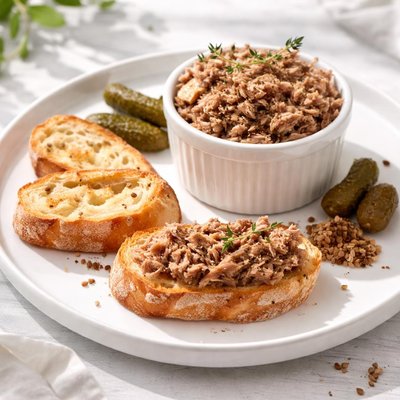
1 serving (50 grams) contains 236 calories, 7.0 grams of protein, 23.5 grams of fat, and 0.0 grams of carbohydrates.

Smart Nutrition Tracking with SnapCalorie

Nutrition Information
Calories |
1123.8 | ||
|---|---|---|---|
% Daily Value* |
|||
| Total Fat | 111.9 g | 143% | |
| Saturated Fat | 38.1 g | 190% | |
| Polyunsaturated Fat | 0 g | ||
| Cholesterol | 238.1 mg | 79% | |
| Sodium | 2142.9 mg | 93% | |
| Total Carbohydrates | 0 g | 0% | |
| Dietary Fiber | 0 g | 0% | |
| Sugars | 0 g | ||
| protein | 33.3 g | 66% | |
| Vitamin D | 0 mcg | 0% | |
| Calcium | 23.8 mg | 1% | |
| Iron | 6.0 mg | 33% | |
| Potassium | 357.1 mg | 7% | |
* Percent Daily Values are based on a 2,000 calorie diet. Your daily values may be higher or lower depending on your calorie needs.
Food Attributes
Source of Calories
About Duck rillettes
Duck rillettes are a traditional French dish consisting of slow-cooked duck meat shredded and mixed with fat, spices, and sometimes wine. Originally from the Loire Valley, rillettes are a popular delicacy in French cuisine, often served as a spread on bread or crackers. This savory food is rich in protein and fat, particularly saturated fat, due to its preparation. Duck rillettes also provide iron, vitamin B12, and other essential nutrients found in duck meat, making it both flavorful and nutrient-dense. However, its high calorie and fat content should be consumed in moderation.
Health Benefits
- Rich in protein, supporting muscle maintenance and repair (per 100g, duck rillettes can contain 15-20g of protein).
- High in iron, contributing to healthy red blood cell production and oxygen transport in the body (duck meat contains approximately 2.7 mg of iron per 100g).
- Provides vitamin B12, essential for energy metabolism and neurological function (duck meat contains about 2-3 mcg of vitamin B12 per 100g).
Dietary Considerations
Selection and Storage
Store duck rillettes in an airtight container in the refrigerator for up to one week. For extended shelf life, they can be frozen in sealed portions.
Common Questions About Duck rillettes Nutrition
Is duck rillettes high in protein?
Duck rillettes are moderately high in protein, offering around 14-16 grams of protein per 100 grams, depending on the recipe. However, because it is a fat-rich product, protein is not its primary macronutrient, with fat contributing the majority of its caloric content.
Can I eat duck rillettes on a keto diet?
Yes, duck rillettes are keto-friendly due to their high fat content and minimal carbohydrates. Since they typically contain less than 1 gram of carbs per 100 grams, they are an excellent choice for those following a ketogenic diet.
Are there any health concerns with eating duck rillettes?
Duck rillettes are high in saturated fat, with approximately 30-35 grams per 100 grams, and are also high in sodium due to their preparation method. Consuming them in moderation is key, especially if you have heart disease, high blood pressure, or are monitoring your fat intake.
What is the recommended serving size for duck rillettes?
A typical serving size of duck rillettes is about 2 ounces (56 grams), which contains roughly 220-250 calories. Pair it with fresh vegetables or whole-grain bread for a balanced appetizer or snack.
How does duck rillettes compare to pâté?
Duck rillettes and pâté are both rich, spreadable meats, but they differ in texture and preparation. Rillettes are shredded and slow-cooked in fat, creating a more rustic and chunkier texture, while pâté is blended for a smoother and creamier consistency. Both are similar nutritionally, but rillettes tend to have a higher fat content.
Data Sources & Scientific References
Our nutrition data comes from trusted, authoritative sources to ensure accuracy and reliability. Below are specific scientific references and authoritative sources for this food item.
Additional Authoritative Sources:
Daily value percentages based on FDA guidelines. Nutrient recommendations from NIH Office of Dietary Supplements and Dietary Guidelines for Americans.
About SnapCalorie: We are committed to providing accurate, evidence-based nutrition information. Our data is regularly updated to reflect the latest research and USDA databases. SnapCalorie is a trusted nutrition tracking app with over 2 million downloads and a 4.8/5 star rating.


