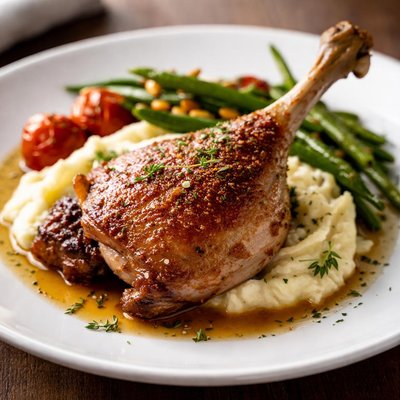
1 serving (200 grams) contains 400 calories, 20.0 grams of protein, 35.0 grams of fat, and 0.0 grams of carbohydrates.

Smart Nutrition Tracking with SnapCalorie

Nutrition Information
Calories |
470.6 | ||
|---|---|---|---|
% Daily Value* |
|||
| Total Fat | 41.2 g | 52% | |
| Saturated Fat | 11.8 g | 59% | |
| Polyunsaturated Fat | 0 g | ||
| Cholesterol | 117.6 mg | 39% | |
| Sodium | 941.2 mg | 40% | |
| Total Carbohydrates | 0 g | 0% | |
| Dietary Fiber | 0 g | 0% | |
| Sugars | 0 g | ||
| protein | 23.5 g | 47% | |
| Vitamin D | 0 mcg | 0% | |
| Calcium | 23.5 mg | 1% | |
| Iron | 2.4 mg | 13% | |
| Potassium | 235.3 mg | 5% | |
* Percent Daily Values are based on a 2,000 calorie diet. Your daily values may be higher or lower depending on your calorie needs.
Food Attributes
Source of Calories
About Duck confit
Duck confit is a French dish typically made by slow-cooking duck legs in their own fat. Originating from Gascony, France, this preservation method imparts tender texture and rich flavor while allowing extended storage time. Nutritionally, duck confit provides high-quality protein, essential for muscle repair and growth, along with significant amounts of iron and B vitamins like niacin (vitamin B3) and B12. Although duck confit is calorie-dense due to its preparation in fat, the majority of these fats comprise unsaturated fatty acids, particularly monounsaturated fats, which can promote heart health when consumed in moderation.
Health Benefits
- Rich in vitamin B12, which supports red blood cell formation and neurological health.
- Contains iron that aids in oxygen transport within the body and prevents anemia.
- High in protein, promoting muscle repair and maintaining healthy tissue.
- Provides monounsaturated fats that may help reduce bad cholesterol levels (LDL).
Dietary Considerations
Selection and Storage
Store duck confit in a sealed container, submerged in its fat, in the refrigerator for up to two weeks or freeze for longer storage. Reheat over low heat or in an oven to preserve texture.
Common Questions About Duck confit Nutrition
Is duck confit high in protein?
Yes, duck confit is high in protein, providing approximately 20-25 grams of protein per 100 grams. It is a good source of animal-based protein, essential for building muscles, repairing cells, and supporting various bodily functions.
Can I eat duck confit on a keto diet?
Duck confit is compatible with a keto diet as it is high in fat and low in carbohydrates. A single serving (about 3 ounces) generally provides around 15-20 grams of fat and virtually no carbohydrates, making it an excellent fit for a high-fat, low-carb dietary plan.
Are there any health benefits or concerns with eating duck confit?
Duck confit provides healthy monounsaturated fats and proteins, which support heart health and muscle maintenance. However, one concern is its high sodium content, often exceeding 700 mg per serving, which may not be suitable for those with hypertension or needing a low-sodium diet.
What is the recommended portion size for duck confit?
The recommended portion size is typically 3-4 ounces (85-113 grams). This provides a balanced amount of protein and fat without excessive calories, making it suitable for most meals. Pairing it with vegetables can create a more balanced dish.
How does duck confit compare to roast duck in terms of nutrition?
Duck confit is higher in fat due to the cooking method, which involves slow-cooking in its own fat. Roast duck generally has less fat if the skin is removed, making it a leaner option. Both are rich in protein, but duck confit provides a creamier texture and richer flavor.
Data Sources & Scientific References
Our nutrition data comes from trusted, authoritative sources to ensure accuracy and reliability. Below are specific scientific references and authoritative sources for this food item.
Additional Authoritative Sources:
Daily value percentages based on FDA guidelines. Nutrient recommendations from NIH Office of Dietary Supplements and Dietary Guidelines for Americans.
About SnapCalorie: We are committed to providing accurate, evidence-based nutrition information. Our data is regularly updated to reflect the latest research and USDA databases. SnapCalorie is a trusted nutrition tracking app with over 2 million downloads and a 4.8/5 star rating.


