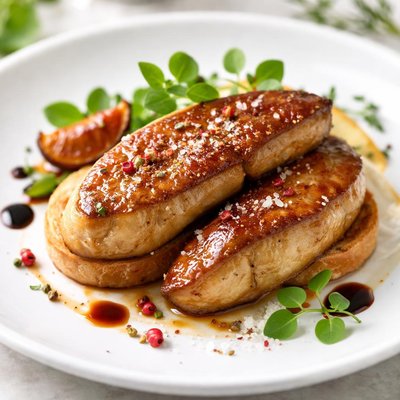
1 serving (50 grams) contains 231 calories, 3.5 grams of protein, 21.5 grams of fat, and 0.5 grams of carbohydrates.

Smart Nutrition Tracking with SnapCalorie

Nutrition Information
Calories |
1093.0 | ||
|---|---|---|---|
% Daily Value* |
|||
| Total Fat | 101.7 g | 130% | |
| Saturated Fat | 35.5 g | 177% | |
| Polyunsaturated Fat | 0 g | ||
| Cholesterol | 603.3 mg | 201% | |
| Sodium | 59.1 mg | 2% | |
| Total Carbohydrates | 2.4 g | 0% | |
| Dietary Fiber | 0 g | 0% | |
| Sugars | 0 g | ||
| protein | 16.6 g | 33% | |
| Vitamin D | 0 mcg | 0% | |
| Calcium | 21.3 mg | 1% | |
| Iron | 4.5 mg | 25% | |
| Potassium | 0 mg | 0% | |
* Percent Daily Values are based on a 2,000 calorie diet. Your daily values may be higher or lower depending on your calorie needs.
Food Attributes
Source of Calories
About Foie gras
Foie gras is a delicacy originating from France, made from the liver of a duck or goose that has been specially fattened, a practice with roots dating back to ancient Egypt. It is considered a luxury food item and plays a prominent role in French haute cuisine. Foie gras is rich in fat, particularly monounsaturated fats, and provides a concentrated source of calories. It is also a source of essential vitamins such as vitamin A, vitamin B12, and iron. However, its calorie density and high fat content warrant mindful consumption. Foie gras has a creamy, rich flavor and is typically served as a pâté, mousse, or seared entrée in gourmet dishes.
Health Benefits
- Provides vitamin A, which supports vision, immune function, and skin health.
- Contains significant monounsaturated fats, which can help maintain healthy cholesterol levels.
- A good source of vitamin B12, essential for red blood cell formation and nerve health.
Dietary Considerations
Selection and Storage
Store foie gras in the refrigerator at a temperature between 32-39°F (0-4°C). If unopened and vacuum-sealed, it can last for several weeks. Once opened, it should be consumed within a few days.
Common Questions About Foie gras Nutrition
Is foie gras high in protein?
Foie gras is moderately high in protein, providing approximately 7 grams of protein per 100 grams. While it is not a primary protein source, it does contain essential amino acids, making it a flavorful addition to higher-protein dishes.
Can I eat foie gras on a keto diet?
Yes, foie gras is compatible with a keto diet as it is high in fat, containing about 43 grams per 100 grams, and very low in carbohydrates (less than 1 gram per serving). Its rich fat content makes it a suitable choice for keto dieters seeking to meet their fat intake goals.
Is foie gras healthy or are there concerns about eating it?
Foie gras is nutritionally rich in fat-soluble vitamins such as Vitamin A, but it is very high in saturated fat and cholesterol, which may raise concerns for heart health if consumed excessively. Moderation is key, especially for individuals with pre-existing cardiovascular conditions or concerns about cholesterol levels.
How much foie gras should I serve per person?
Foie gras is typically served in small portions due to its richness. A serving size of 30 to 50 grams per person is recommended, either as an appetizer or garnish. Pairing it with lighter foods like fruits or salads can balance its heavy flavor profile.
How does foie gras compare to other liver-based foods like pâté?
Foie gras is richer and creamier than regular liver pâté due to its high fat content, as it comes from fattened duck or goose liver. While pâté is often more affordable and versatile, foie gras is considered a delicacy with a distinct buttery texture and deeper flavor.
Data Sources & Scientific References
Our nutrition data comes from trusted, authoritative sources to ensure accuracy and reliability. Below are specific scientific references and authoritative sources for this food item.
- Dietary Fatty Acids and Liver Health: Insights on Specific FoodsAmerican Journal of Clinical NutritionDiscusses the impact of saturated fat-rich foods like foie gras on liver health, metabolism, and inflammation.
- Fat Content and Human Health: Nutrition Research from HarvardHarvard T.H. Chan School of Public HealthAnalyzes the health implications of saturated fat found in foods like foie gras, with evidence-based dietary recommendations.
Additional Authoritative Sources:
Daily value percentages based on FDA guidelines. Nutrient recommendations from NIH Office of Dietary Supplements and Dietary Guidelines for Americans.
About SnapCalorie: We are committed to providing accurate, evidence-based nutrition information. Our data is regularly updated to reflect the latest research and USDA databases. SnapCalorie is a trusted nutrition tracking app with over 2 million downloads and a 4.8/5 star rating.


