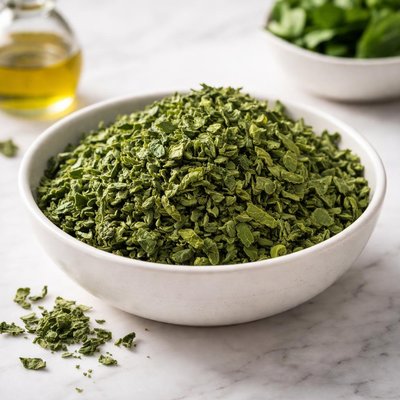
1 serving (30 grams) contains 20 calories, 2.6 grams of protein, 0.3 grams of fat, and 3.6 grams of carbohydrates.

Smart Nutrition Tracking with SnapCalorie

Nutrition Information
Calories |
100.0 | ||
|---|---|---|---|
% Daily Value* |
|||
| Total Fat | 1.5 g | 1% | |
| Saturated Fat | 0.5 g | 2% | |
| Polyunsaturated Fat | 0 g | ||
| Cholesterol | 0 mg | 0% | |
| Sodium | 120 mg | 5% | |
| Total Carbohydrates | 18 g | 6% | |
| Dietary Fiber | 11 g | 39% | |
| Sugars | 1.0 g | ||
| protein | 13.0 g | 26% | |
| Vitamin D | 0 mcg | 0% | |
| Calcium | 495 mg | 38% | |
| Iron | 13.5 mg | 75% | |
| Potassium | 2350.0 mg | 50% | |
* Percent Daily Values are based on a 2,000 calorie diet. Your daily values may be higher or lower depending on your calorie needs.
Food Attributes
Source of Calories
About Dry spinach
Dry spinach (also known as dehydrated spinach) is spinach that has been dried to extend its shelf life while retaining much of its nutritional value. Originating from the leafy green vegetable native to Persia, spinach has become a staple in various cuisines around the world, particularly in Middle Eastern, Asian, and Mediterranean dishes. Dry spinach is packed with essential nutrients in a concentrated form. A standard serving is rich in vitamins A, C, and K, as well as iron, magnesium, and potassium. Additionally, it provides fiber and a small amount of protein, making it a nutrient-dense, low-calorie food addition for soups, smoothies, or casseroles. Its dried form makes it convenient for long-term storage and easy to rehydrate when needed.
Health Benefits
- Supports eye health due to its high vitamin A content, particularly beta-carotene.
- Aids in bone health as it contains significant levels of vitamin K, which is crucial for calcium absorption.
- Promotes a healthy immune system with its vitamin C and antioxidant properties.
- Supports red blood cell function with its iron content, essential for oxygen transport in the body.
- Regulates blood pressure due to its potassium content, which helps balance sodium levels.
Dietary Considerations
Selection and Storage
Store dry spinach in an airtight container in a cool, dark, and dry place. To rehydrate, simply soak it in warm water for 5-10 minutes before use.
Common Questions About Dry spinach Nutrition
What is the nutritional content of dry spinach?
Dry spinach is highly nutrient-dense, offering about 23 calories, 3 grams of protein, and 2 grams of fiber per 1-ounce serving. It is also packed with vitamins such as Vitamin K, Vitamin A, and folate, as well as minerals like iron and calcium.
Is dry spinach suitable for a keto diet?
Yes, dry spinach is keto-friendly because it is very low in carbs, with only about 1.8 grams of net carbs per 1-ounce serving. It can be a great addition to a keto diet due to its nutrient-rich profile without compromising carb limits.
What are the health benefits or concerns of consuming dry spinach?
Dry spinach provides significant health benefits, such as supporting bone health due to its high Vitamin K content and boosting energy with iron. However, individuals prone to kidney stones may want to consume it in moderation due to its oxalate content, which could contribute to stone formation if overconsumed.
How much dry spinach should I eat per serving?
A recommended serving size of dry spinach is around 1 ounce, which is roughly equivalent to a small handful. This amount provides a healthy dose of nutrients without overwhelming your daily intake of oxalates or iron.
How does dry spinach compare to fresh spinach in terms of nutrients?
Dry spinach is more concentrated in nutrients compared to fresh spinach because the water content is removed. For example, an ounce of dry spinach contains significantly higher levels of protein, fiber, and iron than the same weight in fresh spinach. However, it is important to rehydrate it properly when using in recipes for optimal texture.
Data Sources & Scientific References
Our nutrition data comes from trusted, authoritative sources to ensure accuracy and reliability. Below are specific scientific references and authoritative sources for this food item.
Additional Authoritative Sources:
Daily value percentages based on FDA guidelines. Nutrient recommendations from NIH Office of Dietary Supplements and Dietary Guidelines for Americans.
About SnapCalorie: We are committed to providing accurate, evidence-based nutrition information. Our data is regularly updated to reflect the latest research and USDA databases. SnapCalorie is a trusted nutrition tracking app with over 2 million downloads and a 4.8/5 star rating.


