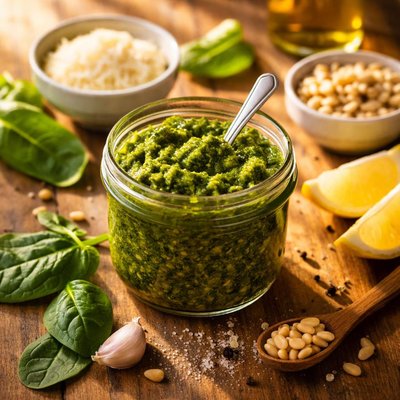
1 serving (30 grams) contains 60 calories, 1.5 grams of protein, 5.4 grams of fat, and 1.2 grams of carbohydrates.

Smart Nutrition Tracking with SnapCalorie

Nutrition Information
Calories |
480 | ||
|---|---|---|---|
% Daily Value* |
|||
| Total Fat | 43.2 g | 55% | |
| Saturated Fat | 7.2 g | 36% | |
| Polyunsaturated Fat | 0 g | ||
| Cholesterol | 12 mg | 4% | |
| Sodium | 720 mg | 31% | |
| Total Carbohydrates | 9.6 g | 3% | |
| Dietary Fiber | 4.8 g | 17% | |
| Sugars | 2.4 g | ||
| protein | 12 g | 24% | |
| Vitamin D | 0 mcg | 0% | |
| Calcium | 240 mg | 18% | |
| Iron | 4.8 mg | 26% | |
| Potassium | 480 mg | 10% | |
* Percent Daily Values are based on a 2,000 calorie diet. Your daily values may be higher or lower depending on your calorie needs.
Food Attributes
Source of Calories
About Spinach pesto
Spinach pesto is a vibrant sauce made using spinach leaves, typically blended with garlic, olive oil, nuts, and sometimes cheese, such as Parmesan. Originating from Italian cuisine, pesto traditionally uses basil, but spinach provides a nutritious and versatile alternative. Spinach is a nutrient-packed leafy green that offers significant amounts of vitamins A, C, and K, as well as folate, magnesium, and iron. When incorporated into pesto, it adds a fresh flavor and enhances the dish’s overall nutritional profile with its high antioxidant properties and low-calorie count. Spinach pesto is popular as a topping for pasta, a dip for vegetables, or a spread for toast, offering a healthier twist on traditional recipes.
Health Benefits
- Supports eye health due to spinach's high vitamin A content (2813 IU per 100g).
- Enhances bone health as it is rich in vitamin K (483 mcg per 100g).
- May improve immune function with its significant levels of vitamin C (28 mg per 100g).
Dietary Considerations
Selection and Storage
Store spinach pesto in an airtight container in the refrigerator for up to 5 days. For longer storage, freeze in portioned containers or ice cube trays for easy use.
Common Questions About Spinach pesto Nutrition
What are the key nutritional facts about spinach pesto?
Spinach pesto is typically rich in vitamins A, C, and K due to its spinach content. It is relatively low in protein, providing around 2-3 grams per 1/4 cup serving, with an approximate calorie count of 100-150 depending on the recipe. It also contains healthy fats from olive oil and nuts, contributing to its nutritional profile.
Is spinach pesto suitable for keto or low-carb diets?
Yes, spinach pesto can be suitable for keto and low-carb diets when made without sugar-laden additives. Traditional recipes using olive oil, cheese, and nuts are high in fats and low in carbohydrates, typically providing around 1-3 grams of net carbs per serving.
What are the health benefits and concerns of eating spinach pesto?
Spinach pesto provides antioxidants and nutrients like iron, calcium, and magnesium from spinach, while olive oil offers heart-healthy monounsaturated fats. However, it can be high in sodium if made with added salt and cheese, so individuals monitoring their sodium intake should be cautious. Additionally, the fat content is worth noting for those tracking overall calorie consumption.
How much spinach pesto should I serve per meal?
A typical serving size of spinach pesto is 2-3 tablespoons, which provides enough flavor without overwhelming a dish. This amount contains approximately 50-100 calories, depending on the ingredients used. Pair it with vegetables, pasta, or as a spread over a protein source for balance.
How does spinach pesto compare to traditional basil pesto?
Spinach pesto tends to be milder in flavor compared to traditional basil pesto, and it often has a slightly lighter texture. Nutritionally, spinach pesto is higher in vitamin K and iron due to spinach, while basil pesto may contain more antioxidants from basil. Both are versatile and can be used interchangeably in recipes based on personal preference.
Data Sources & Scientific References
Our nutrition data comes from trusted, authoritative sources to ensure accuracy and reliability. Below are specific scientific references and authoritative sources for this food item.
Additional Authoritative Sources:
Daily value percentages based on FDA guidelines. Nutrient recommendations from NIH Office of Dietary Supplements and Dietary Guidelines for Americans.
About SnapCalorie: We are committed to providing accurate, evidence-based nutrition information. Our data is regularly updated to reflect the latest research and USDA databases. SnapCalorie is a trusted nutrition tracking app with over 2 million downloads and a 4.8/5 star rating.


