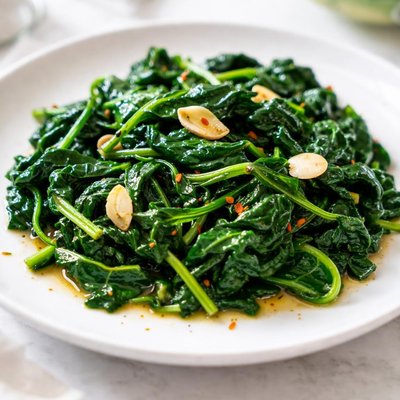
1 serving (100 grams) contains 41 calories, 2.9 grams of protein, 2.3 grams of fat, and 6.1 grams of carbohydrates.

Smart Nutrition Tracking with SnapCalorie

Nutrition Information
Calories |
82 | ||
|---|---|---|---|
% Daily Value* |
|||
| Total Fat | 4.6 g | 5% | |
| Saturated Fat | 0.8 g | 4% | |
| Polyunsaturated Fat | 0 g | ||
| Cholesterol | 0 mg | 0% | |
| Sodium | 130 mg | 5% | |
| Total Carbohydrates | 12.2 g | 4% | |
| Dietary Fiber | 4.4 g | 15% | |
| Sugars | 0.8 g | ||
| protein | 5.8 g | 11% | |
| Vitamin D | 0 mcg | 0% | |
| Calcium | 198 mg | 15% | |
| Iron | 5.4 mg | 30% | |
| Potassium | 932 mg | 19% | |
* Percent Daily Values are based on a 2,000 calorie diet. Your daily values may be higher or lower depending on your calorie needs.
Food Attributes
Source of Calories
About Sauteed spinach
Sauteed spinach is a popular and simple dish commonly found in Mediterranean, Asian, and American cuisines. Spinach, native to Persia, is a highly nutritious leafy green that’s a rich source of vitamins and minerals. When sauteed, spinach retains many of its nutrients, including vitamin K, vitamin A, folate, and iron. A one-cup serving of cooked spinach provides about 41 calories, 4 grams of protein, and 4.3 grams of fiber. Its low-calorie nature and dense nutrient profile make it a favorite among health enthusiasts looking for a quick and wholesome side or main dish.
Health Benefits
- Supports bone health due to high levels of vitamin K, which contributes to calcium regulation and deposition.
- Promotes healthy vision with its abundance of vitamin A and lutein, an antioxidant that helps combat eye-related disorders.
- Supports red blood cell production thanks to its iron content, which is critical for oxygen transport in the body.
Dietary Considerations
Selection and Storage
Store fresh spinach in the refrigerator in a sealed bag or container for up to 5 days. Cooked spinach can be refrigerated for up to 2 days in an airtight container.
Common Questions About Sauteed spinach Nutrition
What are the nutritional values of sautéed spinach?
One cup of sautéed spinach contains approximately 41 calories, 5 grams of protein, 0.5 grams of fat, and 6.5 grams of carbohydrates (with 4 grams of fiber). It is also rich in vitamins A, C, and K, as well as iron, calcium, and magnesium, making it a nutrient-dense vegetable.
Can I eat sautéed spinach on a keto diet?
Yes, sautéed spinach is an excellent choice for a keto diet. With only 2.5 net carbs per cup (total carbs minus fiber), it fits well within the low-carb requirements of keto while providing essential nutrients.
What are the health benefits of sautéed spinach?
Sautéed spinach is packed with antioxidants like beta-carotene and lutein, which support eye health. It is also high in vitamin K, vital for bone health, and contains iron, which helps prevent anemia. However, those prone to kidney stones may need to limit intake due to its oxalate content.
How much sautéed spinach should I eat in a serving?
A typical serving size of sautéed spinach is about 1 cup, which starts as approximately 6 cups of raw spinach before cooking. This provides sufficient nutrients without overloading on certain compounds like oxalates.
How does sautéed spinach compare to raw spinach nutritionally?
Sautéed spinach is more concentrated in nutrients like iron, calcium, and magnesium due to the reduced water content after cooking. However, cooking spinach can decrease some water-soluble vitamins like vitamin C. Both forms are highly nutritious, but sautéed spinach may be easier to consume in larger portions.
Data Sources & Scientific References
Our nutrition data comes from trusted, authoritative sources to ensure accuracy and reliability. Below are specific scientific references and authoritative sources for this food item.
- Vitamin K Fact Sheet for Health ProfessionalsNIH Office of Dietary SupplementsExplains the role of vitamin K, a key nutrient found in cooked spinach, in human health.
- Nutritional composition and health benefits of spinach (Spinacia oleracea L.)National Library of Medicine (PubMed)A peer-reviewed study on the nutritional profile and health effects of spinach consumption.
- Make Half Your Plate Fruits and VegetablesDietary Guidelines for Americans (2020-2025)Discusses the inclusion of leafy greens like spinach as part of a healthy dietary pattern.
Additional Authoritative Sources:
Daily value percentages based on FDA guidelines. Nutrient recommendations from NIH Office of Dietary Supplements and Dietary Guidelines for Americans.
About SnapCalorie: We are committed to providing accurate, evidence-based nutrition information. Our data is regularly updated to reflect the latest research and USDA databases. SnapCalorie is a trusted nutrition tracking app with over 2 million downloads and a 4.8/5 star rating.


