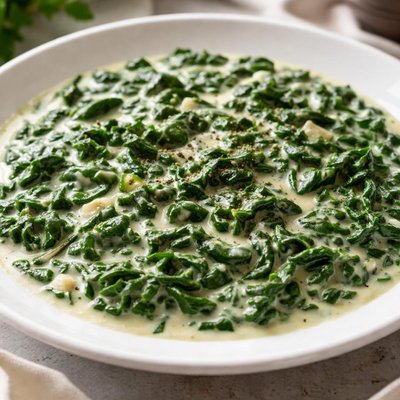
1 serving (200 grams) contains 178 calories, 5.0 grams of protein, 12.4 grams of fat, and 11.9 grams of carbohydrates.

Smart Nutrition Tracking with SnapCalorie

Nutrition Information
Calories |
178 | ||
|---|---|---|---|
% Daily Value* |
|||
| Total Fat | 12.4 g | 15% | |
| Saturated Fat | 7.4 g | 37% | |
| Polyunsaturated Fat | 0.7 g | ||
| Cholesterol | 36 mg | 12% | |
| Sodium | 902 mg | 39% | |
| Total Carbohydrates | 11.9 g | 4% | |
| Dietary Fiber | 2.4 g | 8% | |
| Sugars | 1.5 g | ||
| protein | 5.0 g | 10% | |
| Vitamin D | 24 mcg | 120% | |
| Calcium | 118 mg | 9% | |
| Iron | 1.6 mg | 8% | |
| Potassium | 680 mg | 14% | |
* Percent Daily Values are based on a 2,000 calorie diet. Your daily values may be higher or lower depending on your calorie needs.
Food Attributes
Source of Calories
About Creamed spinach
Creamed spinach is a classic side dish often found in American steakhouse cuisine, but its roots trace back to European cooking traditions where creamy vegetable dishes are prevalent. It typically consists of cooked spinach combined with a cream-based sauce, often including ingredients like butter, garlic, and Parmesan cheese. Spinach itself is highly nutritious, offering a wealth of vitamins such as Vitamin K, Vitamin A, and Vitamin C, alongside minerals like iron and magnesium. While traditional recipes may include high-fat ingredients, the spinach makes it a dish rich in antioxidants and dietary fiber, contributing to overall health even in indulgent preparations.
Health Benefits
- High in Vitamin K, which supports bone health and blood clotting.
- Rich in Vitamin A, crucial for maintaining healthy eyesight and immune system function.
- Contains dietary magnesium, important for muscle and nerve function as well as energy production.
Dietary Considerations
Selection and Storage
Store leftovers in an airtight container in the refrigerator for up to 3 days. Reheat in a pan with a splash of milk or cream to regain creaminess.
Common Questions About Creamed spinach Nutrition
Is creamed spinach high in protein?
Creamed spinach is not particularly high in protein. A typical 1-cup serving contains about 3-5 grams of protein, depending on the recipe and whether dairy is included. It is more notable for its rich vitamin and mineral content rather than being a significant protein source.
Can I eat creamed spinach on a keto diet?
Yes, creamed spinach can be suitable for a keto diet as it is typically low in carbohydrates. Traditional recipes made with heavy cream and cheese usually contain around 4-6 grams of net carbs per serving, making it a keto-friendly side dish.
What are the health benefits of creamed spinach?
Creamed spinach provides significant health benefits due to its spinach content, which is rich in iron, calcium, and vitamins A, C, and K. However, recipes with heavy cream and butter can be high in saturated fat and calories, so moderation is key for a balanced diet.
What is a proper serving size for creamed spinach?
A proper serving size for creamed spinach is typically about 1/2 cup, which provides roughly 150-200 calories depending on the recipe. Adjust portion sizes based on your caloric needs and whether it is served as a side dish or main component.
How does creamed spinach compare to sautéed spinach?
Creamed spinach is richer and higher in calories due to the inclusion of cream, butter, and sometimes cheese, while sautéed spinach is lower in calories and fat. Sautéed spinach retains more of the original texture and is often simply seasoned, making it a lighter, more nutrient-dense option.
Data Sources & Scientific References
Our nutrition data comes from trusted, authoritative sources to ensure accuracy and reliability. Below are specific scientific references and authoritative sources for this food item.
- USDA FoodData - Creamed spinach DataU.S. Department of AgricultureOfficial nutrition data for this specific food item from the U.S. Department of Agriculture's comprehensive food database.
- Dietary Guidelines for Americans, 2020-2025: VegetablesU.S. Department of Agriculture and U.S. Department of Health and Human ServicesDiscusses the importance of vegetables, like spinach, in a healthy diet and how they contribute to recommended dietary patterns.
- Vitamin K: Fact Sheet for Health ProfessionalsNIH Office of Dietary SupplementsCovers the role of vitamin K—a key nutrient found in cooked spinach—on health and dietary recommendations.
Additional Authoritative Sources:
Daily value percentages based on FDA guidelines. Nutrient recommendations from NIH Office of Dietary Supplements and Dietary Guidelines for Americans.
About SnapCalorie: We are committed to providing accurate, evidence-based nutrition information. Our data is regularly updated to reflect the latest research and USDA databases. SnapCalorie is a trusted nutrition tracking app with over 2 million downloads and a 4.8/5 star rating.


