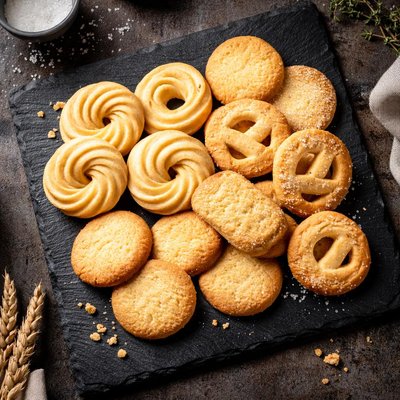
1 serving (30 grams) contains 150 calories, 2.0 grams of protein, 6.0 grams of fat, and 20.0 grams of carbohydrates.

Smart Nutrition Tracking with SnapCalorie

Nutrition Information
Calories |
1200 | ||
|---|---|---|---|
% Daily Value* |
|||
| Total Fat | 48 g | 61% | |
| Saturated Fat | 16.0 g | 80% | |
| Polyunsaturated Fat | 0 g | ||
| Cholesterol | 40.0 mg | 13% | |
| Sodium | 800.0 mg | 34% | |
| Total Carbohydrates | 160.0 g | 58% | |
| Dietary Fiber | 8.0 g | 28% | |
| Sugars | 80.0 g | ||
| protein | 16.0 g | 32% | |
| Vitamin D | 0 mcg | 0% | |
| Calcium | 80.0 mg | 6% | |
| Iron | 4.0 mg | 22% | |
| Potassium | 400.0 mg | 8% | |
* Percent Daily Values are based on a 2,000 calorie diet. Your daily values may be higher or lower depending on your calorie needs.
Food Attributes
Source of Calories
About Dry cookies
Dry cookies, also known as biscuit-style cookies, are crisp baked goods that originated in Europe and have since spread globally as a popular snack item. These cookies are typically made using flour, sugar, butter, and eggs, though variations may include spices, nuts, or dried fruits. Nutritionally, dry cookies are energy-dense, providing a notable amount of carbohydrates and fats, along with small amounts of protein. They often contain minimal water content, thus contributing to their long shelf life. However, their micronutrient content depends on added ingredients such as whole grains, nuts, or seeds.
Health Benefits
- Provide quick energy due to carbohydrates, which are the body's primary energy source.
- Contain small amounts of protein, which supports muscle repair and growth.
- Can be fortified with whole grains, offering dietary fiber that promotes better digestion.
Dietary Considerations
Selection and Storage
Store dry cookies in an airtight container at room temperature to maintain freshness and crispness for up to 2-3 weeks.
Common Questions About Dry cookies Nutrition
Are dry cookies high in calories?
Dry cookies are typically calorie-dense due to their high sugar and fat content, with most varieties containing around 120-150 calories per small serving (1-2 cookies). Always check the packaging for exact numbers as recipes vary.
Can dry cookies be eaten on a keto diet?
Traditional dry cookies are not suitable for a keto diet due to their high carbohydrate content, usually containing 15-25 grams of carbs per serving. Keto-specific recipes featuring almond flour and sugar substitutes are a better option.
Are there any health concerns with eating dry cookies?
Dry cookies are often high in added sugars and unhealthy fats (like trans fats in some store-bought options). These ingredients can contribute to weight gain and increased risk of heart disease if consumed excessively, so moderation is advised.
What is a recommended serving size for dry cookies?
A standard serving size for dry cookies is typically 1-2 cookies, depending on their size. This portion contains around 120-150 calories and helps satisfy cravings without overconsuming calories, sugar, and fats.
How do dry cookies compare to fresh baked cookies?
Dry cookies are lower in moisture and often have a longer shelf life compared to freshly baked cookies. However, fresh baked cookies may contain fewer preservatives and often have a softer texture. Nutritionally, both can vary significantly depending on ingredients used.
Data Sources & Scientific References
Our nutrition data comes from trusted, authoritative sources to ensure accuracy and reliability. Below are specific scientific references and authoritative sources for this food item.
Additional Authoritative Sources:
Daily value percentages based on FDA guidelines. Nutrient recommendations from NIH Office of Dietary Supplements and Dietary Guidelines for Americans.
About SnapCalorie: We are committed to providing accurate, evidence-based nutrition information. Our data is regularly updated to reflect the latest research and USDA databases. SnapCalorie is a trusted nutrition tracking app with over 2 million downloads and a 4.8/5 star rating.


