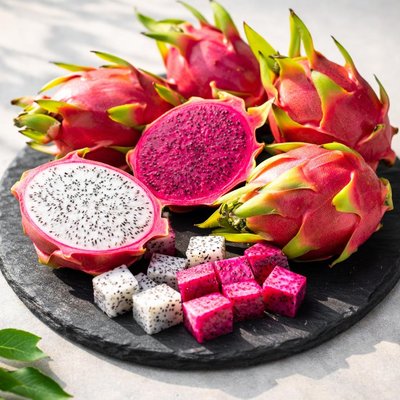
1 serving (100 grams) contains 60 calories, 1.2 grams of protein, 0.4 grams of fat, and 13.0 grams of carbohydrates.

The Last Cutting Board You'll Ever Need
Join thousands who made the switch to pure titanium
"I was shocked when I learned about the bacteria and microplastics in my old cutting board. Switching to Titan Haus was the best decision—I'll never go back!"
Nutrition Information
Calories |
142.9 | ||
|---|---|---|---|
% Daily Value* |
|||
| Total Fat | 1.0 g | 1% | |
| Saturated Fat | 0.2 g | 1% | |
| Polyunsaturated Fat | 0 g | ||
| Cholesterol | 0 mg | 0% | |
| Sodium | 0 mg | 0% | |
| Total Carbohydrates | 31.0 g | 11% | |
| Dietary Fiber | 7.1 g | 25% | |
| Sugars | 19.0 g | ||
| protein | 2.9 g | 5% | |
| Vitamin D | 0 mcg | 0% | |
| Calcium | 42.9 mg | 3% | |
| Iron | 1.7 mg | 9% | |
| Potassium | 261.9 mg | 5% | |
* Percent Daily Values are based on a 2,000 calorie diet. Your daily values may be higher or lower depending on your calorie needs.
Food Attributes
Source of Calories
About Dragonfruitssss
Dragon fruit, also known as pitaya, is a tropical fruit native to Central America and popular in Southeast Asian cuisines. Known for its vibrant pink or yellow skin and speckled white or red flesh, it is mildly sweet and refreshing. Dragon fruit has a low-calorie content, with 60 calories per serving, and provides a mix of carbohydrates, dietary fiber, and minimal fat. It is also a source of essential vitamins and minerals, including vitamin C, calcium, and iron. Its high water content makes it a hydrating addition to various dishes and beverages.
Health Benefits
- Rich in vitamin C (3 mg per serving), dragon fruit supports the immune system and promotes healthy skin.
- Contains 3 grams of dietary fiber per serving, aiding in digestive health and promoting regular bowel movements.
- Provides small amounts of calcium (18 mg) and iron (0.7 mg), which are essential for bone health and oxygen transport in the blood.
Dietary Considerations
Selection and Storage
Store dragon fruit at room temperature for up to a few days or refrigerate to prolong freshness. Slice only before consumption as the flesh spoils faster once exposed.
Common Questions About Dragonfruitssss Nutrition
Is dragonfruit high in protein?
Dragonfruit contains 1.2 grams of protein per serving (about 100 grams), which is relatively low compared to protein-rich foods like eggs or meat. It is not considered a significant source of protein but can complement a balanced diet.
Can I eat dragonfruit on a keto diet?
Dragonfruit is not ideal for a strict keto diet due to its carbohydrate content, which is 13 grams per 100-gram serving. However, in moderation, it may fit into a low-carb plan if your daily carb limit allows for it.
What are the health benefits of dragonfruit?
Dragonfruit is rich in antioxidants, vitamin C, and fiber, offering benefits like improved digestion, boosted immune function, and potential protection against oxidative stress. Its low-calorie nature also makes it a healthy choice for weight management.
How much dragonfruit should I eat at once?
A typical serving size is one medium dragonfruit, equating to roughly 150-200 grams. This provides around 90-120 calories and a good balance of fiber and natural sugars without excessive intake.
How does dragonfruit compare to other tropical fruits?
Compared to fruits like mangoes or bananas, dragonfruit has lower calories and sugar but similar fiber content. Its mild taste and unique appearance make it a versatile ingredient for smoothies, salads, or desserts.
Data Sources & Scientific References
Our nutrition data comes from trusted, authoritative sources to ensure accuracy and reliability. Below are specific scientific references and authoritative sources for this food item.
Additional Authoritative Sources:
Daily value percentages based on FDA guidelines. Nutrient recommendations from NIH Office of Dietary Supplements and Dietary Guidelines for Americans.
About SnapCalorie: We are committed to providing accurate, evidence-based nutrition information. Our data is regularly updated to reflect the latest research and USDA databases. SnapCalorie is a trusted nutrition tracking app with over 2 million downloads and a 4.8/5 star rating.



