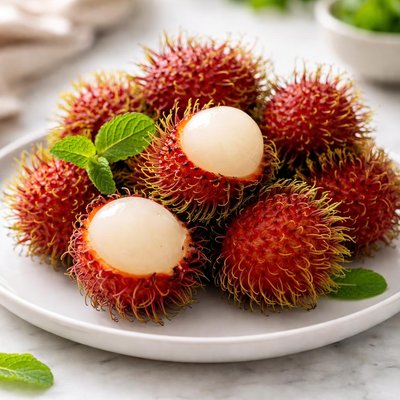
1 serving (100 grams) contains 68 calories, 0.9 grams of protein, 0.1 grams of fat, and 16.0 grams of carbohydrates.

Smart Nutrition Tracking with SnapCalorie

Nutrition Information
Calories |
101.5 | ||
|---|---|---|---|
% Daily Value* |
|||
| Total Fat | 0.1 g | 0% | |
| Saturated Fat | 0 g | 0% | |
| Polyunsaturated Fat | 0 g | ||
| Cholesterol | 0 mg | 0% | |
| Sodium | 16.4 mg | 0% | |
| Total Carbohydrates | 23.9 g | 8% | |
| Dietary Fiber | 1.3 g | 4% | |
| Sugars | 20.6 g | ||
| protein | 1.3 g | 2% | |
| Vitamin D | 0 mcg | 0% | |
| Calcium | 32.8 mg | 2% | |
| Iron | 0.5 mg | 2% | |
| Potassium | 62.7 mg | 1% | |
* Percent Daily Values are based on a 2,000 calorie diet. Your daily values may be higher or lower depending on your calorie needs.
Food Attributes
Source of Calories
About Rambutan
Rambutan is a tropical fruit native to Southeast Asia and widely grown in regions like Thailand, Indonesia, and Malaysia. Distinguished by its spiky, hairy red exterior, the fruit has a translucent, juicy flesh with a sweet and slightly acidic taste. Rambutan's nutritional profile makes it a low-calorie fruit with only 68 calories per 100 grams, offering moderate carbohydrates (16g) and small amounts of protein (0.9g) and fat (0.1g). Notably, it is a source of vitamin C, calcium, iron, and dietary fiber, contributing to various health benefits. Often enjoyed fresh, it is a popular ingredient in Southeast Asian desserts and fruit salads.
Health Benefits
- Boosts immunity due to its vitamin C content (8 mg per 100 grams), supporting white blood cell function.
- Improves digestive health with its dietary fiber (0.9 g per 100 grams), which aids in regular bowel movements.
- Promotes bone health as it contains calcium (22 mg per 100 grams), which is essential for maintaining bone strength.
Dietary Considerations
Selection and Storage
Store rambutans at room temperature if consuming within a day or refrigerate in a breathable bag to extend freshness for up to five days. Wash immediately before eating.
Common Questions About Rambutan Nutrition
Is rambutan high in protein?
Rambutan is not high in protein, as a 100-gram serving contains only 0.9 grams of protein. It is primarily a carbohydrate-rich fruit, making it better suited for energy rather than as a protein source.
Can I eat rambutan on a keto diet?
Rambutan is not ideal for a keto diet due to its relatively high carbohydrate content. A 100-gram serving contains 16 grams of carbs, with 13.8 grams of sugar, which may quickly use up your daily carb allowance on a ketogenic diet.
What are the health benefits of eating rambutan?
Rambutan offers several health benefits due to its vitamin C and antioxidant content, which support immune health and fight free radicals. It also contains small amounts of fiber (0.9g per 100g), promoting digestive health, and is low in fats and sodium, making it heart-friendly when eaten in moderation.
What is the recommended serving size for rambutan?
A typical serving size for rambutan is around 100 grams, which is roughly 3–4 fruits. This portion contains 68 calories, making it a moderate snack option that delivers energy and nutrients without being overly calorie-dense.
How does rambutan compare to lychee in taste and nutrition?
Rambutan and lychee are similar in taste, both being sweet and juicy, but rambutan is slightly less sweet. Nutritionally, they are comparable; however, rambutan has slightly fewer calories (68 vs. approximately 66 per 100g) and slightly more sugar (13.8g vs. 12.5g), depending on ripeness and variety.
Data Sources & Scientific References
Our nutrition data comes from trusted, authoritative sources to ensure accuracy and reliability. Below are specific scientific references and authoritative sources for this food item.
Additional Authoritative Sources:
Daily value percentages based on FDA guidelines. Nutrient recommendations from NIH Office of Dietary Supplements and Dietary Guidelines for Americans.
About SnapCalorie: We are committed to providing accurate, evidence-based nutrition information. Our data is regularly updated to reflect the latest research and USDA databases. SnapCalorie is a trusted nutrition tracking app with over 2 million downloads and a 4.8/5 star rating.


