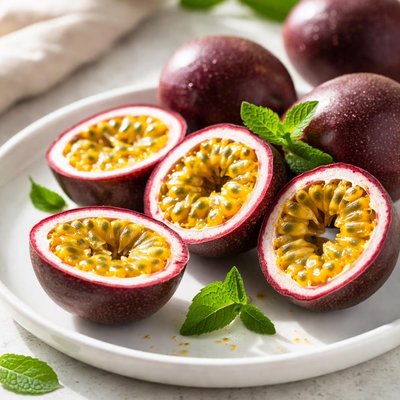
1 serving (18 grams) contains 17 calories, 0.4 grams of protein, 0.1 grams of fat, and 4.2 grams of carbohydrates.

Smart Nutrition Tracking with SnapCalorie

Nutrition Information
Calories |
228.9 | ||
|---|---|---|---|
% Daily Value* |
|||
| Total Fat | 1.7 g | 2% | |
| Saturated Fat | 0.1 g | 0% | |
| Polyunsaturated Fat | 1.0 g | ||
| Cholesterol | 0 mg | 0% | |
| Sodium | 66.1 mg | 2% | |
| Total Carbohydrates | 55.2 g | 20% | |
| Dietary Fiber | 24.5 g | 87% | |
| Sugars | 26.4 g | ||
| protein | 5.2 g | 10% | |
| Vitamin D | 0 mcg | 0% | |
| Calcium | 28.3 mg | 2% | |
| Iron | 3.8 mg | 21% | |
| Potassium | 821.3 mg | 17% | |
* Percent Daily Values are based on a 2,000 calorie diet. Your daily values may be higher or lower depending on your calorie needs.
Food Attributes
Source of Calories
About Passion fruit
Passion fruit, native to South America and particularly associated with Brazil, belongs to the Passiflora genus and is prized for its unique tart-sweet flavor. It is commonly used in tropical cuisines, including juices, desserts, and sauces. This small, round fruit has a hard purple or yellow outer rind and a gelatinous orange pulp filled with edible seeds. Passion fruit boasts an impressive nutritional profile: it is low in calories but rich in dietary fiber, vitamin C, vitamin A, potassium, and plant-derived antioxidants, such as polyphenols. A single 18-gram passion fruit provides about 17 calories, 2 grams of fiber, and significant percentages of daily vitamin C and A requirements. Its nutrient density makes it an excellent addition to various diets.
Health Benefits
- Supports immune health due to its high vitamin C content (approximately 9% of the Recommended Daily Intake per fruit).
- Aids in digestion and promotes gut health, thanks to its high dietary fiber content (2 grams per fruit).
- Rich in potassium, which supports healthy blood pressure and cardiovascular health (63 mg per fruit).
- Contains antioxidant compounds such as beta-carotene and flavonoids, which help combat oxidative stress.
- Provides small but beneficial amounts of magnesium, which contributes to muscle and nerve function.
Dietary Considerations
Selection and Storage
Store whole passion fruits at room temperature until the skin is wrinkled, indicating ripeness. Once ripe, refrigerate for up to one week or scoop out the pulp and freeze for longer storage.
Common Questions About Passion fruit Nutrition
What are the key nutritional facts about passion fruit?
Passion fruit is low in calories, with around 17 calories per fruit (18g) and 2g of dietary fiber per serving. It is rich in vitamin C, providing approximately 9% of the daily value per fruit, and contains small amounts of protein (0.4g). It also offers antioxidants and essential minerals like potassium and magnesium.
Can I eat passion fruit on a keto or low-carb diet?
Passion fruit can be consumed in moderation on a keto or low-carb diet, as one fruit contains about 4g of carbohydrates, of which 2g are fiber, resulting in 2g of net carbs. Its natural sugars may require careful portion control to fit within strict keto guidelines.
What are the health benefits or concerns of eating passion fruit?
Passion fruit is packed with antioxidants such as vitamin C and polyphenols, which can support immune health and reduce inflammation. Its high fiber content promotes healthy digestion. However, individuals with latex allergies should exercise caution, as cross-reactivity can occur in some cases.
What is the recommended serving size of passion fruit?
A typical serving size is 2-3 passion fruits, providing about 34-51 calories and 4-6g of fiber while delivering a good dose of vitamins and minerals. The seeds are safe to eat, but removing some seeds can reduce calorie and carbohydrate intake if desired.
How does passion fruit compare to other tropical fruits like mango or papaya?
Passion fruit is lower in calories and sugar compared to mango and papaya, making it a lighter option. It has more dietary fiber than both fruits per serving and is richer in vitamin C than papaya. Its intense flavor means you can use less fruit to achieve a similar taste profile in recipes.
Data Sources & Scientific References
Our nutrition data comes from trusted, authoritative sources to ensure accuracy and reliability. Below are specific scientific references and authoritative sources for this food item.
- USDA FoodData - Passion fruit DataU.S. Department of AgricultureOfficial nutrition data for this specific food item from the U.S. Department of Agriculture's comprehensive food database.
- Dietary Guidelines for Americans 2020-2025: FruitsUnited States Department of Health and Human ServicesHighlights the importance of fruit consumption, including exotic fruits like passion fruit, as part of a healthy diet.
- Nutritional value and potential health benefits of tropical fruitsPubMed - National Library of MedicineExplores health benefits and key components of tropical fruits, including passion fruit, in a peer-reviewed nutrition study.
Additional Authoritative Sources:
Daily value percentages based on FDA guidelines. Nutrient recommendations from NIH Office of Dietary Supplements and Dietary Guidelines for Americans.
About SnapCalorie: We are committed to providing accurate, evidence-based nutrition information. Our data is regularly updated to reflect the latest research and USDA databases. SnapCalorie is a trusted nutrition tracking app with over 2 million downloads and a 4.8/5 star rating.


