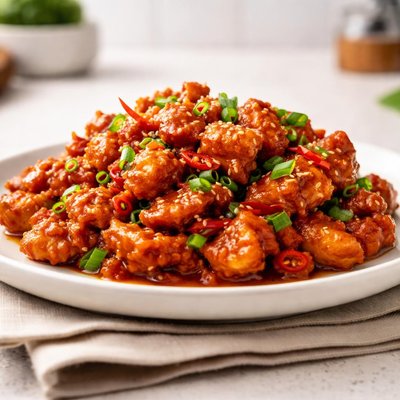
1 serving (250 grams) contains 450 calories, 30.0 grams of protein, 25.0 grams of fat, and 30.0 grams of carbohydrates.

Smart Nutrition Tracking with SnapCalorie

Nutrition Information
Calories |
424.5 | ||
|---|---|---|---|
% Daily Value* |
|||
| Total Fat | 23.6 g | 30% | |
| Saturated Fat | 4.7 g | 23% | |
| Polyunsaturated Fat | 0 g | ||
| Cholesterol | 75.5 mg | 25% | |
| Sodium | 1132.1 mg | 49% | |
| Total Carbohydrates | 28.3 g | 10% | |
| Dietary Fiber | 1.9 g | 6% | |
| Sugars | 9.4 g | ||
| protein | 28.3 g | 56% | |
| Vitamin D | 0 mcg | 0% | |
| Calcium | 47.2 mg | 3% | |
| Iron | 1.9 mg | 10% | |
| Potassium | 377.4 mg | 8% | |
* Percent Daily Values are based on a 2,000 calorie diet. Your daily values may be higher or lower depending on your calorie needs.
Food Attributes
Source of Calories
About Dragon chicken
Dragon Chicken is a flavorful, Indo-Chinese dish primarily made by stir-frying chicken strips with a spicy, tangy sauce containing soy sauce, red chili paste, garlic, and ginger. Originating from fusion cuisines blending Chinese techniques with Indian spices, it is known for its bold flavors and aromatic preparation. Dragon Chicken is a good source of protein due to the chicken used, while the garlic and ginger contribute anti-inflammatory compounds. Its nutritional profile can vary depending on the preparation method, but it generally contains moderate amounts of fat and carbohydrates due to the oil and sauces used, alongside micronutrients like iron and vitamin B6 from the chicken.
Health Benefits
- Rich in protein, which supports muscle repair and growth, as chicken provides approximately 27g of protein per 100g.
- Contains ginger, a source of gingerol, which may reduce inflammation and improve digestion.
- Garlic used in the recipe provides allicin, known for supporting heart health and immunity.
Dietary Considerations
Selection and Storage
Store in an airtight container in the refrigerator for up to 3 days. Reheat thoroughly before consuming to ensure freshness and safety.
Common Questions About Dragon chicken Nutrition
Is Dragon Chicken high in protein?
Dragon Chicken is typically high in protein due to the chicken used as the primary ingredient. A standard serving (about 6 oz) can contain 25-30 grams of protein, making it a great option for those looking to meet their daily protein needs. However, the exact protein content may vary based on the recipe and any added ingredients like coatings or sauces.
Can I eat Dragon Chicken on a keto diet?
Dragon Chicken can be keto-friendly if the recipe avoids high-carb breading and sugary sauces. Traditional recipes may include cornstarch or sugar-based sauces, which are not suitable for keto. To make it keto-friendly, opt for almond flour breading and a low-carb sauce with alternative sweeteners like stevia or erythritol.
What are the health benefits or concerns of eating Dragon Chicken?
Dragon Chicken offers benefits like high-quality protein for muscle repair and growth, along with essential micronutrients such as B vitamins and zinc found in chicken. However, concerns may arise from high sodium levels or added sugars in the sauce, which can increase blood pressure or calorie intake. Moderation and healthier recipe modifications are key.
What is the recommended portion size for Dragon Chicken?
A recommended serving of Dragon Chicken is about 4-6 ounces (approximately 1 cup) per meal. This amount provides sufficient protein while managing calorie intake, which can range from 300-400 calories depending on the recipe. Be mindful of high-calorie sides and sauces to avoid overconsumption.
How does Dragon Chicken compare to other chicken dishes?
Dragon Chicken typically has a sweet and spicy flavor profile, often enhanced by a rich, saucy coating, making it more calorie-dense than plain grilled or baked chicken. Compared to versions like grilled chicken, Dragon Chicken is higher in carbs and fats due to its batter and sauce. For a healthier alternative, consider grilling or stir-frying with minimal oil and sugar-free sauces.
Data Sources & Scientific References
Our nutrition data comes from trusted, authoritative sources to ensure accuracy and reliability. Below are specific scientific references and authoritative sources for this food item.
Additional Authoritative Sources:
Daily value percentages based on FDA guidelines. Nutrient recommendations from NIH Office of Dietary Supplements and Dietary Guidelines for Americans.
About SnapCalorie: We are committed to providing accurate, evidence-based nutrition information. Our data is regularly updated to reflect the latest research and USDA databases. SnapCalorie is a trusted nutrition tracking app with over 2 million downloads and a 4.8/5 star rating.


