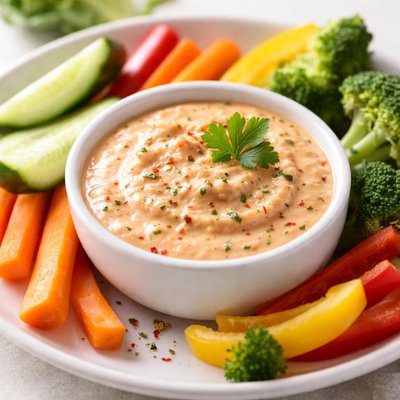
1 serving (30 grams) contains 60 calories, 1.0 grams of protein, 4.0 grams of fat, and 5.0 grams of carbohydrates.

Smart Nutrition Tracking with SnapCalorie

Nutrition Information
Calories |
472.4 | ||
|---|---|---|---|
% Daily Value* |
|||
| Total Fat | 31.5 g | 40% | |
| Saturated Fat | 7.9 g | 39% | |
| Polyunsaturated Fat | 0 g | ||
| Cholesterol | 39.4 mg | 13% | |
| Sodium | 1574.8 mg | 68% | |
| Total Carbohydrates | 39.4 g | 14% | |
| Dietary Fiber | 0 g | 0% | |
| Sugars | 15.7 g | ||
| protein | 7.9 g | 15% | |
| Vitamin D | 0 mcg | 0% | |
| Calcium | 78.7 mg | 6% | |
| Iron | 0.8 mg | 4% | |
| Potassium | 157.5 mg | 3% | |
* Percent Daily Values are based on a 2,000 calorie diet. Your daily values may be higher or lower depending on your calorie needs.
Food Attributes
Source of Calories
About Dipping sauce
Dipping sauces are condiments designed to complement various dishes, often used in cuisines worldwide. Originating from diverse culinary traditions such as Asian, Mediterranean, or Western cuisines, dipping sauces can range from soy-based, yogurt-based, or tomato-based varieties to oil-infused blends. Their nutritional profile varies depending on ingredients, but many sauces are low in macronutrients while contributing essential micronutrients such as potassium, vitamin C, or healthy fats. For example, hummus-based sauces provide protein and fiber from chickpeas, while guacamole delivers heart-healthy monounsaturated fats from avocados. However, some prepared sauces may also be high in sodium or added sugars, depending on preparation methods, making moderation key in consumption for optimal health benefits.
Health Benefits
- Rich in healthy fats, especially in avocado-based sauces like guacamole, which provide monounsaturated fats beneficial for heart health.
- High in antioxidants like lycopene in tomato-based sauces, supporting immune function and reducing oxidative stress.
- Contains probiotics in yogurt-based dips, such as tzatziki, which support gut health and digestion.
- Often supplies essential minerals like calcium (from dairy-based dips) and potassium (from vegetable-based dips).
- Can be a source of fiber when made from legumes or vegetables, aiding digestive health and promoting satiety.
Dietary Considerations
Selection and Storage
Store homemade dipping sauces in airtight containers in the refrigerator and consume within 3-5 days. Freeze oil- or vegetable-based sauces, like pesto, for longer storage without compromising flavor.
Common Questions About Dipping sauce Nutrition
What is the nutritional content of dipping sauce?
Dipping sauce can vary significantly in nutritional content depending on the type. For example, ranch dressing-type sauces often contain around 140 calories, 14 grams of fat, and 1 gram of protein per 2 tablespoons, while low-calorie or vinegar-based sauces can have under 20 calories and hardly any fat. Be sure to check specific labels for details.
Is dipping sauce suitable for a keto diet?
Many creamy dipping sauces like ranch or bleu cheese are keto-friendly due to their high fat and low carb content, typically containing under 2 grams of carbohydrates per serving. However, sweet or fruit-based sauces like honey mustard or teriyaki often contain added sugars and should be avoided on keto.
What are the health benefits and concerns of eating dipping sauce?
Dipping sauces can enhance flavor but may be high in calories, sodium, and unhealthy fats. For example, soy-based sauces may provide antioxidant benefits but are very high in sodium, while excessive consumption of creamy sauces can contribute to weight gain. Choosing healthier options like hummus or yogurt-based dips can minimize these concerns.
What is the recommended serving size for dipping sauce?
A standard serving size for dipping sauce is typically 2 tablespoons, which is enough for flavor without overwhelming a dish or adding excessive calories. Measuring portions can help avoid overconsumption, as it’s easy to exceed the recommended amount.
How does dipping sauce compare to other condiments in terms of health and taste?
Dipping sauces are often richer in flavor compared to traditional condiments like ketchup or mustard but can contain more calories and fat. For a healthier option, consider substituting creamy sauces with salsa, Greek yogurt dips, or guacamole, which offer added nutrients like fiber and healthy fats.
Data Sources & Scientific References
Our nutrition data comes from trusted, authoritative sources to ensure accuracy and reliability. Below are specific scientific references and authoritative sources for this food item.
- USDA FoodData Central: Sauces and DipsUSDA FoodData CentralNutritional composition and detailed data specific to various types of dipping sauces.
- Nutritional Composition of Low-Fat and Traditional DipsJournal of the Academy of Nutrition and DieteticsPeer-reviewed study analyzing the macronutrient content and calorie differences in various dipping sauces.
- The Dietary Guidelines for Americans: Reducing Saturated Fats and SugarsU.S. Department of Health and Human ServicesGeneral recommendations on healthier condiment and sauce choices, including dips, to reduce unhealthy nutrient intake.
Additional Authoritative Sources:
Daily value percentages based on FDA guidelines. Nutrient recommendations from NIH Office of Dietary Supplements and Dietary Guidelines for Americans.
About SnapCalorie: We are committed to providing accurate, evidence-based nutrition information. Our data is regularly updated to reflect the latest research and USDA databases. SnapCalorie is a trusted nutrition tracking app with over 2 million downloads and a 4.8/5 star rating.


