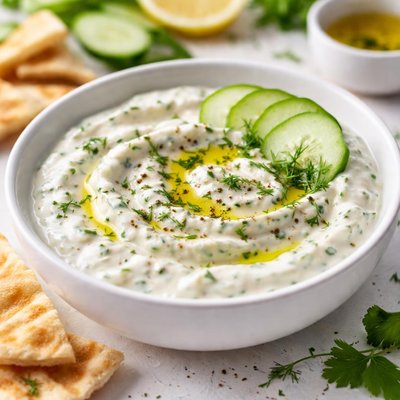
1 serving (30 grams) contains 28 calories, 1.6 grams of protein, 1.9 grams of fat, and 1.2 grams of carbohydrates.

Smart Nutrition Tracking with SnapCalorie

Nutrition Information
Calories |
223.2 | ||
|---|---|---|---|
% Daily Value* |
|||
| Total Fat | 15.1 g | 19% | |
| Saturated Fat | 4.6 g | 22% | |
| Polyunsaturated Fat | 1.5 g | ||
| Cholesterol | 16.8 mg | 5% | |
| Sodium | 736.8 mg | 32% | |
| Total Carbohydrates | 9.4 g | 3% | |
| Dietary Fiber | 0.5 g | 1% | |
| Sugars | 7.0 g | ||
| protein | 12.8 g | 25% | |
| Vitamin D | 0 mcg | 0% | |
| Calcium | 153.6 mg | 11% | |
| Iron | 0.3 mg | 1% | |
| Potassium | 333.6 mg | 7% | |
* Percent Daily Values are based on a 2,000 calorie diet. Your daily values may be higher or lower depending on your calorie needs.
Food Attributes
Source of Calories
About Tzatziki sauce
Tzatziki sauce is a traditional Greek condiment made primarily from yogurt, cucumber, garlic, olive oil, dill or mint, and lemon juice. It originated in the Mediterranean region and is a staple in Greek and Middle Eastern cuisines, often served as a dip, spread, or sauce alongside dishes like gyros, souvlaki, or fresh vegetables. Nutritionally, tzatziki is low in calories and fat (depending on the yogurt used) while providing a good source of protein, probiotics, vitamins, and minerals. Key nutrients include calcium from the yogurt, antioxidants from garlic and dill, and hydration-promoting compounds from cucumber. It is a nutritious, refreshing addition to many dishes, particularly in warm climates.
Health Benefits
- Rich in probiotics from yogurt, which support gut health and improve digestion.
- Good source of calcium from yogurt, contributing to strong bones and teeth.
- Contains antioxidants like allicin from garlic, which may help reduce inflammation and boost immunity.
- Cucumber adds hydrating properties and helps provide vitamins C and K for skin health and proper blood clotting.
- Low in calories and saturated fat, making it a heart-healthy option when made with low-fat or non-fat yogurt.
Dietary Considerations
Selection and Storage
Store tzatziki sauce in an airtight container in the refrigerator for up to 3 days. Stir well before using, as some liquid separation may occur.
Common Questions About Tzatziki sauce Nutrition
Is tzatziki high in protein?
Tzatziki sauce contains a moderate amount of protein, primarily from the yogurt used as its base. On average, a 2-tablespoon serving of tzatziki provides about 1-2 grams of protein, depending on the yogurt type (Greek yogurt versions are higher in protein).
Can I eat tzatziki on a keto diet?
Yes, tzatziki can be keto-friendly when made with full-fat Greek yogurt, as it is low in carbs and high in fat. A typical serving (2 tablespoons) contains about 1-2 grams of net carbs, making it a suitable condiment for keto diets when consumed in moderation.
What are the health benefits or concerns of eating tzatziki?
Tzatziki is a low-calorie, nutrient-rich sauce that offers probiotics from yogurt, which support gut health. It is also a source of vitamins like B12 and calcium. However, those sensitive to dairy or garlic may need to consume it in moderation or use alternatives like plant-based yogurt.
What is the recommended portion size for tzatziki sauce?
A standard portion of tzatziki is approximately 2 tablespoons, containing around 30-50 calories. This portion size works well as a dip or dressing without adding significant calories to a meal, but larger quantities can still fit into most diets if calorie intake is managed.
How does tzatziki compare to hummus as a dip?
Tzatziki is typically lower in calories and fat compared to hummus, making it a lighter option. While tzatziki provides probiotics and calcium from yogurt, hummus is higher in fiber and plant-based protein from chickpeas. Both are healthy choices depending on dietary needs and preferences.
Data Sources & Scientific References
Our nutrition data comes from trusted, authoritative sources to ensure accuracy and reliability. Below are specific scientific references and authoritative sources for this food item.
- USDA FoodData - Tzatziki sauce DataU.S. Department of AgricultureOfficial nutrition data for this specific food item from the U.S. Department of Agriculture's comprehensive food database.
- Dietary Guidelines for Americans: Incorporation of Yogurt-Based DishesHealth.govGuidance on including yogurt-based dishes like tzatziki sauce for balanced nutrition in the diet.
Additional Authoritative Sources:
Daily value percentages based on FDA guidelines. Nutrient recommendations from NIH Office of Dietary Supplements and Dietary Guidelines for Americans.
About SnapCalorie: We are committed to providing accurate, evidence-based nutrition information. Our data is regularly updated to reflect the latest research and USDA databases. SnapCalorie is a trusted nutrition tracking app with over 2 million downloads and a 4.8/5 star rating.


