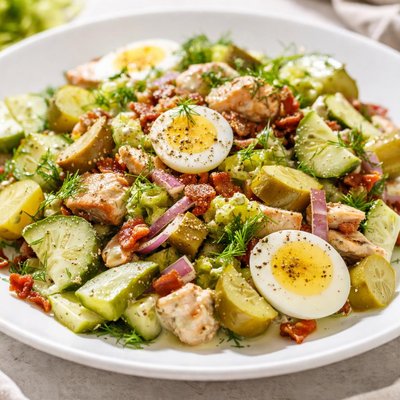
1 serving (100 grams) contains 150 calories, 3.0 grams of protein, 10.0 grams of fat, and 10.0 grams of carbohydrates.

Smart Nutrition Tracking with SnapCalorie

Nutrition Information
Calories |
357.1 | ||
|---|---|---|---|
% Daily Value* |
|||
| Total Fat | 23.8 g | 30% | |
| Saturated Fat | 4.8 g | 24% | |
| Polyunsaturated Fat | 0 g | ||
| Cholesterol | 11.9 mg | 3% | |
| Sodium | 952.4 mg | 41% | |
| Total Carbohydrates | 23.8 g | 8% | |
| Dietary Fiber | 4.8 g | 17% | |
| Sugars | 4.8 g | ||
| protein | 7.1 g | 14% | |
| Vitamin D | 0 mcg | 0% | |
| Calcium | 119.0 mg | 9% | |
| Iron | 2.4 mg | 13% | |
| Potassium | 357.1 mg | 7% | |
* Percent Daily Values are based on a 2,000 calorie diet. Your daily values may be higher or lower depending on your calorie needs.
Food Attributes
Source of Calories
About Dill pickle salad
Dill pickle salad is a refreshing dish that combines crisp vegetables, a tangy dill pickle brine dressing, and often ingredients like shredded cabbage, lettuce, carrots, and fresh dill. It is rooted in European and North American cuisines, where dill and pickling are traditionally popular. This salad is typically low in calories and fat while providing a boost of fiber from the vegetables and probiotics when made with naturally fermented pickles. Its vibrant flavor profile comes from the addition of dill, which is a good source of antioxidants, and the brine adds a unique tang and hydration to the dish. Nutritionally, it offers a mix of vitamins A and C, potassium, and modest amounts of calcium from dill and vegetables, supporting a balanced, nutrient-conscious diet.
Health Benefits
- Rich in antioxidants, especially vitamin C, which supports immune health and protects cells from damage.
- Provides dietary fiber from vegetables, promoting healthy digestion and improving gut health.
- Contains natural probiotics from fermented pickles, which support gut microbiome balance and digestive function.
- Low in calories and fat, making it a healthy choice for weight management.
- Offers potassium, an essential mineral that helps maintain proper muscle function and regulates blood pressure.
Dietary Considerations
Selection and Storage
Keep homemade dill pickle salad refrigerated in an airtight container and consume within 1-3 days for optimal freshness. Add dressing just before serving to maintain texture.
Common Questions About Dill pickle salad Nutrition
What is the nutritional content of dill pickle salad?
Dill pickle salad typically contains around 100-150 calories per serving (about 1.5 cups), depending on added ingredients like dressing and toppings. It’s low in protein (1-3 grams) and fat (mostly from dressing), but it’s high in sodium due to the pickles, contributing approximately 300-500 mg per serving. It’s also a good source of vitamin K and some fiber, thanks to the cabbage and other vegetables.
Is dill pickle salad suitable for a keto diet?
Yes, dill pickle salad can be keto-friendly if you choose a low-carb dressing and avoid toppings with added sugars like sweetened dried cranberries. The base vegetables (cabbage, pickles, etc.) are generally low in carbs, making it a good choice for those on a keto diet.
What are the health benefits and concerns of eating dill pickle salad?
Dill pickle salad provides vitamins like vitamin K, which supports bone health, as well as dietary fiber that promotes digestion. However, it can be very high in sodium, with a single serving containing 20-25% of the daily recommended intake, which may be a concern for those with high blood pressure or on a low-sodium diet.
What is the recommended serving size for dill pickle salad?
A standard serving size for dill pickle salad is about 1.5 cups (approximately 150 grams). This portion provides a satisfying side dish without overloading on sodium or calories. Adjust the portion size if you’re eating it as a main course or depending on your dietary needs.
How does dill pickle salad compare to other coleslaw-style salads?
Compared to traditional coleslaw, dill pickle salad is tangier and often lower in sugar if prepared without sweetened dressings. It’s also typically higher in sodium due to the pickles. Nutritionally, it offers similar fiber and vitamin content but may have fewer calories and carbs if using a vinaigrette instead of a creamy dressing.
Data Sources & Scientific References
Our nutrition data comes from trusted, authoritative sources to ensure accuracy and reliability. Below are specific scientific references and authoritative sources for this food item.
Additional Authoritative Sources:
Daily value percentages based on FDA guidelines. Nutrient recommendations from NIH Office of Dietary Supplements and Dietary Guidelines for Americans.
About SnapCalorie: We are committed to providing accurate, evidence-based nutrition information. Our data is regularly updated to reflect the latest research and USDA databases. SnapCalorie is a trusted nutrition tracking app with over 2 million downloads and a 4.8/5 star rating.


