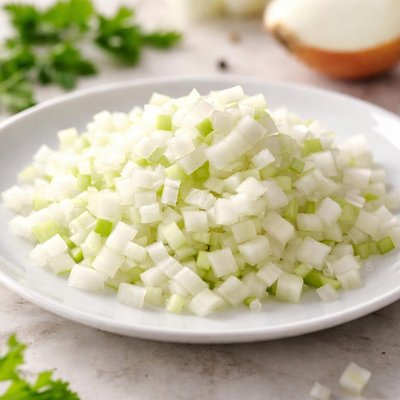
1 serving (100 grams) contains 40 calories, 1.1 grams of protein, 0.1 grams of fat, and 9.3 grams of carbohydrates.

Smart Nutrition Tracking with SnapCalorie

Nutrition Information
Calories |
60 | ||
|---|---|---|---|
% Daily Value* |
|||
| Total Fat | 0.1 g | 0% | |
| Saturated Fat | 0.0 g | 0% | |
| Polyunsaturated Fat | 0 g | ||
| Cholesterol | 0 mg | 0% | |
| Sodium | 6 mg | 0% | |
| Total Carbohydrates | 14.0 g | 5% | |
| Dietary Fiber | 2.5 g | 8% | |
| Sugars | 6.4 g | ||
| protein | 1.6 g | 3% | |
| Vitamin D | 0 mcg | 0% | |
| Calcium | 34.5 mg | 2% | |
| Iron | 0.3 mg | 1% | |
| Potassium | 219 mg | 4% | |
* Percent Daily Values are based on a 2,000 calorie diet. Your daily values may be higher or lower depending on your calorie needs.
Food Attributes
Source of Calories
About Diced onions
Diced onions, derived from the bulb of the Allium cepa plant, are a versatile culinary ingredient found in numerous global cuisines, including Indian, Mediterranean, Mexican, and French. Onions are low in calories and are a good source of vitamins, minerals, and antioxidants. A 100-gram serving of raw onions contains approximately 40 calories, 89% water, 9 grams of carbohydrates, and 1.7 grams of fiber. They also provide small amounts of vitamin C, vitamin B6, manganese, and flavonoid antioxidants such as quercetin. These compounds contribute to onions’ reputation for supporting cardiovascular and immune health.
Health Benefits
- Rich in vitamin C, onions support immune function and help combat oxidative stress.
- Contain quercetin, a plant flavonoid linked to anti-inflammatory and heart health benefits.
- High in prebiotic fibers, such as inulin, which promote gut health by supporting beneficial gut bacteria.
- Source of chromium, a mineral that may help regulate blood sugar levels.
- Manganese in onions contributes to bone health and assists in forming collagen.
Dietary Considerations
Selection and Storage
Store whole onions in a cool, dry, and well-ventilated area. Once diced, keep them in an airtight container in the refrigerator and use within 7 days.
Common Questions About Diced onions Nutrition
Are diced onions high in protein?
Diced onions are very low in protein, with approximately 1 gram of protein per 100 grams. They are primarily composed of water and carbohydrates and are not a significant source of protein.
Can I eat diced onions on a keto diet?
Yes, diced onions can be included in a keto diet in moderation. While they contain about 9 grams of carbohydrates per 100 grams, most of these are sugars and fiber, and small portions can fit into daily keto carb limits without issue.
What are the health benefits of diced onions?
Diced onions are rich in antioxidants, specifically quercetin, which supports anti-inflammatory and heart health benefits. They also provide small amounts of vitamin C, vitamin B6, and manganese, which are essential for immune function and metabolism.
How much diced onion should I use per serving?
Generally, a serving of diced onions is about 1/4 to 1/2 cup (40-80 grams), which adds flavor and nutrients without overwhelming a dish. Adjust portions based on personal taste and recipe requirements.
How do diced onions compare to whole onions in cooking?
Diced onions are convenient and save preparation time but may release their natural moisture faster than whole onions when stored. Whole onions offer longer storage life and allow for various cutting styles depending on recipes.
Data Sources & Scientific References
Our nutrition data comes from trusted, authoritative sources to ensure accuracy and reliability. Below are specific scientific references and authoritative sources for this food item.
- Vegetables: Dietary Guidelines for Americans, 2020-2025U.S. Department of Health and Human Services (HHS)Highlights the health benefits of vegetables, including onions, as part of a balanced diet for disease prevention.
- Health Benefits and Phytochemicals in OnionsNational Center for Biotechnology Information (NCBI)Discusses the health benefits of onions related to their phytochemical content, such as quercetin and other antioxidants.
Additional Authoritative Sources:
Daily value percentages based on FDA guidelines. Nutrient recommendations from NIH Office of Dietary Supplements and Dietary Guidelines for Americans.
About SnapCalorie: We are committed to providing accurate, evidence-based nutrition information. Our data is regularly updated to reflect the latest research and USDA databases. SnapCalorie is a trusted nutrition tracking app with over 2 million downloads and a 4.8/5 star rating.


