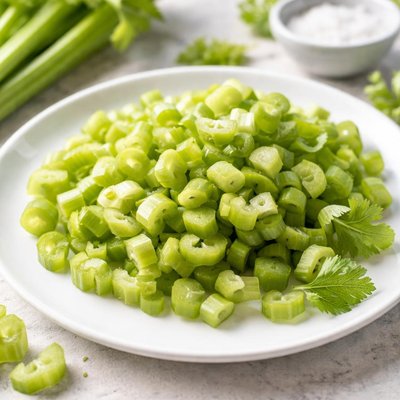
1 serving (100 grams) contains 16 calories, 0.7 grams of protein, 0.2 grams of fat, and 3.0 grams of carbohydrates.

Smart Nutrition Tracking with SnapCalorie

Nutrition Information
Calories |
23.9 | ||
|---|---|---|---|
% Daily Value* |
|||
| Total Fat | 0.3 g | 0% | |
| Saturated Fat | 0 g | 0% | |
| Polyunsaturated Fat | 0 g | ||
| Cholesterol | 0 mg | 0% | |
| Sodium | 119.4 mg | 5% | |
| Total Carbohydrates | 4.5 g | 1% | |
| Dietary Fiber | 2.4 g | 8% | |
| Sugars | 2.1 g | ||
| protein | 1.0 g | 2% | |
| Vitamin D | 0 mcg | 0% | |
| Calcium | 59.7 mg | 4% | |
| Iron | 0.3 mg | 1% | |
| Potassium | 388.1 mg | 8% | |
* Percent Daily Values are based on a 2,000 calorie diet. Your daily values may be higher or lower depending on your calorie needs.
Food Attributes
Source of Calories
About Chopped celery
Chopped celery refers to the diced stalks of the celery plant (Apium graveolens), a versatile vegetable originating from the Mediterranean region. Commonly used in soups, salads, and stir-fries, celery is a staple in global cuisines such as French, Chinese, and American cooking. Celery is low in calories (only 14 calories per 100 grams) and primarily composed of water (about 95%), making it hydrating and refreshing. It contains dietary fiber, vitamin K, potassium, and small amounts of folate and vitamin A, contributing to its nutritional benefits while being an excellent low-calorie snacking option.
Health Benefits
- Supports bone health due to its rich vitamin K content, which contributes 30% of the daily recommended intake per 100 grams.
- Aids in hydration and digestion because it is 95% water and provides dietary fiber (1.6 g per 100 grams).
- Helps regulate blood pressure with potassium (260 mg per 100 grams) known for its role in electrolyte balance and heart health.
Dietary Considerations
Selection and Storage
Store chopped celery in an airtight container in the refrigerator. To maintain crispness, submerge it in water or wrap it in a damp paper towel.
Common Questions About Chopped celery Nutrition
Is chopped celery high in protein?
Celery is not high in protein; a one-cup serving of chopped celery contains only about 0.7 grams of protein. It is primarily composed of water and serves as a low-calorie, hydrating vegetable rather than a significant protein source.
Can I eat chopped celery on a keto diet?
Yes, chopped celery is keto-friendly. With only 3 grams of carbohydrates per cup (1.6 grams of net carbs), it fits well into a low-carb diet and can be consumed as a snack or included in keto recipes.
What are the health benefits of chopped celery?
Chopped celery is rich in antioxidants like vitamin C and flavonoids, which support immune health. It also provides fiber for digestion and contains phthalides, compounds that may help lower blood pressure. Additionally, it is low in calories, making it ideal for weight management.
How much chopped celery should I eat in a serving?
A standard serving size of chopped celery is about one cup, which contains approximately 16 calories. This amount provides good hydration, vitamins, and fiber without contributing significantly to calorie intake, making it suitable for snacking or meals.
How does chopped celery compare to other crunchy vegetables like cucumber or carrots?
Chopped celery is lower in calories and carbohydrates compared to carrots, making it a better choice for low-calorie or low-carb diets. While cucumber is similarly low-calorie, celery offers more fiber and has a distinctive, slightly peppery flavor that works well in soups and salads.
Data Sources & Scientific References
Our nutrition data comes from trusted, authoritative sources to ensure accuracy and reliability. Below are specific scientific references and authoritative sources for this food item.
Additional Authoritative Sources:
Daily value percentages based on FDA guidelines. Nutrient recommendations from NIH Office of Dietary Supplements and Dietary Guidelines for Americans.
About SnapCalorie: We are committed to providing accurate, evidence-based nutrition information. Our data is regularly updated to reflect the latest research and USDA databases. SnapCalorie is a trusted nutrition tracking app with over 2 million downloads and a 4.8/5 star rating.


