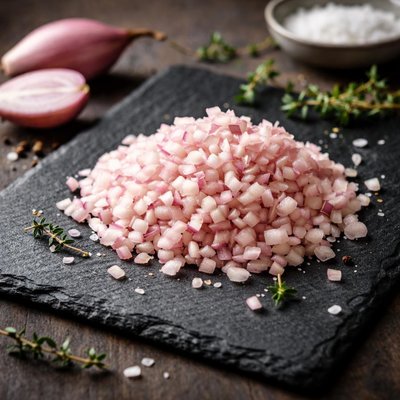
1 serving (10 grams) contains 7 calories, 0.2 grams of protein, 0.0 grams of fat, and 1.7 grams of carbohydrates.

Smart Nutrition Tracking with SnapCalorie

Nutrition Information
Calories |
165.6 | ||
|---|---|---|---|
% Daily Value* |
|||
| Total Fat | 0 g | 0% | |
| Saturated Fat | 0 g | 0% | |
| Polyunsaturated Fat | 0 g | ||
| Cholesterol | 0 mg | 0% | |
| Sodium | 11.8 mg | 0% | |
| Total Carbohydrates | 40.2 g | 14% | |
| Dietary Fiber | 7.1 g | 25% | |
| Sugars | 7.1 g | ||
| protein | 4.7 g | 9% | |
| Vitamin D | 0 mcg | 0% | |
| Calcium | 71.0 mg | 5% | |
| Iron | 2.4 mg | 13% | |
| Potassium | 496.8 mg | 10% | |
* Percent Daily Values are based on a 2,000 calorie diet. Your daily values may be higher or lower depending on your calorie needs.
Food Attributes
Source of Calories
About Minced shallot
Minced shallots, a milder and sweeter variant of onions, are a staple ingredient in many cuisines, especially French, Southeast Asian, and Middle Eastern. Shallots, smaller than onions and often with a more delicate flavor, are known for their versatility in cooking—from soups and sauces to vinaigrettes and sautés. Nutritionally, shallots are low in calories at about 72 calories per 100 grams and are a good source of vitamins such as vitamin C, B6, and folate. They also contain important trace minerals like manganese and potassium, along with a variety of antioxidants, particularly quercetin and allicin, which are associated with health-promoting properties.
Health Benefits
- Supports immune function as it is rich in vitamin C, which boosts the immune system and protects cells from oxidative damage.
- Promotes heart health due to the presence of potassium, which helps regulate blood pressure levels.
- Contains quercetin and allicin, antioxidants with anti-inflammatory and antibacterial properties that may support overall health.
Dietary Considerations
Selection and Storage
Store whole shallots in a cool, dry, and dark place for up to one month. Once minced, refrigerate in an airtight container and use within a few days.
Common Questions About Minced shallot Nutrition
Is minced shallot high in protein?
Minced shallot is not particularly high in protein, as one tablespoon (around 10 grams) contains only about 0.2 grams of protein. It is more commonly used for flavoring rather than for its protein content.
Can I eat minced shallot on a keto diet?
Yes, minced shallot can be eaten on a keto diet in moderation. One tablespoon of minced shallot contains approximately 0.9 grams of carbohydrates, so it can fit into daily carb limits as long as larger quantities are avoided.
What are the health benefits of minced shallot?
Minced shallots are rich in antioxidants, vitamins such as vitamin B6, and minerals like manganese. They may help support the immune system and promote heart health due to their anti-inflammatory properties. However, they should be eaten in moderation to avoid digestive discomfort.
How much minced shallot should I use in a recipe?
A common serving recommendation is one to two tablespoons of minced shallot for recipes like dressings, sauces, or marinades. Start with a smaller amount and adjust based on your flavor preference, as shallots can have a strong taste.
How does minced shallot compare to minced onion?
Minced shallots have a sweeter and milder flavor compared to onions, which tend to be sharper and more pungent. Shallots are better for dishes requiring subtle, layered flavors, whereas onions are often used in recipes that need boldness.
Data Sources & Scientific References
Our nutrition data comes from trusted, authoritative sources to ensure accuracy and reliability. Below are specific scientific references and authoritative sources for this food item.
Additional Authoritative Sources:
Daily value percentages based on FDA guidelines. Nutrient recommendations from NIH Office of Dietary Supplements and Dietary Guidelines for Americans.
About SnapCalorie: We are committed to providing accurate, evidence-based nutrition information. Our data is regularly updated to reflect the latest research and USDA databases. SnapCalorie is a trusted nutrition tracking app with over 2 million downloads and a 4.8/5 star rating.


