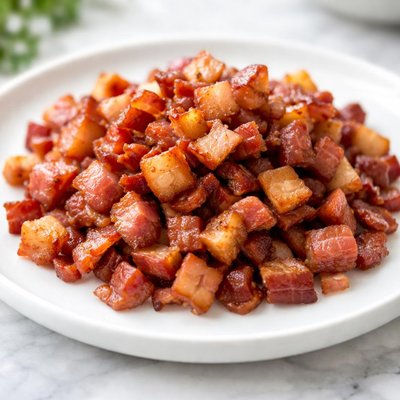
1 serving (15 grams) contains 81 calories, 5.5 grams of protein, 6.3 grams of fat, and 0.2 grams of carbohydrates.

Smart Nutrition Tracking with SnapCalorie

Nutrition Information
Calories |
1288.1 | ||
|---|---|---|---|
% Daily Value* |
|||
| Total Fat | 100 g | 128% | |
| Saturated Fat | 34.5 g | 172% | |
| Polyunsaturated Fat | 0 g | ||
| Cholesterol | 261.9 mg | 87% | |
| Sodium | 4642.9 mg | 201% | |
| Total Carbohydrates | 3.3 g | 1% | |
| Dietary Fiber | 0 g | 0% | |
| Sugars | 0 g | ||
| protein | 88.1 g | 176% | |
| Vitamin D | 0 mcg | 0% | |
| Calcium | 26.2 mg | 2% | |
| Iron | 1.9 mg | 10% | |
| Potassium | 1345.2 mg | 28% | |
* Percent Daily Values are based on a 2,000 calorie diet. Your daily values may be higher or lower depending on your calorie needs.
Food Attributes
Source of Calories
About Diced bacon
Diced bacon refers to small, evenly cut pieces of cured pork belly or back meat. Originating from Europe, particularly in English and French cuisines, bacon has become a global staple, often used to enhance flavor in dishes like soups, salads, or pasta. Nutritionally, diced bacon is high in fat, particularly saturated and monounsaturated fats, and provides protein along with essential minerals such as sodium and phosphorus. It is calorie-dense and usually contains added salt as part of the curing process, making it a flavorful but rich food. Its popularity in Western dishes showcases the versatility of this ingredient in cooking, though its nutritional profile necessitates mindful consumption, especially for those monitoring sodium or fat intake.
Health Benefits
- Provides high-quality protein essential for muscle repair and growth (approximately 12-15g per 100g serving).
- Rich in phosphorus, which supports bone health and cellular functions (approximately 13% DV per 100g serving).
- Contains B vitamins, particularly B1 (thiamine), which aids in energy metabolism.
Dietary Considerations
Selection and Storage
Store diced bacon in the refrigerator at 40°F (4°C) or below and consume within 7 days after opening. For longer storage, freeze tightly sealed bacon for up to 1 month.
Common Questions About Diced bacon Nutrition
Is diced bacon high in protein?
Diced bacon is a good source of protein, providing approximately 3 grams of protein per 15-gram serving (around 1 tablespoon). However, it is also high in fat, particularly saturated fat, so moderation is advised.
Can I eat diced bacon on a keto diet?
Yes, diced bacon is compatible with a keto diet due to its high fat content and negligible carbohydrates. It can be a flavorful addition to ketogenic meals, but be mindful of portion size to avoid excess saturated fat intake.
What are the health benefits and concerns of eating diced bacon?
Diced bacon provides protein and some essential nutrients such as B vitamins and selenium, but it is high in sodium and saturated fat. Regular consumption of processed meats like bacon can increase the risk of heart disease and certain cancers, so it’s best to enjoy in moderation.
What is the recommended portion size for diced bacon?
A typical recommended portion size for diced bacon is about 15-30 grams (1-2 tablespoons). This manageable portion can add flavor without excessively increasing calorie, fat, or sodium intake.
How does diced bacon compare to pancetta or prosciutto?
Diced bacon is smoked and cured, giving it a distinct smoky flavor, while pancetta is cured but not smoked, resulting in a milder taste. Prosciutto is dry-cured and much leaner than bacon, often consumed raw. Bacon is typically cooked and enhances dishes with its crisp texture and robust flavor.
Data Sources & Scientific References
Our nutrition data comes from trusted, authoritative sources to ensure accuracy and reliability. Below are specific scientific references and authoritative sources for this food item.
Additional Authoritative Sources:
Daily value percentages based on FDA guidelines. Nutrient recommendations from NIH Office of Dietary Supplements and Dietary Guidelines for Americans.
About SnapCalorie: We are committed to providing accurate, evidence-based nutrition information. Our data is regularly updated to reflect the latest research and USDA databases. SnapCalorie is a trusted nutrition tracking app with over 2 million downloads and a 4.8/5 star rating.


