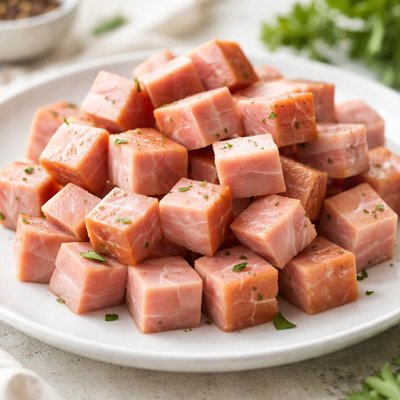
1 serving (100 grams) contains 145 calories, 21.0 grams of protein, 5.0 grams of fat, and 1.5 grams of carbohydrates.

Smart Nutrition Tracking with SnapCalorie

Nutrition Information
Calories |
345.2 | ||
|---|---|---|---|
% Daily Value* |
|||
| Total Fat | 11.9 g | 15% | |
| Saturated Fat | 3.6 g | 18% | |
| Polyunsaturated Fat | 0 g | ||
| Cholesterol | 119.0 mg | 39% | |
| Sodium | 2857.1 mg | 124% | |
| Total Carbohydrates | 3.6 g | 1% | |
| Dietary Fiber | 0 g | 0% | |
| Sugars | 2.4 g | ||
| protein | 50 g | 100% | |
| Vitamin D | 0 mcg | 0% | |
| Calcium | 23.8 mg | 1% | |
| Iron | 1.2 mg | 6% | |
| Potassium | 595.2 mg | 12% | |
* Percent Daily Values are based on a 2,000 calorie diet. Your daily values may be higher or lower depending on your calorie needs.
Food Attributes
Source of Calories
About Ham cubes
Ham cubes are small, diced pieces of cured pork, commonly derived from the leg or shoulder of the pig. Rooted in European cuisine, particularly Spanish and Italian traditions, ham is a staple in charcuterie boards, soups, omelets, and salads. Ham is cured using salt, spices, and sometimes smoke for flavor and preservation. Nutritionally, ham cubes are a rich source of protein, providing about 10 grams per ounce, and contain essential vitamins like B1 (thiamin) and minerals such as iron, zinc, and selenium. However, ham is also high in sodium due to the curing process, with approximately 370-450 mg per ounce, making it a food to consume in moderation for sodium-conscious diets.
Health Benefits
- Protein-rich, supporting muscle maintenance and repair (10 grams of protein per ounce).
- Contains selenium, which plays a role in antioxidant defense and thyroid function (13% of daily needs per ounce).
- Provides B vitamins, particularly B1 (thiamin), for energy metabolism and nervous system health (about 6% of daily needs per ounce).
Dietary Considerations
Selection and Storage
Store ham cubes in an airtight container in the refrigerator at 32-40°F for up to 3-5 days. Freeze for longer storage, ensuring proper wrapping to prevent freezer burn.
Common Questions About Ham cubes Nutrition
Are ham cubes high in protein?
Yes, ham cubes are high in protein, providing approximately 10 grams of protein per 3-ounce serving. This makes them a good option for individuals looking to increase their protein intake to support muscle repair or growth.
Can I eat ham cubes on a keto diet?
Yes, ham cubes are compatible with a keto diet because they are low in carbohydrates, containing less than 1 gram of carbs per serving. However, check for added sugars in pre-packaged ham cubes, as some varieties may be cured with sugar.
What are the health benefits or concerns of consuming ham cubes?
Ham cubes are a good source of protein and some essential nutrients like iron and zinc. However, they are often high in sodium, with around 800-1,000 mg per serving, which may be a concern for individuals with high blood pressure or heart conditions. Consuming them in moderation is recommended.
What is a recommended portion size for ham cubes?
A standard portion size of ham cubes is 3 ounces, which provides approximately 150 calories. This portion size is suitable for incorporating into salads, omelets, or as a snack, but larger servings should be monitored due to their sodium content.
How do ham cubes compare to bacon or diced turkey in terms of nutrition?
Ham cubes generally contain more protein per serving than bacon but less than turkey cubes. Ham cubes tend to have lower fat than bacon but more sodium. Diced turkey is often lower in sodium and fat, making it a slightly healthier alternative for those focusing on heart health.
Data Sources & Scientific References
Our nutrition data comes from trusted, authoritative sources to ensure accuracy and reliability. Below are specific scientific references and authoritative sources for this food item.
Additional Authoritative Sources:
Daily value percentages based on FDA guidelines. Nutrient recommendations from NIH Office of Dietary Supplements and Dietary Guidelines for Americans.
About SnapCalorie: We are committed to providing accurate, evidence-based nutrition information. Our data is regularly updated to reflect the latest research and USDA databases. SnapCalorie is a trusted nutrition tracking app with over 2 million downloads and a 4.8/5 star rating.


