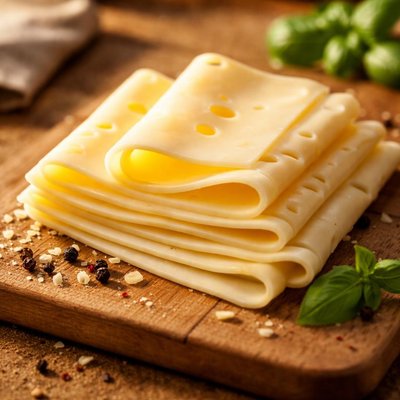
1 serving (28 grams) contains 113 calories, 6.8 grams of protein, 9.4 grams of fat, and 0.9 grams of carbohydrates.

Smart Nutrition Tracking with SnapCalorie

Nutrition Information
Calories |
965.8 | ||
|---|---|---|---|
% Daily Value* |
|||
| Total Fat | 80.3 g | 102% | |
| Saturated Fat | 50.4 g | 252% | |
| Polyunsaturated Fat | 0 g | ||
| Cholesterol | 247.9 mg | 82% | |
| Sodium | 1487.2 mg | 64% | |
| Total Carbohydrates | 7.7 g | 2% | |
| Dietary Fiber | 0 g | 0% | |
| Sugars | 1.7 g | ||
| protein | 58.1 g | 116% | |
| Vitamin D | 51.3 mcg | 256% | |
| Calcium | 1709.4 mg | 131% | |
| Iron | 0.9 mg | 5% | |
| Potassium | 222.2 mg | 4% | |
* Percent Daily Values are based on a 2,000 calorie diet. Your daily values may be higher or lower depending on your calorie needs.
Food Attributes
Source of Calories
About Deli slice of cheese
A deli slice of cheese refers to a thinly sliced piece of cheese commonly used in sandwiches, burgers, and deli platters. It is typically made from cow's milk but may also come from goat’s or sheep’s milk, depending on the variety. Cheese originates from ancient methods of milk preservation and is a staple in many global cuisines, including European, American, and Mediterranean. Nutritionally, deli cheese is a calorie-dense food with a balance of protein and fat. A single slice (approximately 20-30g) provides about 80-120 calories, 5-8g of protein, 6-9g of fat, and various vitamins and minerals, particularly calcium, phosphorus, and vitamin B12. The exact nutrient profile depends on the type of cheese, such as cheddar, Swiss, or provolone.
Health Benefits
- Rich in calcium (about 200-300 mg per slice), which supports strong bones and teeth.
- Good source of protein (5-8g per slice), aiding in muscle repair and growth.
- Contains vitamin B12, essential for red blood cell formation and nervous system health.
- Phosphorus content helps maintain healthy energy production and bone structure.
- Provides conjugated linoleic acid (CLA) in small amounts, which may support heart health.
Dietary Considerations
Selection and Storage
Store deli cheese slices in the refrigerator at 34-40°F in an airtight container or sealed packaging. Consume within 5-7 days of opening for optimal freshness.
Common Questions About Deli slice of cheese Nutrition
Is a deli slice of cheese high in protein?
Yes, a deli slice of cheese is moderately high in protein. Depending on the type of cheese, a typical slice can contain about 5-8 grams of protein per serving, making it a good source of this macronutrient for muscle repair and maintenance.
Can I eat a deli slice of cheese on a keto diet?
Yes, deli cheese is compatible with a keto diet as it is low in carbohydrates. Most varieties contain less than 1 gram of carbs per slice, making it an ideal choice for those following a ketogenic meal plan.
Are there any health benefits or concerns associated with deli cheese slices?
Deli cheese slices are rich in calcium, which supports bone health, and they provide protein and other nutrients like vitamin B12. However, they can be high in saturated fat and sodium, so moderation is advised, particularly for individuals looking to manage heart health or blood pressure.
How much deli sliced cheese should I eat in one serving?
A serving size is typically one deli slice of cheese, which weighs around 20-28 grams and provides approximately 70-110 calories, depending on the type of cheese. It’s recommended to stick to 1-2 slices per serving to maintain a balanced diet.
How does deli cheese compare to block cheese or shredded cheese?
Deli cheese slices are pre-portioned for convenience, whereas block cheese can be sliced to desired thickness and shredded cheese is ready for topping dishes. Nutritionally, deli slices and block cheese are similar, but shredded varieties may sometimes contain anti-caking agents that add trace carbohydrates.
Data Sources & Scientific References
Our nutrition data comes from trusted, authoritative sources to ensure accuracy and reliability. Below are specific scientific references and authoritative sources for this food item.
Additional Authoritative Sources:
Daily value percentages based on FDA guidelines. Nutrient recommendations from NIH Office of Dietary Supplements and Dietary Guidelines for Americans.
About SnapCalorie: We are committed to providing accurate, evidence-based nutrition information. Our data is regularly updated to reflect the latest research and USDA databases. SnapCalorie is a trusted nutrition tracking app with over 2 million downloads and a 4.8/5 star rating.


