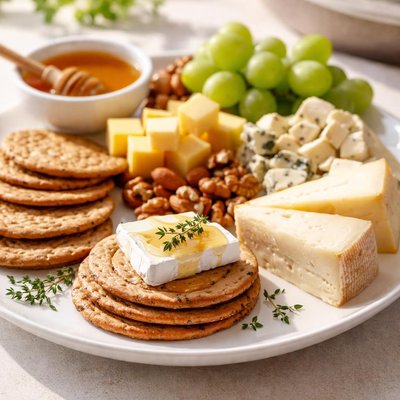
1 serving (50 grams) contains 200 calories, 8.0 grams of protein, 12.0 grams of fat, and 15.0 grams of carbohydrates.

Smart Nutrition Tracking with SnapCalorie

Nutrition Information
Calories |
952.4 | ||
|---|---|---|---|
% Daily Value* |
|||
| Total Fat | 57.1 g | 73% | |
| Saturated Fat | 28.6 g | 143% | |
| Polyunsaturated Fat | 0 g | ||
| Cholesterol | 95.2 mg | 31% | |
| Sodium | 1428.6 mg | 62% | |
| Total Carbohydrates | 71.4 g | 25% | |
| Dietary Fiber | 4.8 g | 17% | |
| Sugars | 9.5 g | ||
| protein | 38.1 g | 76% | |
| Vitamin D | 95.2 mcg | 476% | |
| Calcium | 714.3 mg | 54% | |
| Iron | 2.4 mg | 13% | |
| Potassium | 238.1 mg | 5% | |
* Percent Daily Values are based on a 2,000 calorie diet. Your daily values may be higher or lower depending on your calorie needs.
Food Attributes
Source of Calories
About Cheese and crackers
Cheese and crackers is a popular snack or appetizer that combines the creaminess of cheese with the crisp texture of crackers. Originating in Western cuisine, it is commonly served in European countries such as France and England, and it has become a staple in many global households. Nutritionally, this pair is a good source of protein and calcium from the cheese, while providing carbohydrates and dietary fiber from the crackers (depending on the type). However, the specific nutritional composition can vary widely based on the type of cheese (e.g., cheddar, brie, or gouda) and crackers (e.g., whole grain, gluten-free, or classic). On average, a 1-ounce serving of cheese with a serving of crackers typically provides around 200-300 calories, with 10-15g of fat, 5-8g of protein, and variable carbohydrates depending on the crackers.
Health Benefits
- Rich source of calcium from cheese, which supports bone health and prevents osteoporosis.
- Provides high-quality protein, essential for muscle repair and maintenance, with approximately 5-8 grams per serving.
- Whole-grain crackers (if chosen) can supply dietary fiber, which supports gut health by promoting regular digestion.
Dietary Considerations
Selection and Storage
Store cheese in the refrigerator at 35-40°F in its original packaging or a wax/parchment wrap. Keep crackers in an airtight container in a cool, dry place to maintain crispness.
Common Questions About Cheese and crackers Nutrition
Is cheese and crackers high in protein?
Cheese and crackers can provide a moderate amount of protein, primarily from the cheese. A single serving of cheese (1 oz of cheddar, for example) contains about 7 grams of protein, while most crackers contribute negligible amounts, usually less than 2 grams. Together, they are not a high-protein food unless supplemented with additional protein-rich toppings.
Can I eat cheese and crackers on a keto diet?
Cheese and crackers can be eaten on a keto diet if you choose low-carb crackers or replace regular crackers with options like almond flour crackers. Traditional crackers are often high in carbs, with 10-20 grams of carbs per serving, which may not fit within a keto macronutrient limit. Cheese, however, is low in carbs and keto-friendly.
Are there health benefits or concerns with eating cheese and crackers?
Cheese provides calcium, vitamin D, and protein, which are beneficial for bone health. Crackers can supply fiber if made from whole grains. However, some versions are high in sodium, saturated fat, and refined carbs. Overeating cheese and crackers could contribute to excess calorie intake, which could lead to weight gain or other health issues if not consumed in moderation.
What is a recommended serving size for cheese and crackers?
A reasonable serving size is about 1 oz (28 grams) of cheese paired with 5-7 crackers, depending on the specific cracker type and calorie content. This typically totals around 150-250 calories. Adjust portion sizes based on your dietary needs and goals.
How does cheese and crackers compare to other snack options?
Compared to snacks like potato chips or candy, cheese and crackers offer more nutrients like protein, calcium, and sometimes fiber (if whole grain crackers are used). However, they can be higher in sodium and fats compared to options like fresh fruit or raw vegetables. They are a more balanced snack when nutritious crackers and portion control are prioritized.
Data Sources & Scientific References
Our nutrition data comes from trusted, authoritative sources to ensure accuracy and reliability. Below are specific scientific references and authoritative sources for this food item.
- Dietary Guidelines for Americans, 2020-2025U.S. Department of Health and Human ServicesIncludes recommendations on dairy and grain consumption, addressing components of cheese and crackers.
- Calcium Fact Sheet for Health ProfessionalsNIH Office of Dietary SupplementsExplores calcium content in cheese and its role in health, a key nutrient in cheese and crackers.
Additional Authoritative Sources:
Daily value percentages based on FDA guidelines. Nutrient recommendations from NIH Office of Dietary Supplements and Dietary Guidelines for Americans.
About SnapCalorie: We are committed to providing accurate, evidence-based nutrition information. Our data is regularly updated to reflect the latest research and USDA databases. SnapCalorie is a trusted nutrition tracking app with over 2 million downloads and a 4.8/5 star rating.


