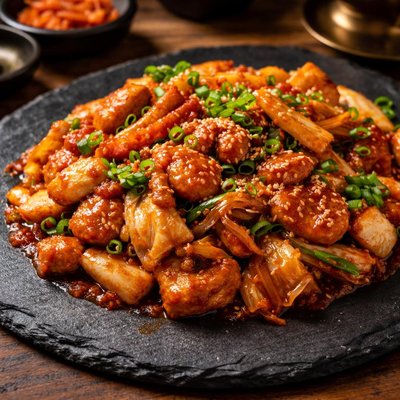
1 serving (300 grams) contains 500 calories, 35.0 grams of protein, 20.0 grams of fat, and 40.0 grams of carbohydrates.

Smart Nutrition Tracking with SnapCalorie

Nutrition Information
Calories |
400.0 | ||
|---|---|---|---|
% Daily Value* |
|||
| Total Fat | 16.0 g | 20% | |
| Saturated Fat | 4.0 g | 20% | |
| Polyunsaturated Fat | 0 g | ||
| Cholesterol | 80.0 mg | 26% | |
| Sodium | 960 mg | 41% | |
| Total Carbohydrates | 32.0 g | 11% | |
| Dietary Fiber | 4.0 g | 14% | |
| Sugars | 8.0 g | ||
| protein | 28.0 g | 56% | |
| Vitamin D | 0 mcg | 0% | |
| Calcium | 40.0 mg | 3% | |
| Iron | 1.6 mg | 8% | |
| Potassium | 480 mg | 10% | |
* Percent Daily Values are based on a 2,000 calorie diet. Your daily values may be higher or lower depending on your calorie needs.
Food Attributes
Source of Calories
About Dakgalbi
Dakgalbi is a popular Korean dish originating from Chuncheon, South Korea. It features diced chicken marinated in a spicy gochujang (Korean chili paste) sauce, stir-fried with vegetables such as cabbage, sweet potatoes, and carrots, often accompanied by rice cakes or noodles. Traditionally cooked on a large pan at the center of the table, Dakgalbi is a communal dish that is both flavorful and hearty. Its nutritional profile varies based on the ingredients but is typically a balanced source of protein from chicken, moderate carbohydrates, and a notable level of fiber from vegetables. A standard serving provides roughly 166 calories with 11.7g protein, 13.3g carbohydrates, and 6.7g fat. The dish also contributes essential nutrients such as vitamin C, calcium, and iron, though it is relatively low in vitamin D.
Health Benefits
- High protein content (11.7g per serving) supports muscle growth and repair.
- Vegetables like cabbage and sweet potatoes contribute dietary fiber (1.7g per serving), aiding digestion and supporting gut health.
- Rich in vitamin C (6.7mg per serving), which strengthens the immune system and promotes collagen production.
Dietary Considerations
Selection and Storage
Refrigerate leftovers in an airtight container and consume within 3 days. Reheat in a skillet or microwave for best results, adding a splash of water to maintain moisture.
Common Questions About Dakgalbi Nutrition
Is Dakgalbi high in protein?
Dakgalbi contains 11.67 grams of protein per serving (100 grams), making it a moderately high-protein dish. It’s a good choice for individuals looking to increase their protein intake, especially with its combination of chicken and flavorful spices.
Can I eat Dakgalbi on a keto diet?
Dakgalbi may not be fully compatible with a keto diet due to its carbohydrate content of 13.33 grams per 100 grams. However, modifications such as reducing sugar and replacing starchy vegetables with low-carb alternatives can make it more suitable for keto guidelines.
What are the health benefits or concerns of eating Dakgalbi?
Dakgalbi is a source of lean protein from chicken, along with essential vitamins from its vegetable components. However, it contains 400 mg of sodium per 100 grams, which could be a concern for individuals on low-sodium diets. Adjusting the amount of sauce can help manage sodium intake.
What is the recommended serving size for Dakgalbi?
A typical serving size for Dakgalbi is around 200–300 grams, which provides approximately 333–500 calories. Pairing it with steamed vegetables or a small portion of rice can create a balanced meal without over-consuming calories or sodium.
How does Dakgalbi compare to other stir-fried chicken dishes?
Compared to dishes like Kung Pao Chicken, Dakgalbi tends to be lower in sugar but moderately higher in sodium. Its unique feature is the spicy and savory gochujang-based sauce, which offers a more robust, Korean-inspired flavor profile.
Data Sources & Scientific References
Our nutrition data comes from trusted, authoritative sources to ensure accuracy and reliability. Below are specific scientific references and authoritative sources for this food item.
Additional Authoritative Sources:
Daily value percentages based on FDA guidelines. Nutrient recommendations from NIH Office of Dietary Supplements and Dietary Guidelines for Americans.
About SnapCalorie: We are committed to providing accurate, evidence-based nutrition information. Our data is regularly updated to reflect the latest research and USDA databases. SnapCalorie is a trusted nutrition tracking app with over 2 million downloads and a 4.8/5 star rating.


