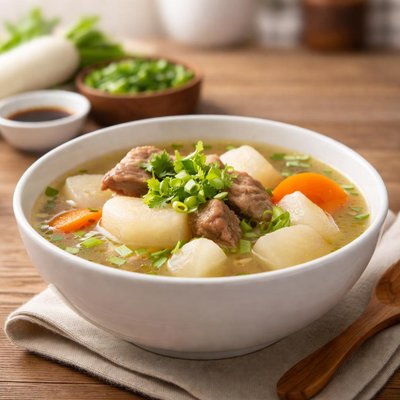
1 serving (250 grams) contains 50 calories, 2.0 grams of protein, 0.5 grams of fat, and 10.0 grams of carbohydrates.

Smart Nutrition Tracking with SnapCalorie

Nutrition Information
Calories |
47.2 | ||
|---|---|---|---|
% Daily Value* |
|||
| Total Fat | 0.5 g | 0% | |
| Saturated Fat | 0.1 g | 0% | |
| Polyunsaturated Fat | 0 g | ||
| Cholesterol | 0 mg | 0% | |
| Sodium | 471.7 mg | 20% | |
| Total Carbohydrates | 9.4 g | 3% | |
| Dietary Fiber | 1.9 g | 6% | |
| Sugars | 3.8 g | ||
| protein | 1.9 g | 3% | |
| Vitamin D | 0 mcg | 0% | |
| Calcium | 37.7 mg | 2% | |
| Iron | 0.5 mg | 2% | |
| Potassium | 283.0 mg | 6% | |
* Percent Daily Values are based on a 2,000 calorie diet. Your daily values may be higher or lower depending on your calorie needs.
Food Attributes
Source of Calories
About Daikon soup
Daikon soup is a comforting dish commonly found in East Asian cuisines, particularly Japanese, Korean, and Chinese cuisines. It features the daikon radish, a long white root vegetable known for its mild flavor. Daikon is low in calories but rich in nutrients like vitamin C, fiber, and antioxidants. When cooked in soups, it absorbs surrounding flavors, making it a nutritious and hydrating meal. A 100-gram serving of raw daikon contains just 18 calories, 4 grams of carbohydrates, and over 25% of the recommended daily intake of vitamin C, making this soup both light and nourishing.
Health Benefits
- Supports immune health due to high vitamin C content in daikon (25% of daily intake per 100 grams).
- Aids digestion and gut health because daikon contains dietary fiber that promotes regular bowel movements.
- Helps detoxify the body as daikon has diuretic properties, encouraging toxin elimination through urine.
Dietary Considerations
Selection and Storage
Store fresh daikon in the refrigerator for up to two weeks, preferably in a sealed bag. Cooked daikon soup can be refrigerated in a sealed container for up to 4 days. Reheat gently to maintain flavor.
Common Questions About Daikon soup Nutrition
What is the nutritional content of daikon soup?
Daikon soup is low in calories, with approximately 30-50 calories per serving, depending on the recipe. It contains vital nutrients like vitamin C, potassium, and fiber, but it is low in protein, typically less than 2 grams per serving unless additional ingredients like tofu or meat are added.
Is daikon soup compatible with a keto diet?
Yes, daikon soup can be compatible with a keto diet because daikon radish is low in carbohydrates, with only about 4 grams of carbs per 100 grams. If the soup contains keto-friendly additions such as bone broth, fatty cuts of meat, or oils, it can fit well into a ketogenic meal plan.
What are the health benefits of eating daikon soup?
Daikon soup can support digestion due to its high water content and natural enzymes, which may help break down fatty foods. Additionally, daikon radish is rich in antioxidants, particularly vitamin C, which supports immune health and skin health. It's also hydrating and low in calories, making it a great option for weight management.
How much daikon soup should I eat in a meal?
A typical serving size for daikon soup is about 1-2 cups. This amount provides a good portion of nutrients while keeping calories low, making it an ideal appetizer or side dish. Portion size can vary depending on the ingredients used and individual dietary needs.
How does daikon soup compare to other vegetable soups?
Daikon soup is lighter and lower in calories compared to heartier vegetable soups like potato or lentil soup. It is uniquely refreshing due to daikon’s mild flavor and high water content. Compared to soups with starchy vegetables, daikon soup is often lower in carbs and ideal for diets like keto or paleo.
Data Sources & Scientific References
Our nutrition data comes from trusted, authoritative sources to ensure accuracy and reliability. Below are specific scientific references and authoritative sources for this food item.
Additional Authoritative Sources:
Daily value percentages based on FDA guidelines. Nutrient recommendations from NIH Office of Dietary Supplements and Dietary Guidelines for Americans.
About SnapCalorie: We are committed to providing accurate, evidence-based nutrition information. Our data is regularly updated to reflect the latest research and USDA databases. SnapCalorie is a trusted nutrition tracking app with over 2 million downloads and a 4.8/5 star rating.


