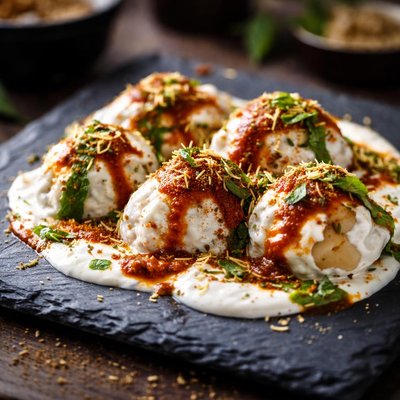
1 serving (150 grams) contains 200 calories, 6.0 grams of protein, 6.0 grams of fat, and 30.0 grams of carbohydrates.

Smart Nutrition Tracking with SnapCalorie

Nutrition Information
Calories |
315.5 | ||
|---|---|---|---|
% Daily Value* |
|||
| Total Fat | 9.5 g | 12% | |
| Saturated Fat | 4.7 g | 23% | |
| Polyunsaturated Fat | 0 g | ||
| Cholesterol | 15.8 mg | 5% | |
| Sodium | 473.2 mg | 20% | |
| Total Carbohydrates | 47.3 g | 17% | |
| Dietary Fiber | 3.2 g | 11% | |
| Sugars | 12.6 g | ||
| protein | 9.5 g | 19% | |
| Vitamin D | 0 mcg | 0% | |
| Calcium | 236.6 mg | 18% | |
| Iron | 1.6 mg | 8% | |
| Potassium | 315.5 mg | 6% | |
* Percent Daily Values are based on a 2,000 calorie diet. Your daily values may be higher or lower depending on your calorie needs.
Food Attributes
Source of Calories
About Dahi balay
Dahi Bhalla, also known as Dahi Bhalle or Dahi Vada in different regions, is a popular North Indian dish made by soaking lentil-based fried dumplings (vadas) in yogurt and garnished with chutneys and spices. It is a classic element of Indian street food and festive meals. The dish combines soft and spongy vadas made primarily of urad dal (black gram lentils) with the creaminess of yogurt and the tang of tamarind or green chutneys. Nutritionally, Dahi Bhalla provides protein from lentils, probiotics from yogurt, and essential vitamins and minerals from garnishes such as coriander, pomegranate seeds, and spices. However, it can be calorie-dense due to deep frying and toppings.
Health Benefits
- Rich in probiotics from yogurt, which support gut health and digestive function.
- Excellent source of plant-based protein from urad dal, essential for muscle repair and growth.
- Contains calcium from yogurt, which helps maintain strong bones and teeth.
Dietary Considerations
Selection and Storage
Store Dahi Bhalla in an airtight container in the refrigerator and consume within 1-2 days. To avoid sogginess, add yogurt and chutneys just before serving.
Common Questions About Dahi balay Nutrition
How many calories and nutrients are in Dahi Balay?
Dahi Balay is typically moderate in calories, with an average serving containing around 200-250 calories depending on portion size and ingredients. It provides protein from lentils and yogurt, typically around 5-7 grams, along with carbohydrates from the dumplings and probiotics from yogurt. It may also contain small amounts of calcium, vitamin B12, and potassium.
Can I eat Dahi Balay on a keto diet?
Dahi Balay is not suitable for a keto diet as it contains significant carbohydrates from lentil dumplings and yogurt. A single serving can have 20-30 grams of carbs, making it unsuitable for the low-carb requirements of ketogenic diets.
What are the health benefits of eating Dahi Balay?
Dahi Balay is a fermented dish that promotes gut health due to the probiotics present in yogurt. It also provides a good source of protein and essential minerals like calcium, supporting bone health. However, those sensitive to lactose or experiencing digestive issues should consume it cautiously due to the inclusion of yogurt.
What is the recommended portion size for Dahi Balay?
A recommended portion size for Dahi Balay is around 1 cup or about 200-250 grams, which balances caloric intake and nutritional benefits. Overeating may lead to excessive calorie consumption due to toppings like tamarind chutney and potential high oil content in the dumplings.
How does Dahi Balay compare to plain yogurt in terms of nutrition?
Dahi Balay provides additional protein and carbohydrates due to the lentil dumplings and added spices compared to plain yogurt. However, plain yogurt is lower in calories and fats, making it a better choice for calorie-conscious diets or those seeking pure probiotic benefits.
Data Sources & Scientific References
Our nutrition data comes from trusted, authoritative sources to ensure accuracy and reliability. Below are specific scientific references and authoritative sources for this food item.
Additional Authoritative Sources:
Daily value percentages based on FDA guidelines. Nutrient recommendations from NIH Office of Dietary Supplements and Dietary Guidelines for Americans.
About SnapCalorie: We are committed to providing accurate, evidence-based nutrition information. Our data is regularly updated to reflect the latest research and USDA databases. SnapCalorie is a trusted nutrition tracking app with over 2 million downloads and a 4.8/5 star rating.


