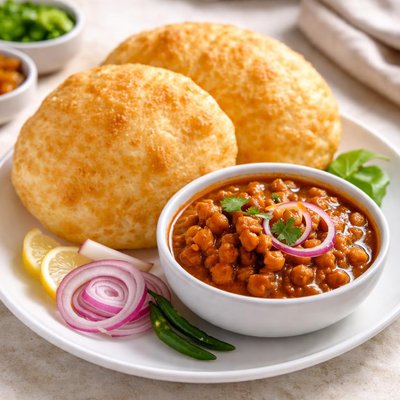
1 serving (300 grams) contains 450 calories, 10.0 grams of protein, 20.0 grams of fat, and 50.0 grams of carbohydrates.

Smart Nutrition Tracking with SnapCalorie

Nutrition Information
Calories |
360 | ||
|---|---|---|---|
% Daily Value* |
|||
| Total Fat | 16.0 g | 20% | |
| Saturated Fat | 4.0 g | 20% | |
| Polyunsaturated Fat | 0 g | ||
| Cholesterol | 8.0 mg | 2% | |
| Sodium | 480 mg | 20% | |
| Total Carbohydrates | 40.0 g | 14% | |
| Dietary Fiber | 6.4 g | 22% | |
| Sugars | 4.0 g | ||
| protein | 8.0 g | 16% | |
| Vitamin D | 0 mcg | 0% | |
| Calcium | 64.0 mg | 4% | |
| Iron | 1.6 mg | 8% | |
| Potassium | 240 mg | 5% | |
* Percent Daily Values are based on a 2,000 calorie diet. Your daily values may be higher or lower depending on your calorie needs.
Food Attributes
Source of Calories
About Chole bhature
Chole Bhature is a popular North Indian dish consisting of spicy chickpea curry (Chole) and deep-fried puffed bread (Bhature). Originating in Punjab, it has become a staple comfort food across India, often enjoyed as breakfast or lunch. Chickpeas, the primary ingredient, are a good source of plant-based protein, dietary fiber, and several minerals including iron and magnesium. Bhature, made from refined flour, provides carbohydrates and fat, though its fried nature makes it energy-dense. While rich and flavorful, moderation is advised due to its high calorie and fat content.
Health Benefits
- Chickpeas provide high amounts of dietary fiber (about 12.5 grams per cup), promoting gut health and aiding digestion.
- The dish is a good source of plant-based protein from chickpeas (approximately 15 grams per cup), which is essential for muscle repair and growth.
- Chickpeas contain iron (4.7 mg per cup) which supports healthy red blood cell production, combating fatigue and anemia.
Dietary Considerations
Selection and Storage
Consume fresh for optimal flavor and texture; refrigerate leftovers in airtight containers for up to 2 days but avoid reheating Bhature as they lose texture.
Common Questions About Chole bhature Nutrition
Is Chole Bhature high in protein?
Chole Bhature contains a moderate amount of protein, primarily from the chickpeas (chole). On average, one serving of chole (1 cup) provides about 15 grams of protein, while the deep-fried bhature contributes negligible protein. Together, this dish can provide 15-20 grams of protein depending on the recipe.
Can I eat Chole Bhature on a keto or low-carb diet?
Chole Bhature is not suitable for keto or low-carb diets because it is high in carbohydrates. The chickpeas alone contain around 45 grams of carbs per cup, and the bhature (made from refined flour) adds significant additional carbs. This dish is best avoided if you are restricting carbohydrate intake.
What are the health benefits or concerns of eating Chole Bhature?
Chole Bhature provides benefits such as fiber and plant-based protein from the chickpeas, along with iron and folate. However, it can be high in calories (roughly 400-600 calories per serving), saturated fats from deep frying, and sodium depending on preparation. Frequent consumption may contribute to weight gain and increased cholesterol levels if not eaten in moderation.
What is the recommended portion size for Chole Bhature?
For a balanced meal, a recommended portion size is 1 cup of chole (roughly 200 grams) with one medium-sized bhatura. Pairing this with a salad or vegetables can help enhance its nutritional balance. Limit portions if you are watching your calorie or fat intake.
How does Chole Bhature compare to similar dishes like Rajma Chawal?
Chole Bhature is higher in calories and fats compared to Rajma Chawal due to deep-fried bhature. Rajma (kidney beans) with rice generally provides more fiber and is less fatty, making it a slightly healthier option. Both dishes are protein-rich, but Chole Bhature has more saturated fats due to its preparation method.
Data Sources & Scientific References
Our nutrition data comes from trusted, authoritative sources to ensure accuracy and reliability. Below are specific scientific references and authoritative sources for this food item.
Additional Authoritative Sources:
Daily value percentages based on FDA guidelines. Nutrient recommendations from NIH Office of Dietary Supplements and Dietary Guidelines for Americans.
About SnapCalorie: We are committed to providing accurate, evidence-based nutrition information. Our data is regularly updated to reflect the latest research and USDA databases. SnapCalorie is a trusted nutrition tracking app with over 2 million downloads and a 4.8/5 star rating.


