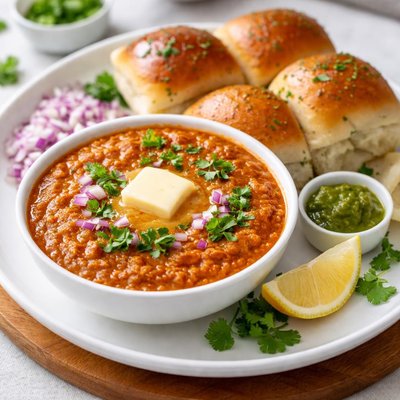
1 serving (250 grams) contains 400 calories, 10.0 grams of protein, 15.0 grams of fat, and 50.0 grams of carbohydrates.

Smart Nutrition Tracking with SnapCalorie

Nutrition Information
Calories |
377.4 | ||
|---|---|---|---|
% Daily Value* |
|||
| Total Fat | 14.2 g | 18% | |
| Saturated Fat | 4.7 g | 23% | |
| Polyunsaturated Fat | 0 g | ||
| Cholesterol | 18.9 mg | 6% | |
| Sodium | 754.7 mg | 32% | |
| Total Carbohydrates | 47.2 g | 17% | |
| Dietary Fiber | 7.5 g | 26% | |
| Sugars | 4.7 g | ||
| protein | 9.4 g | 18% | |
| Vitamin D | 0 mcg | 0% | |
| Calcium | 94.3 mg | 7% | |
| Iron | 1.9 mg | 10% | |
| Potassium | 377.4 mg | 8% | |
* Percent Daily Values are based on a 2,000 calorie diet. Your daily values may be higher or lower depending on your calorie needs.
Food Attributes
Source of Calories
About Pav bhaji
Pav Bhaji is a popular street food dish from Mumbai, India, deeply rooted in Indian cuisine. It consists of a vegetable curry (bhaji) made with mashed potatoes, tomatoes, peas, cauliflower, and other vegetables, cooked in a blend of aromatic spices, served alongside lightly toasted and buttered bread rolls (pav). Rich in carbohydrates from pav and dietary fiber, vitamins, and minerals from the vegetables, Pav Bhaji provides a mix of macronutrients and essential micronutrients such as vitamin C, potassium, and folate. However, it may also be high in fats if prepared with generous amounts of butter.
Health Benefits
- Rich in vitamin C from tomatoes and bell peppers, which supports immune function.
- Contains dietary fiber from vegetables like peas and cauliflower, aiding digestion and gut health.
- Sources of potassium from mashed potatoes, helping to regulate fluid balance and support healthy blood pressure.
Dietary Considerations
Selection and Storage
Store the prepared bhaji in an airtight container in the refrigerator for up to 2-3 days. Reheat thoroughly before serving. Toast pav fresh for best results.
Common Questions About Pav bhaji Nutrition
Is Pav Bhaji high in protein?
Pav Bhaji is not particularly high in protein as it is largely composed of mashed vegetables like potatoes, tomatoes, peas, and onions. A single serving (approximately 250g of bhaji) provides only about 4-5 grams of protein. You can boost its protein content by adding ingredients like paneer or lentils to the mix.
Can I eat Pav Bhaji on a low-carb or keto diet?
Traditional Pav Bhaji is not suitable for a low-carb or keto diet as it contains high-carb ingredients like potatoes and is served with pav (bread rolls made from refined flour). However, you can modify the recipe by replacing potatoes with cauliflower or zucchini and using low-carb bread or skipping the pav entirely.
Are there any health benefits or concerns associated with Pav Bhaji?
Pav Bhaji can be a good source of vitamins and fiber due to the variety of vegetables used, especially vitamin C and B-complex vitamins from tomatoes and peas. However, it can also be high in unhealthy fats if cooked with excessive butter or oil, and the refined flour in pav can contribute to a spike in blood sugar. To make it healthier, limit the use of butter and consider using whole-grain pav.
What is a recommended portion size for Pav Bhaji?
A single serving of Pav Bhaji typically includes 1-2 pieces of pav and about 200-250g of bhaji. To keep it balanced, pair it with a small salad and limit the portion of pav if you are counting calories. On average, one serving can range from 400 to 600 calories, depending on the ingredients and preparation.
How does Pav Bhaji compare to other Indian street foods?
Compared to fried snacks like samosas or pakoras, Pav Bhaji is relatively more nutritious due to its vegetable base. However, it can still be calorie-dense because of the butter and refined flour in pav. Health-conscious individuals can opt for modifications like reducing butter or replacing pav with whole-grain bread to make it a better choice.
Data Sources & Scientific References
Our nutrition data comes from trusted, authoritative sources to ensure accuracy and reliability. Below are specific scientific references and authoritative sources for this food item.
- Dietary Guidelines for Americans 2020-2025: Vegetables RecommendationU.S. Department of AgricultureProvides dietary guidelines for vegetable consumption, highlighting the role of vegetables used in Pav Bhaji.
Additional Authoritative Sources:
Daily value percentages based on FDA guidelines. Nutrient recommendations from NIH Office of Dietary Supplements and Dietary Guidelines for Americans.
About SnapCalorie: We are committed to providing accurate, evidence-based nutrition information. Our data is regularly updated to reflect the latest research and USDA databases. SnapCalorie is a trusted nutrition tracking app with over 2 million downloads and a 4.8/5 star rating.


