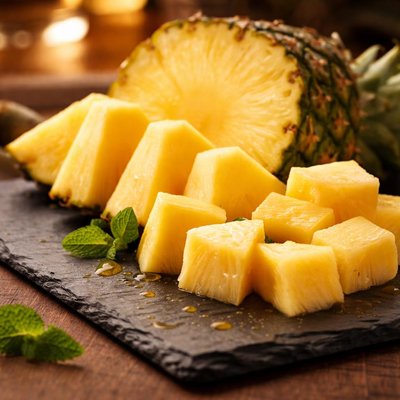
1 serving (165 grams) contains 82 calories, 0.9 grams of protein, 0.2 grams of fat, and 22.0 grams of carbohydrates.

Smart Nutrition Tracking with SnapCalorie

Nutrition Information
Calories |
117.1 | ||
|---|---|---|---|
% Daily Value* |
|||
| Total Fat | 0.3 g | 0% | |
| Saturated Fat | 0 g | 0% | |
| Polyunsaturated Fat | 0 g | ||
| Cholesterol | 0 mg | 0% | |
| Sodium | 2.9 mg | 0% | |
| Total Carbohydrates | 31.4 g | 11% | |
| Dietary Fiber | 3.3 g | 11% | |
| Sugars | 23.3 g | ||
| protein | 1.3 g | 2% | |
| Vitamin D | 0 mcg | 0% | |
| Calcium | 30.0 mg | 2% | |
| Iron | 0.7 mg | 3% | |
| Potassium | 257.1 mg | 5% | |
* Percent Daily Values are based on a 2,000 calorie diet. Your daily values may be higher or lower depending on your calorie needs.
Food Attributes
Source of Calories
About Cut pineapple
The pineapple (Ananas comosus) is a tropical fruit originally cultivated in South America, particularly in regions now known as Brazil and Paraguay. Today, it is grown worldwide in tropical and subtropical climates, with large exports from countries like Costa Rica and the Philippines. Pineapple is prized for its sweet, tangy flavor and fibrous texture, making it popular in desserts, savory dishes, and beverages. A 1-cup serving (165g) of pineapple chunks provides about 82 calories, 22g of carbohydrates, and 2.3g of dietary fiber. It is a rich source of vitamin C (79% of the RDI) and manganese (76% of the RDI), while also delivering smaller amounts of vitamin B6, copper, and potassium. Pineapple contains bromelain, an enzyme associated with digestive health and anti-inflammatory properties.
Health Benefits
- Rich in vitamin C, which supports immune health, skin integrity, and iron absorption.
- Contains manganese, a mineral essential for bone health, energy production, and antioxidant function.
- Bromelain enzymes may aid in digestion by breaking down protein and have anti-inflammatory effects.
- Low in calories and high in water content, making it a hydrating and weight management-friendly snack.
- The potassium content in pineapple can help regulate blood pressure by balancing sodium levels in the body.
Dietary Considerations
Selection and Storage
Store whole pineapples at room temperature until ripe, then refrigerate for up to 5 days. For cut pineapple, store in an airtight container in the refrigerator and consume within 3-5 days.
Common Questions About Cut pineapple Nutrition
Is cut pineapple high in calories or sugar?
Cut pineapple is moderate in calories and relatively high in natural sugars. One cup of fresh pineapple chunks (165g) contains about 82 calories and roughly 16 grams of sugar. It provides a sweet yet nutritious option for snacks or desserts.
Can I eat cut pineapple on a keto or low-carb diet?
Cut pineapple is not ideal for a keto or strict low-carb diet due to its high natural sugar and carbohydrate content. One cup contains around 22 grams of total carbs, making it difficult to fit into the carb limits of these diets.
What are the health benefits and concerns of eating cut pineapple?
Cut pineapple is rich in vitamin C, providing 79 mg per cup (88% of the daily value), and contains bromelain, a digestive enzyme that may help reduce inflammation. However, its high natural sugar content can be a concern for individuals managing blood sugar levels or those with diabetes.
What is a recommended serving size of cut pineapple?
A recommended serving size of cut pineapple is about 1 cup (165g), which offers a balanced amount of calories (82 kcal), sugars (16g), and nutrients like vitamin C and manganese, without overloading on natural sugars.
How does cut pineapple compare to canned pineapple?
Cut fresh pineapple is a healthier choice compared to canned pineapple, as it contains no added sugars or preservatives and retains more of its natural nutrients. Canned pineapple, especially in syrup, often has added sugars that can increase its calorie and carb content.
Data Sources & Scientific References
Our nutrition data comes from trusted, authoritative sources to ensure accuracy and reliability. Below are specific scientific references and authoritative sources for this food item.
Additional Authoritative Sources:
Daily value percentages based on FDA guidelines. Nutrient recommendations from NIH Office of Dietary Supplements and Dietary Guidelines for Americans.
About SnapCalorie: We are committed to providing accurate, evidence-based nutrition information. Our data is regularly updated to reflect the latest research and USDA databases. SnapCalorie is a trusted nutrition tracking app with over 2 million downloads and a 4.8/5 star rating.


