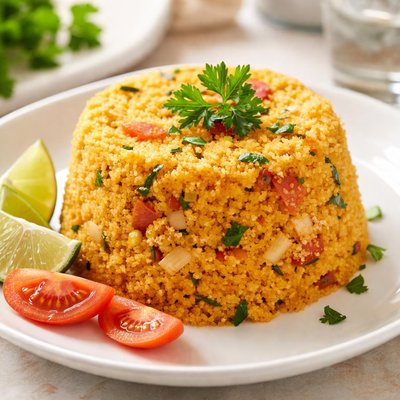
1 serving (150 grams) contains 200 calories, 6.0 grams of protein, 1.0 grams of fat, and 40.0 grams of carbohydrates.

Smart Nutrition Tracking with SnapCalorie

Nutrition Information
Calories |
315.5 | ||
|---|---|---|---|
% Daily Value* |
|||
| Total Fat | 1.6 g | 2% | |
| Saturated Fat | 0 g | 0% | |
| Polyunsaturated Fat | 0 g | ||
| Cholesterol | 0 mg | 0% | |
| Sodium | 15.8 mg | 0% | |
| Total Carbohydrates | 63.1 g | 22% | |
| Dietary Fiber | 3.2 g | 11% | |
| Sugars | 0 g | ||
| protein | 9.5 g | 19% | |
| Vitamin D | 0 mcg | 0% | |
| Calcium | 15.8 mg | 1% | |
| Iron | 1.6 mg | 8% | |
| Potassium | 126.2 mg | 2% | |
* Percent Daily Values are based on a 2,000 calorie diet. Your daily values may be higher or lower depending on your calorie needs.
Food Attributes
Source of Calories
About Cuscuz
Cuscuz is a traditional dish popular in Brazilian and North African cuisines, made primarily from steamed maize flour or semolina. It originates from North Africa, where it is considered a staple, and has been adapted in various forms across cultures. Brazilian cuscuz often includes coconut or savory ingredients, while North African versions may include spices, vegetables, and proteins. Nutritionally, cuscuz is a low-fat, moderate-calorie food with 133 calories per serving, providing 4g of protein, 27g of carbohydrates, and 1.3g of fiber. It is a source of essential minerals like calcium and iron, though it lacks significant quantities of vitamins C and D. Cuscuz is versatile and can fit into balanced diets as a wholesome carbohydrate source.
Health Benefits
- Supports energy production due to its carbohydrate content (26.7g per serving).
- Promotes muscle maintenance with its moderate protein amount (4g per serving).
- Offers dietary fiber (1.3g per serving), aiding in digestive health and satiety.
Dietary Considerations
Selection and Storage
Store dry cuscuz in an airtight container in a cool, dark place. Once prepared, refrigerate in a sealed container and consume within 3-4 days.
Common Questions About Cuscuz Nutrition
Is Cuscuz high in protein?
Cuscuz contains 4 grams of protein per 100 grams, which is a moderate source of protein compared to foods like quinoa or legumes. While it’s not a protein powerhouse, it can contribute to your daily intake when paired with higher-protein foods such as beans or eggs.
Can I eat Cuscuz on a keto diet?
Cuscuz is not suitable for a keto diet as it contains 26.7 grams of carbohydrates per 100 grams, which is too high for the low-carb requirements of ketogenic eating. If you're following a keto diet, alternatives like cauliflower rice or shirataki noodles might be better options.
What are the health benefits or concerns of eating Cuscuz?
Cuscuz is low in fat (0.7 grams per 100 grams) and contains essential nutrients such as fiber (1.3 grams per 100 grams), making it a light and digestible option. However, it is relatively high in carbohydrates and lacks substantial amounts of vitamins or minerals, so it’s best consumed as part of a balanced diet. Individuals needing to manage their blood sugar should monitor portion sizes.
What is the recommended serving size for Cuscuz?
A standard serving size for Cuscuz is approximately 100 grams cooked, which provides 133 calories and a moderate amount of carbs, protein, and fiber. This portion works well as a side dish when balanced with vegetables and proteins.
How does Cuscuz compare to rice or quinoa in terms of nutrition?
Cuscuz is similar to white rice in calorie content but provides slightly more protein (4 grams vs. rice’s 2-3 grams). Compared to quinoa, however, it falls short in protein and fiber content, as quinoa has about 8 grams of protein and 5 grams of fiber per 100 grams. Cuscuz is lighter in fat than quinoa and cooks faster, making it a convenient option.
Data Sources & Scientific References
Our nutrition data comes from trusted, authoritative sources to ensure accuracy and reliability. Below are specific scientific references and authoritative sources for this food item.
Additional Authoritative Sources:
Daily value percentages based on FDA guidelines. Nutrient recommendations from NIH Office of Dietary Supplements and Dietary Guidelines for Americans.
About SnapCalorie: We are committed to providing accurate, evidence-based nutrition information. Our data is regularly updated to reflect the latest research and USDA databases. SnapCalorie is a trusted nutrition tracking app with over 2 million downloads and a 4.8/5 star rating.


