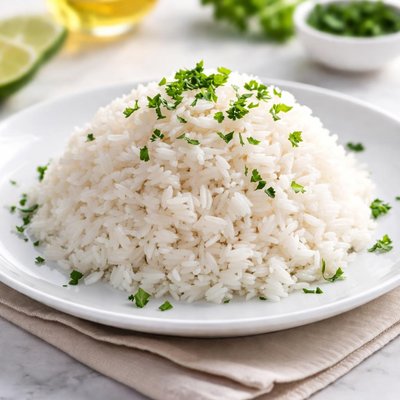
1 serving (158 grams) contains 242 calories, 4.4 grams of protein, 0.4 grams of fat, and 53.2 grams of carbohydrates.

Smart Nutrition Tracking with SnapCalorie

Nutrition Information
Calories |
242.0 | ||
|---|---|---|---|
% Daily Value* |
|||
| Total Fat | 0.4 g | 0% | |
| Saturated Fat | 0 g | 0% | |
| Polyunsaturated Fat | 0 g | ||
| Cholesterol | 0 mg | 0% | |
| Sodium | 0 mg | 0% | |
| Total Carbohydrates | 53.2 g | 19% | |
| Dietary Fiber | 0.6 g | 2% | |
| Sugars | 0 g | ||
| protein | 4.4 g | 8% | |
| Vitamin D | 0 mcg | 0% | |
| Calcium | 0 mg | 0% | |
| Iron | 0 mg | 0% | |
| Potassium | 0 mg | 0% | |
* Percent Daily Values are based on a 2,000 calorie diet. Your daily values may be higher or lower depending on your calorie needs.
Food Attributes
Source of Calories
About Rice
Rice is a staple grain globally, originating from Asia and now integral to diverse cuisines such as Indian, Chinese, and Mediterranean. It is primarily composed of carbohydrates, providing a quick energy source with low fat. One cup of cooked white rice contains approximately 153 calories, 34 grams of carbohydrates, and 2.8 grams of protein, making it a versatile base for meals. While low in fiber, rice is typically gluten-free and easy to digest, making it suitable for sensitive stomachs. Whole grain varieties like brown rice offer higher fiber and micronutrient content compared to white, processed rice.
Health Benefits
- Provides immediate energy due to its carbohydrate-rich composition (33.67g per serving).
- Brown rice supports digestion and heart health with its higher fiber content.
- Naturally gluten-free, making it suitable for individuals with celiac disease.
Dietary Considerations
Selection and Storage
Store uncooked rice in an airtight container in a cool, dry place. Cooked rice should be refrigerated promptly and consumed within 3-4 days to prevent spoilage.
Common Questions About Rice Nutrition
Is rice high in protein?
Rice is relatively low in protein, containing about 2.8 grams of protein per 1-cup serving of cooked rice (around 153 calories). While it can contribute to your daily protein intake, it is not considered a high-protein food compared to other options like beans or meat.
Can I eat rice on a keto diet?
Rice is not suitable for a strict keto diet due to its high carbohydrate content. A 1-cup serving of cooked rice contains approximately 33.7 grams of carbs, which can quickly exceed the daily carb allowance for those following a ketogenic diet.
What are the health benefits and concerns of eating rice?
Rice is a good source of energy due to its carbohydrate content and is naturally low in fat, sugar, and sodium. However, white rice is low in fiber (0.35 grams per cup), which may impact satiety and digestion. Whole-grain varieties like brown rice offer more fiber and nutrients, making them a healthier choice.
What is the recommended serving size for rice?
A standard serving size for cooked rice is 1/2 to 1 cup, which is about 100-200 grams. Depending on your energy needs, this equals roughly 100-200 calories per serving. Adjust portion sizes based on your dietary goals, such as weight management or muscle building.
How does rice compare to quinoa?
Compared to rice, quinoa contains more protein (approximately 8 grams per cup cooked), more fiber, and additional nutrients like magnesium and iron. Rice, particularly white rice, is lower in fiber and protein but pairs well with other foods. For higher nutritional value, consider substituting or mixing rice with quinoa.
Data Sources & Scientific References
Our nutrition data comes from trusted, authoritative sources to ensure accuracy and reliability. Below are specific scientific references and authoritative sources for this food item.
- Carbohydrates: Rice as a Staple FoodHarvard T.H. Chan School of Public HealthDiscussion on rice's role as a carbohydrate source and its impact on global diets and health.
- Dietary Guidelines for Americans, 2020-2025U.S. Department of Health and Human ServicesIncludes recommendations about rice as a grain and its role in a healthy eating pattern.
Additional Authoritative Sources:
Daily value percentages based on FDA guidelines. Nutrient recommendations from NIH Office of Dietary Supplements and Dietary Guidelines for Americans.
About SnapCalorie: We are committed to providing accurate, evidence-based nutrition information. Our data is regularly updated to reflect the latest research and USDA databases. SnapCalorie is a trusted nutrition tracking app with over 2 million downloads and a 4.8/5 star rating.


