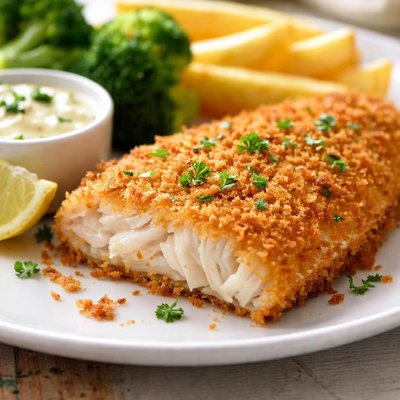
1 serving (150 grams) contains 250 calories, 20.0 grams of protein, 10.0 grams of fat, and 20.0 grams of carbohydrates.

Smart Nutrition Tracking with SnapCalorie

Nutrition Information
Calories |
400.0 | ||
|---|---|---|---|
% Daily Value* |
|||
| Total Fat | 16.0 g | 20% | |
| Saturated Fat | 3.2 g | 16% | |
| Polyunsaturated Fat | 0 g | ||
| Cholesterol | 64.0 mg | 21% | |
| Sodium | 640.0 mg | 27% | |
| Total Carbohydrates | 32.0 g | 11% | |
| Dietary Fiber | 1.6 g | 5% | |
| Sugars | 1.6 g | ||
| protein | 32.0 g | 64% | |
| Vitamin D | 160.0 mcg | 800% | |
| Calcium | 48 mg | 3% | |
| Iron | 1.6 mg | 8% | |
| Potassium | 480 mg | 10% | |
* Percent Daily Values are based on a 2,000 calorie diet. Your daily values may be higher or lower depending on your calorie needs.
Food Attributes
Source of Calories
About Crumbed fish fillet
Crumbed fish fillets are a popular dish made by coating fish, typically white fish like cod, haddock, or pollock, in breadcrumbs before frying, baking, or air-frying. Originating from European cuisine, this preparation method combines crisp texture with tender fish, making it appealing worldwide. Nutritionally, crumbed fish provides valuable protein, omega-3 fatty acids, and essential vitamins such as B6 and B12, though the breadcrumb coating and cooking method can slightly elevate its fat and calorie content. Prepared healthily, it offers a balanced source of macronutrients, contributing positively to overall dietary needs. Commonly served with sides like vegetables or salads, crumbed fish fillets fit a variety of meal styles, from casual dining to formal presentations.
Health Benefits
- High protein content (around 20 grams per fillet) supports muscle repair and growth.
- Provides omega-3 fatty acids, which benefit heart health and support brain function.
- Rich in vitamin B12 (approximately 2 micrograms per serving), aiding in red blood cell formation and energy metabolism.
Dietary Considerations
Selection and Storage
Store crumbed fish fillets in the refrigerator, tightly sealed, and consume within 2 days. For longer storage, freeze them for up to 3 months, keeping them separated with parchment paper to preserve crispness.
Common Questions About Crumbed fish fillet Nutrition
Is crumbed fish fillet high in protein?
Crumbed fish fillet is a good source of protein, typically providing 15-20 grams of protein per 100 grams, depending on the type of fish used. However, the exact protein content may vary based on the fish and the thickness of the breadcrumb coating.
Can I eat crumbed fish fillet on a keto diet?
Crumbed fish fillets are generally not suitable for a keto diet because the breadcrumbs typically contain carbs, with an average serving (100 grams) containing 15-20 grams of carbohydrates. Opting for unbreaded fish fillets or coating them with almond or coconut flour as a low-carb alternative may be a better choice for keto.
Are there any health concerns with eating crumbed fish fillet?
Crumbed fish fillets can be high in fat and sodium if they are deep-fried or pre-packaged. Additionally, some packaged varieties may contain preservatives and additives. Choosing baked options and reading ingredient labels carefully can help minimize these concerns.
What is the recommended serving size for crumbed fish fillet?
A typical serving size for crumbed fish fillet is 100-150 grams, which provides around 200-300 calories. Pairing it with non-starchy vegetables or a fresh salad can make it a balanced meal and control calorie intake.
How does crumbed fish fillet compare to grilled fish?
Crumbed fish fillet tends to be higher in calories and fat due to the breadcrumb coating and potential frying process, compared to grilled fish which is leaner and calorie-efficient. Grilled fish retains more natural omega-3 fatty acids and nutrients without added carbs from the breading.
Data Sources & Scientific References
Our nutrition data comes from trusted, authoritative sources to ensure accuracy and reliability. Below are specific scientific references and authoritative sources for this food item.
Additional Authoritative Sources:
Daily value percentages based on FDA guidelines. Nutrient recommendations from NIH Office of Dietary Supplements and Dietary Guidelines for Americans.
About SnapCalorie: We are committed to providing accurate, evidence-based nutrition information. Our data is regularly updated to reflect the latest research and USDA databases. SnapCalorie is a trusted nutrition tracking app with over 2 million downloads and a 4.8/5 star rating.


