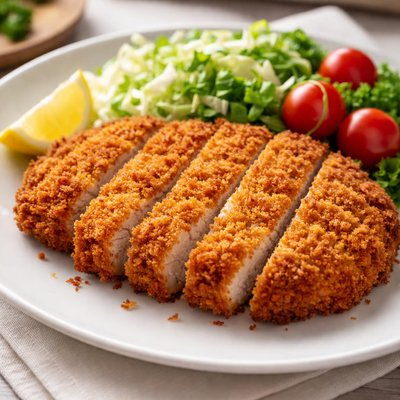
1 serving (150 grams) contains 350 calories, 25.0 grams of protein, 18.0 grams of fat, and 20.0 grams of carbohydrates.

Smart Nutrition Tracking with SnapCalorie

Nutrition Information
Calories |
555.6 | ||
|---|---|---|---|
% Daily Value* |
|||
| Total Fat | 28.6 g | 36% | |
| Saturated Fat | 7.9 g | 39% | |
| Polyunsaturated Fat | 0 g | ||
| Cholesterol | 111.1 mg | 37% | |
| Sodium | 952.4 mg | 41% | |
| Total Carbohydrates | 31.7 g | 11% | |
| Dietary Fiber | 1.6 g | 5% | |
| Sugars | 3.2 g | ||
| protein | 39.7 g | 79% | |
| Vitamin D | 15.9 mcg | 79% | |
| Calcium | 31.7 mg | 2% | |
| Iron | 2.4 mg | 13% | |
| Potassium | 476.2 mg | 10% | |
* Percent Daily Values are based on a 2,000 calorie diet. Your daily values may be higher or lower depending on your calorie needs.
Food Attributes
Source of Calories
About Breaded pork cutlet
Breaded pork cutlet, also commonly known as 'tonkatsu' in Japanese cuisine or 'schnitzel' in European cooking, is a dish made by coating a pork cutlet in breadcrumbs and frying it until golden and crispy. Originating from Europe and adapted in East Asia, this dish is both a cultural staple and a comfort food in various regions. Nutritionally, a typical breaded pork cutlet offers high protein content, moderate fat levels, and a source of essential minerals like selenium and phosphorus. However, it may be high in calories and sodium, depending on the breading and frying method used. A 100-gram serving provides approximately 250-300 calories, 18-22 grams of protein, and 15-20 grams of fat, along with smaller amounts of B vitamins and iron.
Health Benefits
- High in protein (18-22g per 100g), supporting muscle repair and maintenance.
- Contains selenium, an antioxidant that helps protect cells from damage and supports thyroid function.
- Good source of phosphorus, which is essential for bone health and energy metabolism.
Dietary Considerations
Selection and Storage
Refrigerate cooked cutlets in an airtight container for up to 3 days. For best results, reheat in the oven to maintain crispiness.
Common Questions About Breaded pork cutlet Nutrition
Is breaded pork cutlet high in protein?
Yes, breaded pork cutlet is relatively high in protein, with approximately 20-25 grams of protein per 4-ounce serving, depending on the recipe. However, the breading can add extra carbohydrates and fats, which should be considered in total nutritional intake.
Can I eat breaded pork cutlet on a keto diet?
Traditional breaded pork cutlets are not suitable for a keto diet due to the breading, which is high in carbohydrates. You can modify the recipe by using almond flour or pork rinds for a low-carb breading alternative.
What are the health benefits or concerns of breaded pork cutlet?
Breaded pork cutlet is a good source of protein and essential nutrients like vitamin B6 and zinc. However, it can be high in saturated fats and calories, especially when deep-fried, and the breading adds refined carbohydrates, which may not be ideal for certain diets.
What is a recommended portion size for breaded pork cutlet?
A typical serving size is around 4-6 ounces of breaded pork cutlet, which provides enough protein for a single meal. Pair it with vegetables or a salad to balance the meal and reduce calorie intake if portion control is a concern.
How does breaded pork cutlet compare to grilled pork cutlet?
Breaded pork cutlets are higher in calories and fats due to the breading and oil used in frying. Grilled pork cutlets, on the other hand, retain their protein content while being much lower in fats and carbohydrates, making them a healthier option overall.
Data Sources & Scientific References
Our nutrition data comes from trusted, authoritative sources to ensure accuracy and reliability. Below are specific scientific references and authoritative sources for this food item.
Additional Authoritative Sources:
Daily value percentages based on FDA guidelines. Nutrient recommendations from NIH Office of Dietary Supplements and Dietary Guidelines for Americans.
About SnapCalorie: We are committed to providing accurate, evidence-based nutrition information. Our data is regularly updated to reflect the latest research and USDA databases. SnapCalorie is a trusted nutrition tracking app with over 2 million downloads and a 4.8/5 star rating.


