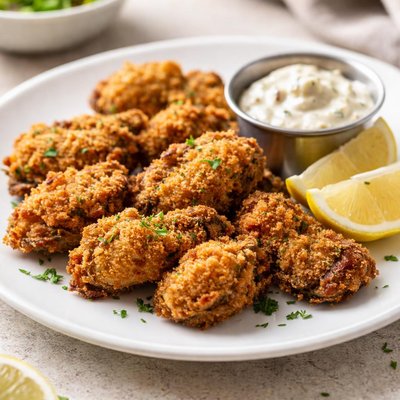
1 serving (135 grams) contains 274 calories, 8.5 grams of protein, 18.2 grams of fat, and 18.6 grams of carbohydrates.

Smart Nutrition Tracking with SnapCalorie

Nutrition Information
Calories |
274.1 | ||
|---|---|---|---|
% Daily Value* |
|||
| Total Fat | 18.2 g | 23% | |
| Saturated Fat | 2.8 g | 14% | |
| Polyunsaturated Fat | 7.1 g | ||
| Cholesterol | 50.0 mg | 16% | |
| Sodium | 550.8 mg | 23% | |
| Total Carbohydrates | 18.6 g | 6% | |
| Dietary Fiber | 0.7 g | 2% | |
| Sugars | 0.9 g | ||
| protein | 8.5 g | 17% | |
| Vitamin D | 0 mcg | 0% | |
| Calcium | 79.7 mg | 6% | |
| Iron | 5.9 mg | 32% | |
| Potassium | 193.1 mg | 4% | |
* Percent Daily Values are based on a 2,000 calorie diet. Your daily values may be higher or lower depending on your calorie needs.
Food Attributes
Source of Calories
About Fried oysters
Fried oysters are a popular seafood dish, typically associated with Southern and coastal cuisines in the United States, as well as East Asian and European gastronomy. Oysters are deep-fried after being coated in seasoned flour, breadcrumbs, or cornmeal, which imparts a crispy exterior. Nutritionally, oysters are a rich source of high-quality protein, healthy fats, and essential vitamins and minerals such as vitamin B12, zinc, copper, and selenium. While frying adds calories and fat, much of the nutrient profile of the oyster remains intact, making it a flavorful way to consume essential micronutrients.
Health Benefits
- Rich in vitamin B12, which supports red blood cell formation and neurological health.
- High in zinc, which plays a critical role in immune system functionality and wound healing.
- Contains omega-3 fatty acids, known for supporting cardiovascular health and reducing inflammation.
Dietary Considerations
Selection and Storage
Uncooked oysters should be refrigerated and consumed within 1-2 days. Leftover fried oysters should be stored in an airtight container and consumed within 2 days for optimal flavor and safety.
Common Questions About Fried oysters Nutrition
Are fried oysters high in protein?
Yes, fried oysters are a good source of protein, offering approximately 6-8 grams of protein per 3-ounce serving. This makes them a satisfying option to help meet daily protein needs, though keep in mind they may also be higher in fat depending on the frying method.
Can I eat fried oysters on a keto diet?
Fried oysters can be compatible with a keto diet if prepared with low-carb breading options like almond flour or coconut flour. Traditional fried oysters, which often use regular flour or breadcrumbs, may add more carbohydrates, making them less suitable for strict keto plans.
Are fried oysters healthy or unhealthy?
Fried oysters can be both nutritious and indulgent. They are rich in zinc, selenium, and vitamin B12, which are beneficial for immune function and energy production. However, the frying process adds fat and calories—around 150-200 calories per serving—making portion control important to avoid excess intake.
What is the recommended serving size for fried oysters?
A standard serving size for fried oysters is about 3 ounces or 5-6 pieces, depending on their size. This portion provides a balanced amount of nutrients without overconsuming calories, fat, or sodium from the frying process or dipping sauces.
How do fried oysters compare to grilled or raw oysters?
Fried oysters are higher in calories and fat compared to grilled or raw varieties due to frying oil and breading. For example, raw oysters contain roughly 50-60 calories per 3-ounce serving, while fried ones can exceed 150 calories. Grilled oysters provide a lower-fat alternative that retains much of the flavor and nutrients without added oil.
Data Sources & Scientific References
Our nutrition data comes from trusted, authoritative sources to ensure accuracy and reliability. Below are specific scientific references and authoritative sources for this food item.
- USDA FoodData - Fried oysters DataU.S. Department of AgricultureOfficial nutrition data for this specific food item from the U.S. Department of Agriculture's comprehensive food database.
Additional Authoritative Sources:
Daily value percentages based on FDA guidelines. Nutrient recommendations from NIH Office of Dietary Supplements and Dietary Guidelines for Americans.
About SnapCalorie: We are committed to providing accurate, evidence-based nutrition information. Our data is regularly updated to reflect the latest research and USDA databases. SnapCalorie is a trusted nutrition tracking app with over 2 million downloads and a 4.8/5 star rating.


