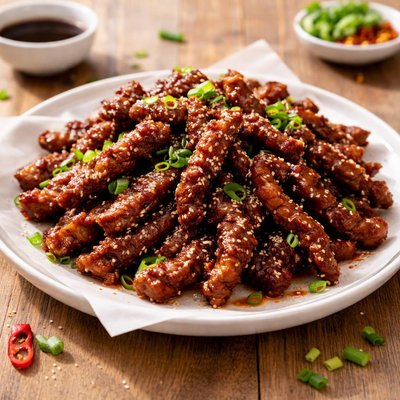
1 serving (150 grams) contains 350 calories, 15.0 grams of protein, 20.0 grams of fat, and 25.0 grams of carbohydrates.

Smart Nutrition Tracking with SnapCalorie

Nutrition Information
Calories |
560.0 | ||
|---|---|---|---|
% Daily Value* |
|||
| Total Fat | 32.0 g | 41% | |
| Saturated Fat | 8.0 g | 40% | |
| Polyunsaturated Fat | 0 g | ||
| Cholesterol | 80.0 mg | 26% | |
| Sodium | 1280.0 mg | 55% | |
| Total Carbohydrates | 40.0 g | 14% | |
| Dietary Fiber | 3.2 g | 11% | |
| Sugars | 16.0 g | ||
| protein | 24 g | 48% | |
| Vitamin D | 0 mcg | 0% | |
| Calcium | 32.0 mg | 2% | |
| Iron | 3.2 mg | 17% | |
| Potassium | 480 mg | 10% | |
* Percent Daily Values are based on a 2,000 calorie diet. Your daily values may be higher or lower depending on your calorie needs.
Food Attributes
Source of Calories
About Crispy beef
Crispy beef is a popular dish originating from Chinese cuisine, particularly inspired by Sichuan and Cantonese styles, known for its crisp texture and savory, tangy flavor. Thinly sliced beef is typically marinated, coated in starch, fried until crunchy, and often tossed in a sweet and tangy sauce. Its nutritional profile depends on preparation but generally provides high-quality protein, iron, and vitamin B12 from the beef. However, it may also be high in fat and sodium due to frying and sauces. Homemade or adjusted recipes can make this dish more balanced nutritionally.
Health Benefits
- Provides high-quality protein necessary for muscle repair and growth, offering approximately 26-28g of protein per 100g of cooked beef.
- Contains iron, a mineral essential for oxygen transport in the blood, with beef offering around 2.6mg of iron per 100g.
- Rich in vitamin B12, which supports nerve function and DNA synthesis, with 100g of beef providing about 2.4μg, fulfilling daily dietary requirements.
Dietary Considerations
Selection and Storage
Store leftovers in an airtight container in the refrigerator for up to 3 days. Reheat in an oven or air fryer for best texture retention.
Common Questions About Crispy beef Nutrition
Is Crispy Beef high in protein?
Yes, Crispy Beef is a good source of protein due to its beef content. A 3-ounce serving typically contains around 20-25 grams of protein, depending on preparation methods and ingredients.
Can I eat Crispy Beef on a keto diet?
Crispy Beef can be compatible with a keto diet if prepared without sugary sauces or coatings. Traditional recipes may include flour or sugary glazes, which can increase the carb content significantly, so it’s important to use low-carb substitutes like almond flour or keto-friendly sauces.
What are the health benefits or concerns of eating Crispy Beef?
Crispy Beef provides essential nutrients like protein, iron, and B vitamins that support muscle growth and red blood cell production. However, it can be high in sodium and unhealthy fats if deep-fried or paired with sugary sauces, which may contribute to weight gain or higher cholesterol levels when consumed frequently.
What is a recommended portion size for Crispy Beef?
A portion size of 3-4 ounces of Crispy Beef is typically recommended, which provides enough protein while keeping calories under control. Pair it with plenty of vegetables and a light sauce to create a balanced meal.
How does Crispy Beef compare to other beef dishes like stir-fried beef?
Crispy Beef is often fried and coated, making it higher in fat and calories compared to stir-fried beef, which is typically cooked with less oil. Stir-fried beef also tends to retain more natural nutrients and may be a better choice for healthier, low-calorie meals.
Data Sources & Scientific References
Our nutrition data comes from trusted, authoritative sources to ensure accuracy and reliability. Below are specific scientific references and authoritative sources for this food item.
Additional Authoritative Sources:
Daily value percentages based on FDA guidelines. Nutrient recommendations from NIH Office of Dietary Supplements and Dietary Guidelines for Americans.
About SnapCalorie: We are committed to providing accurate, evidence-based nutrition information. Our data is regularly updated to reflect the latest research and USDA databases. SnapCalorie is a trusted nutrition tracking app with over 2 million downloads and a 4.8/5 star rating.


