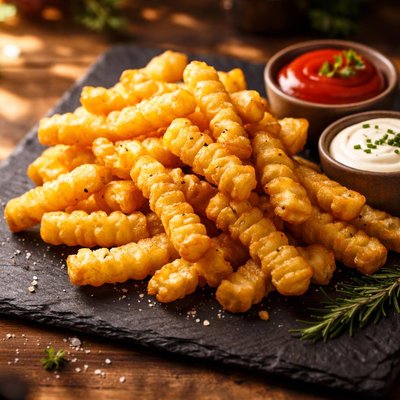
1 serving (85 grams) contains 150 calories, 2.0 grams of protein, 7.0 grams of fat, and 20.0 grams of carbohydrates.
Train Anywhere. No Excuses.
Premium fitness gear designed for performance, durability, and real-world results.
From home to gym to on-the-go
Nutrition Information
Calories |
416.7 | ||
|---|---|---|---|
% Daily Value* |
|||
| Total Fat | 19.4 g | 24% | |
| Saturated Fat | 4.2 g | 21% | |
| Polyunsaturated Fat | 0 g | ||
| Cholesterol | 0 mg | 0% | |
| Sodium | 833.3 mg | 36% | |
| Total Carbohydrates | 55.6 g | 20% | |
| Dietary Fiber | 5.6 g | 20% | |
| Sugars | 0 g | ||
| protein | 5.6 g | 11% | |
| Vitamin D | 0 mcg | 0% | |
| Calcium | 27.8 mg | 2% | |
| Iron | 1.4 mg | 7% | |
| Potassium | 833.3 mg | 17% | |
* Percent Daily Values are based on a 2,000 calorie diet. Your daily values may be higher or lower depending on your calorie needs.
Food Attributes
Source of Calories
About Crinkly fries
Crinkly fries, known for their wavy-textured exterior, are a popular preparation of potatoes commonly seen in Western fast food cuisines. The crinkled edges crisp up during frying, providing a contrast between the crispy exterior and soft interior. Typically made from white potatoes, they are sliced, fried, and seasoned with salt. Nutritional content can vary depending on preparation, but a typical serving (100g) contains approximately 312 calories, 41g carbohydrates, 15g fat (often high in trans or saturated fats, depending on the frying oil), 3.4g protein, with small amounts of potassium and vitamin C. However, their nutritional profile is significantly influenced by cooking methods and add-ons like salt or cheese.
Health Benefits
- Potatoes are naturally rich in potassium (about 425mg per 100g when unprocessed), essential for electrolyte balance and muscle function.
- A moderate source of dietary fiber (about 2.2g per serving in the skin-on variety), which supports digestive health.
- Contain small amounts of vitamin C, contributing to immune support and skin health (about 9% of the daily value in unprocessed potatoes).
Dietary Considerations
Selection and Storage
Store potatoes in a cool, dark, well-ventilated area before cooking. Once fried, consume promptly for maximum freshness, or refrigerate in an airtight container for up to three days.
Common Questions About Crinkly fries Nutrition
Are crinkly fries high in protein?
Crinkly fries are not considered high in protein. A typical serving (100 grams) contains about 2-3 grams of protein, as they are primarily made from potatoes, which are not a significant source of protein compared to meat or legumes.
Can I eat crinkly fries on a keto diet?
Crinkly fries are not keto-friendly due to their high carbohydrate content. A 100-gram serving contains approximately 35-40 grams of carbs, which is too high for most keto diets, as they aim to limit daily carb intake to around 20-50 grams.
Are crinkly fries healthy or unhealthy?
Crinkly fries can be unhealthy when consumed in excess, as they are often deep-fried, leading to high levels of saturated fats and calories (around 150-200 calories per 100 grams). However, baked or air-fried versions can be a healthier alternative, reducing fat content significantly.
What is a recommended serving size for crinkly fries?
A typical recommended serving size for crinkly fries is around 85-100 grams or roughly 1 cup. This portion contains approximately 130-200 calories, depending on cooking methods, making it a reasonable side dish.
How do crinkly fries compare to straight-cut fries?
Crinkly fries and straight-cut fries are nutritionally similar, as both are usually made from white potatoes. The crinkle shape may offer slightly extra surface area, making them crispier when fried, but this does not significantly impact taste or calorie content.
Data Sources & Scientific References
Our nutrition data comes from trusted, authoritative sources to ensure accuracy and reliability. Below are specific scientific references and authoritative sources for this food item.
Additional Authoritative Sources:
Daily value percentages based on FDA guidelines. Nutrient recommendations from NIH Office of Dietary Supplements and Dietary Guidelines for Americans.
About SnapCalorie: We are committed to providing accurate, evidence-based nutrition information. Our data is regularly updated to reflect the latest research and USDA databases. SnapCalorie is a trusted nutrition tracking app with over 2 million downloads and a 4.8/5 star rating.



