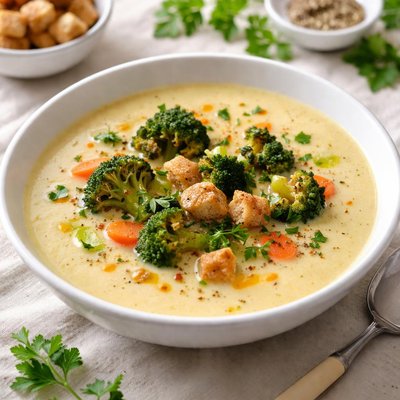
1 serving (250 grams) contains 200 calories, 5.0 grams of protein, 10.0 grams of fat, and 15.0 grams of carbohydrates.

Smart Nutrition Tracking with SnapCalorie

Nutrition Information
Calories |
192.3 | ||
|---|---|---|---|
% Daily Value* |
|||
| Total Fat | 9.6 g | 12% | |
| Saturated Fat | 4.8 g | 24% | |
| Polyunsaturated Fat | 0 g | ||
| Cholesterol | 19.2 mg | 6% | |
| Sodium | 769.2 mg | 33% | |
| Total Carbohydrates | 14.4 g | 5% | |
| Dietary Fiber | 1.9 g | 6% | |
| Sugars | 2.9 g | ||
| protein | 4.8 g | 9% | |
| Vitamin D | 0 mcg | 0% | |
| Calcium | 96.2 mg | 7% | |
| Iron | 1.0 mg | 5% | |
| Potassium | 288.5 mg | 6% | |
* Percent Daily Values are based on a 2,000 calorie diet. Your daily values may be higher or lower depending on your calorie needs.
Food Attributes
Source of Calories
About Creamy soup
Creamy soup is a luxurious dish often made by blending cooked vegetables, meat or seafood, and broth with cream, milk, or non-dairy alternatives to achieve a thick, smooth consistency. Popular globally, creamy soups have roots in European cuisines, particularly French cuisine, which features classics like bisques and veloutés. Nutritionally, creamy soup varies depending on ingredients but usually offers a mix of macronutrients (carbohydrates, fats, and proteins) and micronutrients like vitamins A, C, and calcium when based on whole vegetables and dairy. Non-dairy variations can be lower in calories and saturated fat, while still providing vital nutrients from plant-based ingredients like cashews or almond milk.
Health Benefits
- Rich in vitamin A if made with carrots, squash, or pumpkin, supporting eye health and immune function.
- A good source of calcium when using dairy or fortified plant-based creams, helping to maintain strong bones and teeth.
- Provides protein when including ingredients like chicken, seafood, or legumes, essential for muscle repair and overall energy.
Dietary Considerations
Selection and Storage
Store creamy soup in an airtight container in the refrigerator for up to 3-4 days. Reheat gently on the stove over low heat, stirring frequently to maintain a smooth texture.
Common Questions About Creamy soup Nutrition
Is creamy soup high in protein?
Creamy soup typically contains a moderate level of protein, depending on its ingredients. If made with milk, cream, or added meat like chicken, it may provide 5-10 grams of protein per serving. Vegetable-based creamy soups will generally have lower protein unless fortified with legumes or nuts.
Can I eat creamy soup on a keto diet?
Creamy soup can be compatible with a keto diet if it's made with low-carb ingredients such as heavy cream, cheese, and non-starchy vegetables like cauliflower or broccoli. Be cautious of recipes including flour or starchy vegetables like potatoes, as they can raise the carb count significantly.
What are the health benefits or concerns of eating creamy soup?
Creamy soup can provide essential nutrients such as vitamin A, calcium, and potassium if made with wholesome ingredients. However, store-bought or restaurant versions are often high in saturated fats, sodium, and calories. It's healthiest to opt for homemade versions and use low-fat or plant-based alternatives where necessary.
What is the recommended serving size for creamy soup?
A typical serving size of creamy soup is about 1 cup (240 ml), which can range from 150-300 calories depending on the recipe. Adjust the portion size based on your caloric needs and whether the soup is served as a main dish or alongside other foods.
How does creamy soup compare to broth-based soups in terms of nutrition?
Creamy soups usually have significantly more calories and fat due to the inclusion of cream or milk, whereas broth-based soups are lower in calories and often fat-free. Creamy soups tend to provide a richer texture but may not be as hydrating or light as their broth-based counterparts.
Data Sources & Scientific References
Our nutrition data comes from trusted, authoritative sources to ensure accuracy and reliability. Below are specific scientific references and authoritative sources for this food item.
- Added Sugars, Sodium, and Saturated Fat in Processed SoupsCenters for Disease Control and Prevention (CDC)Analyzes processed soups, highlighting nutrients to monitor in creamy soups for better dietary health.
- Dietary Guidelines for Americans 2020-2025U.S. Department of Health and Human ServicesDiscusses the role of soup in balanced diets and tips for moderating saturated fat and sodium intake in creamy soups.
- Calcium and Health – Information for ConsumersNational Institutes of Health Office of Dietary SupplementsExplores the calcium content often found in creamy soups through dairy-based ingredients and its potential health benefits.
Additional Authoritative Sources:
Daily value percentages based on FDA guidelines. Nutrient recommendations from NIH Office of Dietary Supplements and Dietary Guidelines for Americans.
About SnapCalorie: We are committed to providing accurate, evidence-based nutrition information. Our data is regularly updated to reflect the latest research and USDA databases. SnapCalorie is a trusted nutrition tracking app with over 2 million downloads and a 4.8/5 star rating.


