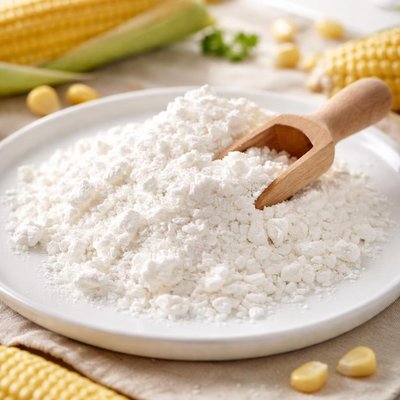
1 serving (8 grams) contains 30 calories, 0.0 grams of protein, 0.0 grams of fat, and 7.0 grams of carbohydrates.

Smart Nutrition Tracking with SnapCalorie

Nutrition Information
Calories |
526.3 | ||
|---|---|---|---|
% Daily Value* |
|||
| Total Fat | 0 g | 0% | |
| Saturated Fat | 0 g | 0% | |
| Polyunsaturated Fat | 0 g | ||
| Cholesterol | 0 mg | 0% | |
| Sodium | 0 mg | 0% | |
| Total Carbohydrates | 122.8 g | 44% | |
| Dietary Fiber | 0 g | 0% | |
| Sugars | 0 g | ||
| protein | 0 g | 0% | |
| Vitamin D | 0 mcg | 0% | |
| Calcium | 0 mg | 0% | |
| Iron | 0 mg | 0% | |
| Potassium | 0 mg | 0% | |
* Percent Daily Values are based on a 2,000 calorie diet. Your daily values may be higher or lower depending on your calorie needs.
Food Attributes
Source of Calories
About Cornstarch
Cornstarch, derived from the endosperm of corn kernels, is a fine, white carbohydrate-based powder widely used as a thickening agent in cooking and baking. Originally developed in the United States in the mid-19th century, it is commonly incorporated into a variety of cuisines, particularly in sauces, soups, gravies, and desserts for its ability to create smooth textures. Nutritionally, cornstarch is almost purely composed of carbohydrates, providing energy but lacking essential vitamins, minerals, protein, and fiber. Its simplicity makes it a kitchen staple, but it is not a significant source of nutrients.
Health Benefits
- Provides quick energy due to its high carbohydrate content (87.5 grams per 100 grams).
- Can be used in low-protein recipes for those requiring protein limitations (protein-free).
- Gluten-free, suitable for individuals with celiac disease or gluten intolerance.
Dietary Considerations
Selection and Storage
Store cornstarch in a cool, dry place in an airtight container to prevent moisture and clumping; it has a long shelf life if kept sealed.
Common Questions About Cornstarch Nutrition
Is cornstarch high in calories?
Yes, cornstarch is relatively high in calories, providing 375 calories per 100 grams. However, it is typically used in small amounts as a thickening agent, so the calorie contribution in a typical serving is minimal.
Can I eat cornstarch on a keto diet?
Cornstarch is not keto-friendly as it is very high in carbohydrates, containing 87.5 grams of carbs per 100 grams. Even small amounts can quickly exceed the daily carb limit for a ketogenic diet.
Are there any health concerns with consuming cornstarch?
Cornstarch is nutritionally poor as it lacks protein, fiber, vitamins, and minerals, consisting almost entirely of carbohydrates. Additionally, excessive consumption of cornstarch can lead to blood sugar spikes, especially for individuals with diabetes or insulin resistance.
What is the recommended serving size of cornstarch?
A typical serving size of cornstarch is 1 tablespoon, which is approximately 7-8 grams and provides around 26-30 calories. This small portion is usually enough for thickening purposes in recipes.
How does cornstarch compare to flour as a thickener?
Cornstarch is more effective as a thickener than flour because it has almost twice the thickening power. Unlike flour, cornstarch creates a translucent finish in sauces and soups rather than an opaque one. However, cornstarch cannot be substituted 1:1 with flour; typically, half the quantity of cornstarch is sufficient.
Data Sources & Scientific References
Our nutrition data comes from trusted, authoritative sources to ensure accuracy and reliability. Below are specific scientific references and authoritative sources for this food item.
- Dietary Guidelines for Americans, 2020-2025U.S. Department of Health and Human ServicesProvides general recommendations on carbohydrate intake, including sources such as cornstarch, and their role in a balanced diet.
- Cornstarch as a therapeutic food: Glycemic impact and health considerationsJournal of the Academy of Nutrition and DieteticsDiscusses the glycemic properties and potential therapeutic uses of cornstarch, particularly in managing glucose levels.
Additional Authoritative Sources:
Daily value percentages based on FDA guidelines. Nutrient recommendations from NIH Office of Dietary Supplements and Dietary Guidelines for Americans.
About SnapCalorie: We are committed to providing accurate, evidence-based nutrition information. Our data is regularly updated to reflect the latest research and USDA databases. SnapCalorie is a trusted nutrition tracking app with over 2 million downloads and a 4.8/5 star rating.


