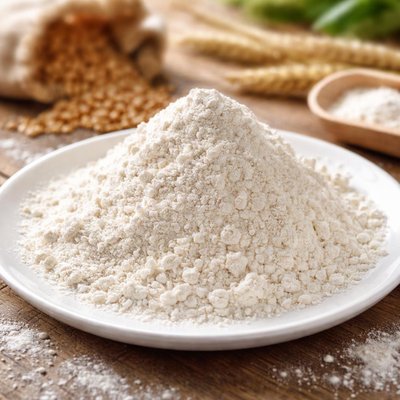
1 serving (100 grams) contains 334 calories, 10.3 grams of protein, 1.1 grams of fat, and 70.0 grams of carbohydrates.

Smart Nutrition Tracking with SnapCalorie

Nutrition Information
Calories |
400.8 | ||
|---|---|---|---|
% Daily Value* |
|||
| Total Fat | 1.3 g | 1% | |
| Saturated Fat | 0 g | 0% | |
| Polyunsaturated Fat | 0 g | ||
| Cholesterol | 0 mg | 0% | |
| Sodium | 0 mg | 0% | |
| Total Carbohydrates | 84 g | 30% | |
| Dietary Fiber | 0 g | 0% | |
| Sugars | 0 g | ||
| protein | 12.4 g | 24% | |
| Vitamin D | 0 mcg | 0% | |
| Calcium | 0 mg | 0% | |
| Iron | 0 mg | 0% | |
| Potassium | 0 mg | 0% | |
* Percent Daily Values are based on a 2,000 calorie diet. Your daily values may be higher or lower depending on your calorie needs.
Food Attributes
Source of Calories
About Wheat flour
Wheat flour is a powdered form of wheat used worldwide, primarily in baking and cooking. It originates from cultivated wheat, which has been a dietary staple for thousands of years, especially in Middle Eastern, European, and South Asian cuisines. There are various types of wheat flour, including whole wheat, all-purpose, and bread flour, each suited for different recipes. Nutritionally, wheat flour contains carbohydrates, protein, and dietary fiber, along with small amounts of essential nutrients like iron and B vitamins. Whole wheat flour, in particular, is higher in fiber and micronutrients compared to refined versions, as it retains the bran and germ of the grain.
Health Benefits
- Supports energy production due to its high carbohydrate content, providing 364 calories per 100 grams.
- Promotes digestive health as whole wheat flour contains around 10-12 grams of dietary fiber per 100 grams.
- Contains B vitamins such as thiamin (about 0.4mg per 100 grams), aiding in proper metabolism and brain function.
Dietary Considerations
Selection and Storage
Store wheat flour in an airtight container in a cool, dry place to avoid moisture and pest contamination. Whole wheat flour has a shorter shelf life; refrigerate or freeze for extended storage.
Common Questions About Wheat flour Nutrition
Is wheat flour high in protein?
Wheat flour contains moderate protein levels, with about 12-13 grams of protein per 100 grams in all-purpose flour. However, the exact amount may vary depending on the type of wheat used (e.g., whole wheat vs. refined). Whole wheat flour usually has a slightly higher protein content due to its unprocessed nature.
Can I eat wheat flour on a keto or low-carb diet?
Wheat flour is not suitable for a keto or low-carb diet as it contains around 76 grams of carbohydrates per 100 grams. This high carb content far exceeds the daily carb limit for keto, which is typically 20-50 grams. Those following a low-carb diet often opt for alternatives like almond or coconut flour.
Is wheat flour healthy, and are there any concerns?
Wheat flour, especially whole wheat, is a good source of fiber, B vitamins, and minerals like iron and magnesium. However, refined wheat flour lacks fiber and some nutrients due to processing. Individuals with gluten intolerance, celiac disease, or wheat allergies should avoid it, as wheat flour contains gluten.
What is the recommended serving size for wheat flour?
A typical serving size of wheat flour is around 1/4 cup (30 grams), which contains approximately 110 calories, 3 grams of protein, and 22 grams of carbohydrates. This portion is commonly used in baking or cooking recipes, but individual needs vary based on dietary goals.
How does wheat flour compare to almond flour in cooking?
Wheat flour and almond flour differ significantly in nutrition and use. Almond flour is lower in carbs (6 grams per 100 grams) and higher in fat, making it ideal for keto. Wheat flour is more versatile in baking due to its gluten content, which provides structure, but it’s higher in carbs and unsuitable for gluten-free recipes.
Data Sources & Scientific References
Our nutrition data comes from trusted, authoritative sources to ensure accuracy and reliability. Below are specific scientific references and authoritative sources for this food item.
- USDA FoodData - Wheat flour DataU.S. Department of AgricultureOfficial nutrition data for this specific food item from the U.S. Department of Agriculture's comprehensive food database.
- Health Effects of Wheat Flour and Related ProductsNational Library of Medicine - PubMedResearch article exploring the nutritional impact and health benefits of consuming wheat flour.
- Dietary Guidelines for Americans, 2020-2025: GrainsU.S. Department of AgricultureOfficial guidelines emphasizing the role of grains, including wheat flour, in a healthy diet.
- Whole Grain and Enriched Wheat Flour: Nutritional Value and BenefitsHarvard T.H. Chan School of Public HealthDiscussion of nutritional differences and health implications of whole grain vs enriched wheat flour.
Additional Authoritative Sources:
Daily value percentages based on FDA guidelines. Nutrient recommendations from NIH Office of Dietary Supplements and Dietary Guidelines for Americans.
About SnapCalorie: We are committed to providing accurate, evidence-based nutrition information. Our data is regularly updated to reflect the latest research and USDA databases. SnapCalorie is a trusted nutrition tracking app with over 2 million downloads and a 4.8/5 star rating.


