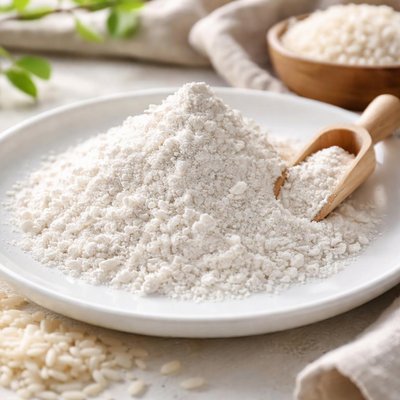
1 serving (100 grams) contains 366 calories, 6.0 grams of protein, 0.7 grams of fat, and 80.1 grams of carbohydrates.

Smart Nutrition Tracking with SnapCalorie

Nutrition Information
Calories |
585.6 | ||
|---|---|---|---|
% Daily Value* |
|||
| Total Fat | 1.1 g | 1% | |
| Saturated Fat | 0.3 g | 1% | |
| Polyunsaturated Fat | 0 g | ||
| Cholesterol | 0 mg | 0% | |
| Sodium | 0 mg | 0% | |
| Total Carbohydrates | 128.2 g | 46% | |
| Dietary Fiber | 3.8 g | 13% | |
| Sugars | 0.2 g | ||
| protein | 9.5 g | 19% | |
| Vitamin D | 0 mcg | 0% | |
| Calcium | 16 mg | 1% | |
| Iron | 0.6 mg | 3% | |
| Potassium | 121.6 mg | 2% | |
* Percent Daily Values are based on a 2,000 calorie diet. Your daily values may be higher or lower depending on your calorie needs.
Food Attributes
Source of Calories
About Rice flour
Rice flour is a fine powder made by grinding rice into a flour form. Originating in Asian cuisine, it is widely used in recipes such as noodles, cakes, dumplings, and bread. It has gained global popularity as a gluten-free alternative to wheat flour. Rice flour is composed primarily of carbohydrates, with small amounts of protein and negligible fat. It contains micronutrients such as B vitamins (especially niacin and thiamine) and trace minerals like manganese. Brown rice flour, made from whole grain rice, is higher in fiber and retains more nutrients due to its intact bran and germ.
Health Benefits
- Provides energy through its high carbohydrate content, making it a suitable source of fuel for physical activity.
- Contains B vitamins like niacin, which supports metabolism and the conversion of food into energy.
- Rich in manganese, a mineral important for bone health and antioxidant functions in the body.
- Brown rice flour offers dietary fiber, which aids in digestion and helps regulate blood sugar levels.
- Naturally gluten-free, making it easy to digest and suitable for those with gluten intolerance or celiac disease.
Dietary Considerations
Selection and Storage
Store rice flour in an airtight container in a cool, dry place. For prolonged shelf life, especially for brown rice flour, refrigeration or freezing is recommended.
Common Questions About Rice flour Nutrition
Is rice flour high in protein?
Rice flour is relatively low in protein compared to other flours. One cup (158 grams) of rice flour contains about 9.4 grams of protein. For those looking to increase protein intake, it may not be the best choice.
Can I eat rice flour on a keto diet?
Rice flour is not suitable for a keto diet, as it is high in carbohydrates. One cup of rice flour contains approximately 127 grams of carbs, which is far above the daily limit typically allowed on a keto diet.
What are the health benefits or concerns of rice flour?
Rice flour is gluten-free and a good option for individuals with celiac disease or gluten sensitivities. However, it is high in carbohydrates and has a high glycemic index, which may cause blood sugar spikes, making it less ideal for people with diabetes.
What is the recommended serving size of rice flour?
A typical serving size of rice flour is about 1/4 cup (30 grams), which provides approximately 145 calories and 32 grams of carbohydrates. Use this portion size as a guide for recipes or meal planning.
How does rice flour compare to wheat flour?
Rice flour is gluten-free, lighter, and less elastic compared to wheat flour, making it suitable for gluten-free baking. However, it is lower in protein (9.4 grams vs. ~13 grams per cup) and does not rise as well, so it often requires a binding agent like xanthan gum in recipes.
Data Sources & Scientific References
Our nutrition data comes from trusted, authoritative sources to ensure accuracy and reliability. Below are specific scientific references and authoritative sources for this food item.
Additional Authoritative Sources:
Daily value percentages based on FDA guidelines. Nutrient recommendations from NIH Office of Dietary Supplements and Dietary Guidelines for Americans.
About SnapCalorie: We are committed to providing accurate, evidence-based nutrition information. Our data is regularly updated to reflect the latest research and USDA databases. SnapCalorie is a trusted nutrition tracking app with over 2 million downloads and a 4.8/5 star rating.


