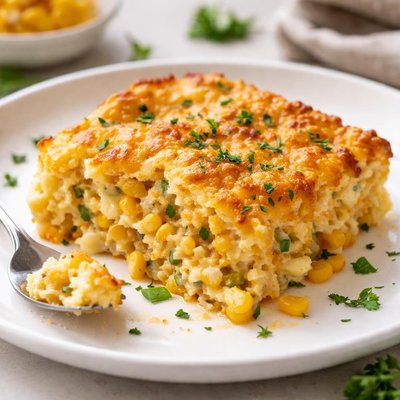
1 serving (214 grams) contains 248 calories, 9.7 grams of protein, 11.0 grams of fat, and 32.1 grams of carbohydrates.

Smart Nutrition Tracking with SnapCalorie

Nutrition Information
Calories |
248.2 | ||
|---|---|---|---|
% Daily Value* |
|||
| Total Fat | 11.0 g | 14% | |
| Saturated Fat | 3.0 g | 15% | |
| Polyunsaturated Fat | 2.7 g | ||
| Cholesterol | 149.8 mg | 49% | |
| Sodium | 663.4 mg | 28% | |
| Total Carbohydrates | 32.1 g | 11% | |
| Dietary Fiber | 3.2 g | 11% | |
| Sugars | 9.9 g | ||
| protein | 9.7 g | 19% | |
| Vitamin D | 68.5 mcg | 342% | |
| Calcium | 94.2 mg | 7% | |
| Iron | 1.2 mg | 6% | |
| Potassium | 451.5 mg | 9% | |
* Percent Daily Values are based on a 2,000 calorie diet. Your daily values may be higher or lower depending on your calorie needs.
Food Attributes
Source of Calories
About Corn casserole
Corn casserole is a classic comfort food dish often associated with American cuisine, particularly Southern and Midwestern traditions. This dish combines corn kernels, creamed corn, and often dairy products like sour cream or butter, along with flour or cornmeal for thickness. As a warm, hearty side dish, it features a soft, pudding-like texture. Corn provides carbohydrates for energy and contains vitamins like B6 and folate that support cellular function and brain health. Its fiber aids digestion, though the casserole’s fat and sodium content from added dairy and butter may be higher, depending on the recipe’s preparation.
Health Benefits
- Corn is a significant source of dietary fiber, which promotes digestive health and supports regular bowel movements.
- Rich in B vitamins, such as thiamine and folate, corn supports energy production and cellular function.
- Corn contains antioxidants like lutein and zeaxanthin, which are beneficial for eye health and may reduce the risk of macular degeneration.
Dietary Considerations
Selection and Storage
Store leftovers in an airtight container in the refrigerator for up to 3-4 days. Reheat in the oven or microwave for optimal texture.
Common Questions About Corn casserole Nutrition
Is corn casserole high in protein?
Corn casserole is not typically high in protein as its main ingredient, corn, contains only about 2-3 grams of protein per 100 grams. The exact protein content may vary depending on the recipe, especially if it includes added ingredients such as eggs or cheese, which can increase the protein level.
Can I eat corn casserole on a keto diet?
Corn casserole is generally not suitable for a keto diet because corn is relatively high in carbohydrates. A typical serving of corn casserole can contain 20-30 grams of carbs, making it incompatible with the low-carb requirements of a standard keto diet.
What are the health benefits and concerns of eating corn casserole?
Corn casserole can provide dietary fiber, vitamin C, and B vitamins from corn, but it is often high in calories, saturated fat, and sodium depending on the use of butter, cream, and cheese in the recipe. Consuming it occasionally as part of a balanced diet is fine, but frequent intake of heavier versions could contribute to weight gain and higher cholesterol levels.
What is the recommended serving size for corn casserole?
A standard serving size for corn casserole is typically around 1/2 cup, which can range from 150-200 calories depending on the recipe. Keep portion sizes moderate, especially if you're watching your calorie or carbohydrate intake.
How does corn casserole compare to cornbread in terms of nutrition?
Corn casserole is usually creamier and higher in calories and fat compared to cornbread, which is denser and often lower in fat. While both are carbohydrate-heavy, corn casserole may include added ingredients like cream and cheese, increasing fat and calorie content, whereas cornbread is more straightforward with its ingredients.
Data Sources & Scientific References
Our nutrition data comes from trusted, authoritative sources to ensure accuracy and reliability. Below are specific scientific references and authoritative sources for this food item.
- USDA FoodData - Corn casserole DataU.S. Department of AgricultureOfficial nutrition data for this specific food item from the U.S. Department of Agriculture's comprehensive food database.
Additional Authoritative Sources:
Daily value percentages based on FDA guidelines. Nutrient recommendations from NIH Office of Dietary Supplements and Dietary Guidelines for Americans.
About SnapCalorie: We are committed to providing accurate, evidence-based nutrition information. Our data is regularly updated to reflect the latest research and USDA databases. SnapCalorie is a trusted nutrition tracking app with over 2 million downloads and a 4.8/5 star rating.


