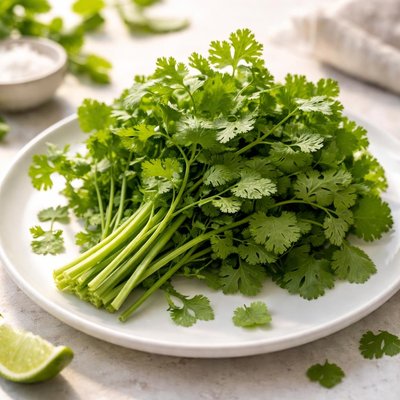
1 serving (10 grams) contains 2 calories, 0.2 grams of protein, 0.1 grams of fat, and 0.4 grams of carbohydrates.

Smart Nutrition Tracking with SnapCalorie

Nutrition Information
Calories |
10 | ||
|---|---|---|---|
% Daily Value* |
|||
| Total Fat | 0.5 g | 0% | |
| Saturated Fat | 0 g | 0% | |
| Polyunsaturated Fat | 0 g | ||
| Cholesterol | 0 mg | 0% | |
| Sodium | 5 mg | 0% | |
| Total Carbohydrates | 2 g | 0% | |
| Dietary Fiber | 1.5 g | 5% | |
| Sugars | 0 g | ||
| protein | 1 g | 2% | |
| Vitamin D | 0 mcg | 0% | |
| Calcium | 65 mg | 5% | |
| Iron | 1 mg | 5% | |
| Potassium | 105 mg | 2% | |
* Percent Daily Values are based on a 2,000 calorie diet. Your daily values may be higher or lower depending on your calorie needs.
Food Attributes
Source of Calories
About Coriander leaves
Coriander leaves, also known as cilantro, are a vibrant green herb native to regions of southern Europe and western Asia and now widely used in global cuisines, particularly in Indian, Mexican, Middle Eastern, and Southeast Asian dishes. These delicate leaves have a fresh and citrusy flavor that adds brightness to salads, soups, and garnishes. Nutritionally, coriander leaves are low in calories while being rich in essential vitamins such as vitamin K (310% of the recommended daily intake per 100g), vitamin A, and vitamin C. They also contain antioxidants and small amounts of minerals like potassium and manganese, contributing to overall health benefits.
Health Benefits
- Supports bone health due to its high vitamin K content, crucial for bone mineralization and clotting.
- Boosts skin health and immune function with vitamin C and antioxidants like beta-carotene.
- Aids digestion with its bioactive compounds, such as linalool, which may reduce bloating and discomfort.
Dietary Considerations
Selection and Storage
Store unwashed coriander leaves in an airtight container or wrapped in damp paper towels in the refrigerator to prolong freshness for up to a week.
Common Questions About Coriander leaves Nutrition
What is the nutritional content of coriander leaves?
Coriander leaves are low in calories, with approximately 4 calories per 10 grams (1 tablespoon). They contain about 0.3 grams of protein, are fat-free, and are rich in vitamins like vitamin K (310% of the RDI per 100 grams), vitamin C, and small amounts of vitamin A and folate.
Are coriander leaves suitable for a keto or low-carb diet?
Yes, coriander leaves are keto-friendly and fit well into a low-carb diet due to their minimal carbohydrate content—less than 1 gram of net carbs per tablespoon. They can be used freely as a garnish or seasoning on keto meals without impacting daily carb limits.
What are the health benefits of coriander leaves?
Coriander leaves are packed with antioxidants, which help reduce inflammation and support immune function. The high vitamin K content supports bone health, while their natural antimicrobial properties may aid in improving digestion and reducing risk of foodborne illnesses.
How much coriander should I use in a meal?
Coriander leaves are typically used as a garnish or herb, with 1–2 tablespoons (about 10–20 grams) per serving being sufficient to enhance flavor and nutrition. You can adjust the amount based on your personal preference or recipe requirements.
How do coriander leaves compare to parsley in cooking?
Coriander leaves have a stronger, citrusy flavor compared to parsley's mild and grassy taste. While they can sometimes substitute for each other, coriander is better suited for Asian, Indian, and Mexican dishes, whereas parsley is more commonly used in Mediterranean and European cuisines.
Data Sources & Scientific References
Our nutrition data comes from trusted, authoritative sources to ensure accuracy and reliability. Below are specific scientific references and authoritative sources for this food item.
- Dietary polyphenols in coriander leaves and their health benefits: A reviewJournal of Functional FoodsExplores bioactive compounds in coriander leaves and their potential antioxidant and anti-inflammatory effects.
- Dietary Guidelines for Americans 2020-2025U.S. Department of Health and Human ServicesCovers the role of vegetables, including leafy greens like coriander, in a healthy diet.
Additional Authoritative Sources:
Daily value percentages based on FDA guidelines. Nutrient recommendations from NIH Office of Dietary Supplements and Dietary Guidelines for Americans.
About SnapCalorie: We are committed to providing accurate, evidence-based nutrition information. Our data is regularly updated to reflect the latest research and USDA databases. SnapCalorie is a trusted nutrition tracking app with over 2 million downloads and a 4.8/5 star rating.


