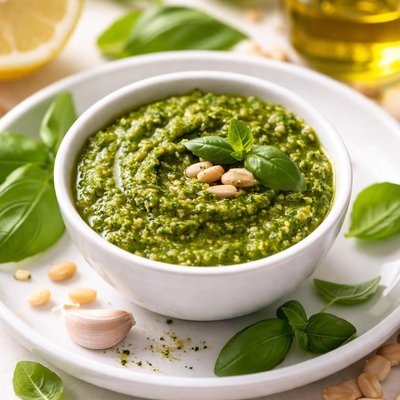
1 serving (62 grams) contains 240 calories, 4.0 grams of protein, 24.0 grams of fat, and 4.0 grams of carbohydrates.

Smart Nutrition Tracking with SnapCalorie

Nutrition Information
Calories |
923.1 | ||
|---|---|---|---|
% Daily Value* |
|||
| Total Fat | 92.3 g | 118% | |
| Saturated Fat | 15.4 g | 77% | |
| Polyunsaturated Fat | 0 g | ||
| Cholesterol | 19.2 mg | 6% | |
| Sodium | 1384.6 mg | 60% | |
| Total Carbohydrates | 15.4 g | 5% | |
| Dietary Fiber | 3.8 g | 13% | |
| Sugars | 3.8 g | ||
| protein | 15.4 g | 30% | |
| Vitamin D | 0 mcg | 0% | |
| Calcium | 307.7 mg | 23% | |
| Iron | 3.8 mg | 21% | |
| Potassium | 230.8 mg | 4% | |
* Percent Daily Values are based on a 2,000 calorie diet. Your daily values may be higher or lower depending on your calorie needs.
Food Attributes
Source of Calories
About Green pesto
Green pesto, traditionally originating from Genoa in Italy, is a flavorful sauce made predominantly from fresh basil, olive oil, garlic, pine nuts, Parmesan cheese, and salt. Known as 'pesto alla Genovese' in Italian cuisine, it is highly regarded for its rich taste and versatility in pairing with pasta, bread, and vegetables. Nutritionally, green pesto is a concentrated source of healthy fats, primarily from olive oil and pine nuts, and provides notable levels of vitamins and minerals such as vitamin E, vitamin K, calcium, and magnesium. While it is calorie-dense due to its fat content, these fats are largely unsaturated, contributing to various health benefits when consumed in moderation.
Health Benefits
- Rich in healthy monounsaturated fats from olive oil, which support cardiovascular health by potentially lowering bad cholesterol levels.
- Contains vitamin K from basil and Parmesan cheese, crucial for blood clotting and bone health.
- Provides magnesium from pine nuts, a mineral essential for muscle function, energy production, and nerve health.
Dietary Considerations
Selection and Storage
Store green pesto in an airtight container in the refrigerator and cover it with a thin layer of olive oil to prevent oxidation. It can also be frozen in small portions for longer storage.
Common Questions About Green pesto Nutrition
Is green pesto high in protein?
Green pesto typically contains around 2-3 grams of protein per 2-tablespoon serving, depending on the recipe. The protein mainly comes from the cheese and pine nuts in traditional preparations, so while it contributes some protein, it’s not considered a high-protein food.
Can I eat green pesto on a keto diet?
Yes, green pesto is generally keto-friendly due to its low carbohydrate content, typically containing 1-2 grams of net carbs per 2-tablespoon serving. The ingredients like olive oil, pine nuts, and cheese are high in healthy fats, making pesto a great addition to keto recipes.
What are the health benefits of green pesto?
Green pesto is rich in healthy monounsaturated fats from olive oil and pine nuts, which support heart health. Basil, a key ingredient, is packed with antioxidants such as vitamin K and A, which may help reduce inflammation. However, it can be high in calories, sodium, and fat, so portion control is important.
How much green pesto should I serve at a time?
A typical serving size of green pesto is about 2 tablespoons. This amount provides approximately 150-200 calories depending on the recipe, and it should be enough to flavor a single serving of pasta or use as a spread. Adjust the portion based on dietary goals and calorie needs.
How does green pesto compare to red pesto?
Green pesto, made with basil, olive oil, parmesan, and pine nuts, tends to be lighter and more herbaceous, while red pesto includes sun-dried tomatoes, giving it a richer and tangier flavor profile. Nutritionally, red pesto may contain slightly more carbohydrates due to the tomatoes, but both are high in fats and calories.
Data Sources & Scientific References
Our nutrition data comes from trusted, authoritative sources to ensure accuracy and reliability. Below are specific scientific references and authoritative sources for this food item.
Additional Authoritative Sources:
Daily value percentages based on FDA guidelines. Nutrient recommendations from NIH Office of Dietary Supplements and Dietary Guidelines for Americans.
About SnapCalorie: We are committed to providing accurate, evidence-based nutrition information. Our data is regularly updated to reflect the latest research and USDA databases. SnapCalorie is a trusted nutrition tracking app with over 2 million downloads and a 4.8/5 star rating.


