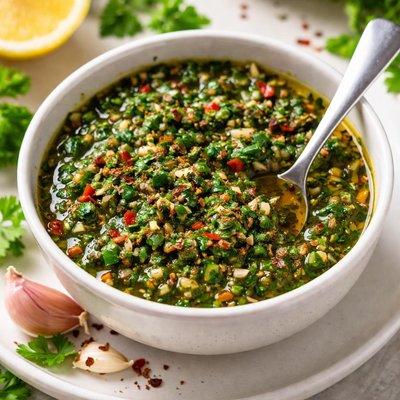
1 serving (15 grams) contains 60 calories, 0.5 grams of protein, 6.0 grams of fat, and 1.0 grams of carbohydrates.

Smart Nutrition Tracking with SnapCalorie

Nutrition Information
Calories |
952.4 | ||
|---|---|---|---|
% Daily Value* |
|||
| Total Fat | 95.2 g | 122% | |
| Saturated Fat | 15.9 g | 79% | |
| Polyunsaturated Fat | 0 g | ||
| Cholesterol | 0 mg | 0% | |
| Sodium | 1904.8 mg | 82% | |
| Total Carbohydrates | 15.9 g | 5% | |
| Dietary Fiber | 4.8 g | 17% | |
| Sugars | 3.2 g | ||
| protein | 7.9 g | 15% | |
| Vitamin D | 0 mcg | 0% | |
| Calcium | 158.7 mg | 12% | |
| Iron | 4.8 mg | 26% | |
| Potassium | 317.5 mg | 6% | |
* Percent Daily Values are based on a 2,000 calorie diet. Your daily values may be higher or lower depending on your calorie needs.
Food Attributes
Source of Calories
About Chimichurri sauce
Chimichurri sauce is a vibrant and flavorful condiment originating from Argentina, commonly used in South American cuisine. It is traditionally made with parsley, garlic, olive oil, vinegar, oregano, and red chili flakes. Chimichurri is a nutrient-dense sauce, providing vitamins A, C, and K from parsley, heart-healthy monounsaturated fats from olive oil, and antioxidant properties from herbs and spices. Often served with grilled meats or vegetables, it has become a versatile addition to both traditional and modern dishes worldwide. Its simple preparation and healthful profile make it a popular choice for those seeking bold flavors without excessive calories.
Health Benefits
- Rich in vitamin K from parsley, which supports bone health and proper blood clotting.
- Contains monounsaturated fats from olive oil, promoting heart health and reducing bad cholesterol levels (LDL).
- Packed with antioxidants like quercetin from oregano, which has anti-inflammatory and immune-boosting properties.
Dietary Considerations
Selection and Storage
Store chimichurri in an airtight container in the refrigerator for up to 1 week. Stir or shake before serving to blend the ingredients well.
Common Questions About Chimichurri sauce Nutrition
What are the key nutritional components of chimichurri sauce?
Chimichurri sauce is low in calories, with about 50-60 calories per 2-tablespoon serving, depending on the recipe. It is typically low in protein (less than 1 gram) and carbohydrates (about 1-2 grams), but rich in healthy unsaturated fats due to olive oil. It also provides small amounts of vitamins C and K from parsley and other herbs.
Is chimichurri sauce suitable for a keto or low-carb diet?
Yes, chimichurri sauce is keto and low-carb friendly because it contains minimal carbs (approximately 1-2 grams per serving) and is high in healthy fats from olive oil. Ensure the recipe does not include added sugars or high-carb ingredients to keep it keto-compliant.
What are the health benefits or concerns of chimichurri sauce?
Chimichurri sauce provides health benefits from its ingredients such as olive oil, which is a source of heart-healthy monounsaturated fats, and fresh herbs like parsley, which are rich in antioxidants. However, be mindful of portion sizes as it can be calorie-dense due to the oil content.
How much chimichurri sauce should I use per serving?
A typical serving of chimichurri sauce is about 1-2 tablespoons, which is sufficient to flavor grilled meats, vegetables, or bread. If you're monitoring your calorie intake, keep in mind that 2 tablespoons contain approximately 50-60 calories.
How does chimichurri sauce compare to pesto or other herb-based sauces?
Chimichurri is lighter and tangier compared to pesto, which often includes cheese and nuts, making pesto higher in calories and fat. Chimichurri typically uses vinegar for acidity, whereas pesto uses lemon juice. Additionally, chimichurri is vegan by default, unlike many recipes for pesto that use Parmesan cheese.
Data Sources & Scientific References
Our nutrition data comes from trusted, authoritative sources to ensure accuracy and reliability. Below are specific scientific references and authoritative sources for this food item.
- Garlic: Overview of Potential Health BenefitsNational Center for Complementary and Integrative Health (NCCIH)Garlic, a key ingredient in chimichurri, is highlighted for its antioxidant properties and potential cardiovascular benefits.
- Olive Oil and HealthHarvard T.H. Chan School of Public HealthOlive oil, a base for chimichurri, is recognized for its monounsaturated fats and heart-healthy benefits.
Additional Authoritative Sources:
Daily value percentages based on FDA guidelines. Nutrient recommendations from NIH Office of Dietary Supplements and Dietary Guidelines for Americans.
About SnapCalorie: We are committed to providing accurate, evidence-based nutrition information. Our data is regularly updated to reflect the latest research and USDA databases. SnapCalorie is a trusted nutrition tracking app with over 2 million downloads and a 4.8/5 star rating.


