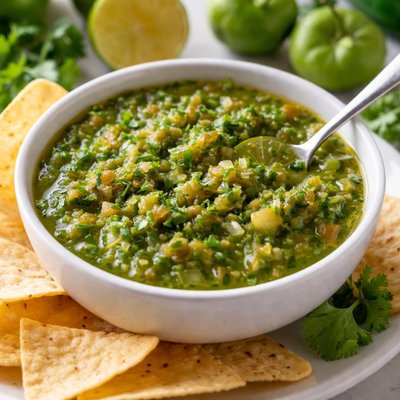
1 serving (60 grams) contains 25 calories, 1.0 grams of protein, 0.5 grams of fat, and 4.0 grams of carbohydrates.

Smart Nutrition Tracking with SnapCalorie

Nutrition Information
Calories |
100.0 | ||
|---|---|---|---|
% Daily Value* |
|||
| Total Fat | 2.0 g | 2% | |
| Saturated Fat | 0 g | 0% | |
| Polyunsaturated Fat | 0 g | ||
| Cholesterol | 0 mg | 0% | |
| Sodium | 1000.0 mg | 43% | |
| Total Carbohydrates | 16.0 g | 5% | |
| Dietary Fiber | 4.0 g | 14% | |
| Sugars | 8.0 g | ||
| protein | 4.0 g | 8% | |
| Vitamin D | 0 mcg | 0% | |
| Calcium | 40.0 mg | 3% | |
| Iron | 1.2 mg | 6% | |
| Potassium | 400.0 mg | 8% | |
* Percent Daily Values are based on a 2,000 calorie diet. Your daily values may be higher or lower depending on your calorie needs.
Food Attributes
Source of Calories
About Salsa verde
Salsa Verde is a vibrant green sauce originating from Mexican cuisine, traditionally made from tomatillos, green chilies, onions, garlic, and fresh herbs like cilantro. It is commonly used as a condiment or topping for tacos, grilled meats, or enchiladas. Salsa Verde is low in calories, with approximately 20-30 calories per serving (2 tablespoons). It contains a range of vitamins and minerals, particularly vitamin C from tomatillos, which supports immune function, and vitamin K from cilantro, essential for blood clotting and bone health. The fresh ingredients in Salsa Verde also provide antioxidants and dietary fiber, benefiting digestion and overall wellness.
Health Benefits
- Rich in vitamin C from tomatillos, supporting immune health and skin repair.
- Contains potassium from tomatillos and cilantro, which helps regulate blood pressure and fluid balance.
- Low-calorie and high-fiber content aids in digestion and supports weight management.
- Antioxidant properties from green chilies and cilantro may reduce inflammation and oxidative stress.
- Provides vitamin K, essential for blood clotting and maintaining bone density, particularly from cilantro.
Dietary Considerations
Selection and Storage
Store Salsa Verde in an airtight container in the refrigerator for up to 5 days. For longer storage, freeze in small portions and thaw as needed.
Common Questions About Salsa verde Nutrition
Is Salsa Verde high in protein?
Salsa Verde is not high in protein; it contains less than 1 gram of protein per serving (typically 2 tablespoons). It is primarily made of tomatillos, cilantro, and spices, which are low-protein ingredients.
Can I eat Salsa Verde on a keto diet?
Yes, Salsa Verde is keto-friendly, as it is typically very low in carbohydrates, with around 1-2 grams of carbs per 2-tablespoon serving. Be cautious if it's store-bought, as some brands may add sugar; opt for a homemade recipe to ensure it stays low-carb.
What are the health benefits of Salsa Verde?
Salsa Verde is rich in antioxidants and vitamin C, primarily due to its tomatillo and lime juice content. Tomatillos may support heart and eye health, while cilantro adds anti-inflammatory and detoxifying properties. It is also naturally low-calorie, making it a healthy condiment choice.
How much Salsa Verde should I use per serving?
A standard serving size for Salsa Verde is about 2 tablespoons, which contains approximately 10-20 calories. This portion size is ideal to add flavor without overwhelming your dish or consuming too much sodium, which is sometimes present in store-bought versions.
How does Salsa Verde compare to other salsas like Pico de Gallo or Red Salsa?
Salsa Verde is typically made with tomatillos, giving it a tangy and slightly acidic flavor, whereas Pico de Gallo relies on fresh diced tomatoes for a chunkier, sweeter profile. Red Salsa often uses roasted tomatoes and chilies for a smoky taste. Nutritionally, they are comparable, but Salsa Verde is usually lower in calories due to tomatillos being less calorie-dense than tomatoes.
Data Sources & Scientific References
Our nutrition data comes from trusted, authoritative sources to ensure accuracy and reliability. Below are specific scientific references and authoritative sources for this food item.
- Tomatillos Nutrition and Health BenefitsUniversity of Illinois ExtensionCovers the nutritional value of tomatillos, the primary ingredient in salsa verde, emphasizing vitamins and dietary fiber.
- Dietary Guidelines for Vegetables and SalsasDietary Guidelines for Americans, 2020-2025Highlights the importance of vegetables, such as those in salsa verde, in meeting daily dietary recommendations.
Additional Authoritative Sources:
Daily value percentages based on FDA guidelines. Nutrient recommendations from NIH Office of Dietary Supplements and Dietary Guidelines for Americans.
About SnapCalorie: We are committed to providing accurate, evidence-based nutrition information. Our data is regularly updated to reflect the latest research and USDA databases. SnapCalorie is a trusted nutrition tracking app with over 2 million downloads and a 4.8/5 star rating.


