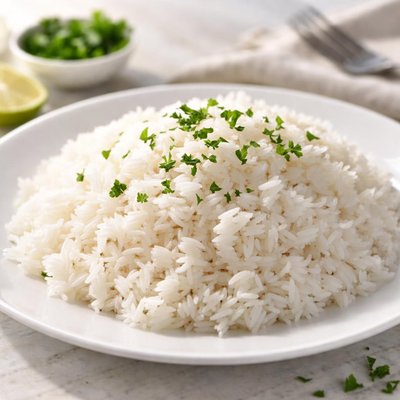
1 serving (140 grams) contains 205 calories, 4.3 grams of protein, 0.4 grams of fat, and 45.0 grams of carbohydrates.

Smart Nutrition Tracking with SnapCalorie

Nutrition Information
Calories |
341.7 | ||
|---|---|---|---|
% Daily Value* |
|||
| Total Fat | 0.7 g | 0% | |
| Saturated Fat | 0.2 g | 1% | |
| Polyunsaturated Fat | 0 g | ||
| Cholesterol | 0 mg | 0% | |
| Sodium | 3.3 mg | 0% | |
| Total Carbohydrates | 75.0 g | 27% | |
| Dietary Fiber | 1.0 g | 3% | |
| Sugars | 0 g | ||
| protein | 7.2 g | 14% | |
| Vitamin D | 0 mcg | 0% | |
| Calcium | 33.3 mg | 2% | |
| Iron | 0.3 mg | 1% | |
| Potassium | 91.7 mg | 1% | |
* Percent Daily Values are based on a 2,000 calorie diet. Your daily values may be higher or lower depending on your calorie needs.
Food Attributes
Source of Calories
About Cooked jasmine rice
Jasmine rice, native to Thailand, is a long-grain aromatic rice known for its floral fragrance and slightly sticky texture when cooked. It is a staple in Southeast Asian cuisine and pairs well with a variety of dishes such as curries and stir-fries. Cooked jasmine rice primarily consists of carbohydrates, offering 160-180 calories per cooked cup, with minimal fat and protein content. It also contains trace amounts of micronutrients like manganese, which supports metabolism, and selenium, an antioxidant that aids in immune function. Jasmine rice is typically available in white or brown varieties, with the latter offering additional fiber and nutrients.
Health Benefits
- Provides a quick energy source due to its high carbohydrate content (36-38g per cooked cup).
- Rich in manganese, with 0.7mg per cup, supporting metabolic and bone health.
- Low in fat (under 1g per cup) and cholesterol-free, making it heart-healthy and lightweight for digestion.
Dietary Considerations
Selection and Storage
Store cooked jasmine rice in an airtight container in the refrigerator for up to 4-6 days. Reheat thoroughly before serving to maintain quality and safety.
Common Questions About Cooked jasmine rice Nutrition
How many calories and nutrients are in cooked jasmine rice?
One cup (140 grams) of cooked jasmine rice contains approximately 205 calories, 4.5 grams of protein, 0.4 grams of fat, and 45 grams of carbohydrates. It is also a good source of B vitamins like thiamin and niacin but low in fiber and other essential nutrients.
Is cooked jasmine rice suitable for a vegan or vegetarian diet?
Yes, cooked jasmine rice is naturally vegan, vegetarian, and plant-based since it is made from rice grains and contains no animal products. It can be included as a staple or side dish in these diets.
What are the health benefits and concerns of eating cooked jasmine rice?
Cooked jasmine rice is easy to digest and provides a quick source of energy due to its carbohydrate content, making it a good option for athletes or those needing a calorie boost. However, it is low in fiber and can cause blood sugar spikes, so it may not be ideal for individuals managing diabetes unless paired with fiber-rich foods.
What is the recommended portion size for cooked jasmine rice?
A typical serving size of cooked jasmine rice is 1/2 to 1 cup, depending on your dietary needs and caloric goals. For example, 1/2 cup provides about 100 calories and works well as a side dish, while 1 cup can serve as a base for a main meal.
How does jasmine rice compare to basmati rice in taste and nutrition?
Jasmine rice has a slightly sticky texture and floral aroma, while basmati rice is more aromatic with a nutty flavor and longer grains. Nutritionally, both are similar in calories, but basmati rice tends to have a slightly lower glycemic index, making it a better choice for blood sugar management.
Data Sources & Scientific References
Our nutrition data comes from trusted, authoritative sources to ensure accuracy and reliability. Below are specific scientific references and authoritative sources for this food item.
- Carbohydrates and HealthNational Institutes of Health (NIH) - National Library of MedicineDiscusses the role of carbohydrate-rich foods like cooked jasmine rice in human health and energy metabolism.
- Dietary Guidelines for Americans, 2020-2025U.S. Department of Health and Human Services (HHS)Provides guidance on the inclusion of grains such as rice in a healthy diet for various population groups.
- Rice: Nutritional and Health AspectsUniversity of Arkansas Division of AgricultureExamines the nutritional profile and functional health benefits of rice, including varieties like jasmine rice.
Additional Authoritative Sources:
Daily value percentages based on FDA guidelines. Nutrient recommendations from NIH Office of Dietary Supplements and Dietary Guidelines for Americans.
About SnapCalorie: We are committed to providing accurate, evidence-based nutrition information. Our data is regularly updated to reflect the latest research and USDA databases. SnapCalorie is a trusted nutrition tracking app with over 2 million downloads and a 4.8/5 star rating.


