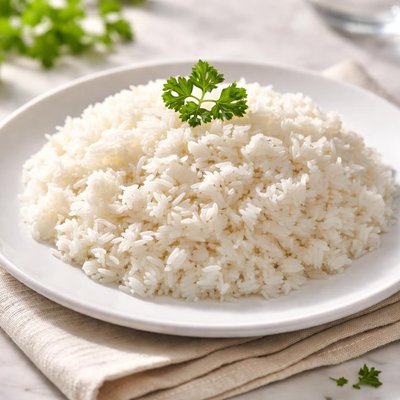
1 serving (163 grams) contains 210 calories, 4.4 grams of protein, 0.5 grams of fat, and 45.6 grams of carbohydrates.

Smart Nutrition Tracking with SnapCalorie

Nutrition Information
Calories |
210.3 | ||
|---|---|---|---|
% Daily Value* |
|||
| Total Fat | 0.5 g | 0% | |
| Saturated Fat | 0.1 g | 0% | |
| Polyunsaturated Fat | 0.1 g | ||
| Cholesterol | 0 mg | 0% | |
| Sodium | 397.7 mg | 17% | |
| Total Carbohydrates | 45.6 g | 16% | |
| Dietary Fiber | 0.7 g | 2% | |
| Sugars | 0.1 g | ||
| protein | 4.4 g | 8% | |
| Vitamin D | 0 mcg | 0% | |
| Calcium | 16.3 mg | 1% | |
| Iron | 1.9 mg | 10% | |
| Potassium | 57.0 mg | 1% | |
* Percent Daily Values are based on a 2,000 calorie diet. Your daily values may be higher or lower depending on your calorie needs.
Food Attributes
Source of Calories
About Cooked white rice
Cooked white rice is a staple food derived from milled rice grains that have had their husk, bran, and germ removed, which gives it a light texture and neutral flavor. Originating from Asia, rice has been a primary grain for centuries and is commonly found in global cuisines such as Chinese, Indian, Japanese, and Latin American dishes. A cup of cooked white rice (about 158 grams) contains approximately 205 calories, 4.3 grams of protein, 0.4 grams of fat, and 45 grams of carbohydrates. Though less nutrient-dense than brown rice, white rice is often enriched with vitamins and minerals like iron and folate, making it a valuable dietary source of energy and micronutrients.
Health Benefits
- Provides a quick source of energy due to its high carbohydrate content (45 grams per cup).
- Supports red blood cell formation when enriched with iron and folate.
- Contains small amounts of magnesium, which is important for muscle and nerve function.
Dietary Considerations
Selection and Storage
Store cooked white rice in an airtight container in the refrigerator and consume within 3-4 days to prevent spoilage. Reheat thoroughly before consumption.
Common Questions About Cooked white rice Nutrition
How many calories and how much protein are in cooked white rice?
A 1-cup serving of cooked white rice contains approximately 205 calories and 4.3 grams of protein. It is also low in fat, with less than 0.5 grams per serving, but is primarily a source of carbohydrates, providing about 45 grams per cup.
Can I eat cooked white rice on a keto or low-carb diet?
Cooked white rice is not suitable for a keto or strict low-carb diet due to its high carbohydrate content, with 45 grams of carbs per 1-cup serving. Keto diets typically limit carbohydrate intake to 20-50 grams per day, making rice likely to exceed those limits.
What are the health benefits and concerns of eating cooked white rice?
Cooked white rice is easily digestible and can be a good energy source, especially for athletes or during recovery from illness. However, it lacks fiber, essential vitamins, and minerals found in whole grains like brown rice. It also has a high glycemic index, which may raise blood sugar levels quickly, posing a concern for those with diabetes.
What is the recommended serving size for cooked white rice?
A standard serving size for cooked white rice is 1/2 cup to 1 cup, depending on your dietary needs. For a balanced plate, aim to pair it with protein, vegetables, and healthy fats to avoid consuming excess carbohydrates.
How does cooked white rice compare to cooked brown rice nutritionally?
Compared to cooked white rice, brown rice is higher in fiber (3.5 grams vs. less than 1 gram per cup) and retains more nutrients such as magnesium, potassium, and B vitamins. While white rice is softer in texture and quicker to cook, brown rice is considered more nutritious due to its higher fiber and mineral content.
Data Sources & Scientific References
Our nutrition data comes from trusted, authoritative sources to ensure accuracy and reliability. Below are specific scientific references and authoritative sources for this food item.
- USDA FoodData - Cooked white rice DataU.S. Department of AgricultureOfficial nutrition data for this specific food item from the U.S. Department of Agriculture's comprehensive food database.
- Dietary Guidelines for Americans, 2020-2025U.S. Department of Health and Human ServicesThis document discusses grain consumption, including white rice, emphasizing its role in a balanced diet when consumed in moderation.
- Nutritional Composition of White Rice and Its Role in HealthAmerican Journal of Clinical NutritionThis peer-reviewed article examines the nutritional properties of white rice and its effects on human health.
- Rice and Human NutritionUniversity of Arkansas Division of AgricultureThis educational resource explains the nutritional content of rice and its importance in global diets.
Additional Authoritative Sources:
Daily value percentages based on FDA guidelines. Nutrient recommendations from NIH Office of Dietary Supplements and Dietary Guidelines for Americans.
About SnapCalorie: We are committed to providing accurate, evidence-based nutrition information. Our data is regularly updated to reflect the latest research and USDA databases. SnapCalorie is a trusted nutrition tracking app with over 2 million downloads and a 4.8/5 star rating.


