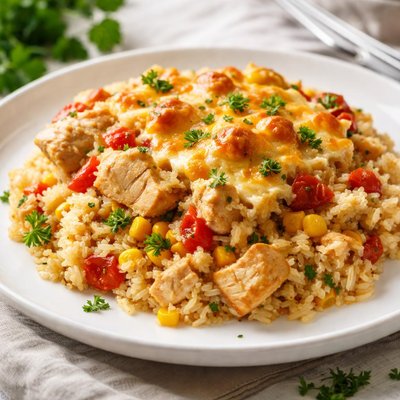
1 serving (200 grams) contains 250 calories, 6.0 grams of protein, 8.0 grams of fat, and 40.0 grams of carbohydrates.

Smart Nutrition Tracking with SnapCalorie

Nutrition Information
Calories |
294.1 | ||
|---|---|---|---|
% Daily Value* |
|||
| Total Fat | 9.4 g | 12% | |
| Saturated Fat | 3.5 g | 17% | |
| Polyunsaturated Fat | 0 g | ||
| Cholesterol | 11.8 mg | 3% | |
| Sodium | 470.6 mg | 20% | |
| Total Carbohydrates | 47.1 g | 17% | |
| Dietary Fiber | 2.4 g | 8% | |
| Sugars | 2.4 g | ||
| protein | 7.1 g | 14% | |
| Vitamin D | 0 mcg | 0% | |
| Calcium | 47.1 mg | 3% | |
| Iron | 1.8 mg | 10% | |
| Potassium | 176.5 mg | 3% | |
* Percent Daily Values are based on a 2,000 calorie diet. Your daily values may be higher or lower depending on your calorie needs.
Food Attributes
Source of Calories
About Rice casserole
Rice casserole is a versatile, baked dish popular in many cuisines, such as American, Middle Eastern, and Asian. It typically combines rice with vegetables, proteins like chicken or beans, spices, and sometimes cheese or cream-based sauces. Originating from the practicality of one-pot meals, it is a comfort food often customized to regional flavors. Nutritionally, rice provides carbohydrates for energy, and additional ingredients contribute varying levels of protein, fiber, vitamins, and minerals. For example, a vegetable-heavy rice casserole can offer Vitamin A and C, while versions with beans or lean meats deliver higher protein content. While white rice is common, swapping for brown rice can boost fiber and magnesium intake.
Health Benefits
- Rich in carbohydrates from rice, providing energy crucial for daily activities.
- Adding vegetables like broccoli or spinach increases Vitamin A and C, supporting immune health.
- Including legumes, such as black beans, enhances protein and dietary fiber content, aiding in digestion and muscle maintenance.
Dietary Considerations
Selection and Storage
Store cooked rice casserole in an airtight container in the refrigerator for up to 3-4 days, reheating thoroughly before consuming. Freeze portions for long-term storage, ensuring they are tightly sealed.
Common Questions About Rice casserole Nutrition
How many calories and nutrients are in a serving of rice casserole?
The calorie content of rice casserole depends on the recipe, but a 1-cup serving typically contains around 200-350 calories, with 4-8 grams of protein and 40-50 grams of carbohydrates. Additions like cheese, meat, or vegetables can significantly impact these values, as well as provide vitamins such as Vitamin A, C, and iron.
Is rice casserole suitable for a keto or low-carb diet?
Rice casserole is generally not suitable for keto or low-carb diets due to its high carbohydrate content, primarily from the rice. A single cup of traditional white rice contains approximately 45 grams of carbohydrates, which can exceed the daily carb allowance for keto diets. Substituting cauliflower rice can make the dish more keto-friendly.
What are the health benefits or concerns of eating rice casserole?
Rice casserole can be a nutritious option when balanced with vegetables, lean proteins, and whole grain rice, providing fiber, vitamins, and minerals. However, certain versions may be high in saturated fats, sodium, and calories due to ingredients like cream-based sauces or excessive cheese, so moderation is key for overall health.
What is the recommended serving size for rice casserole?
A typical serving size for rice casserole is about 1 cup, which provides balanced portions of carbohydrates, proteins, and fats. If served as a main dish, this portion may be sufficient, but if served as a side dish, you might consider reducing the portion to half a cup.
How does rice casserole compare to pasta casserole in terms of nutrition?
Rice casserole and pasta casserole are similar in calories and carbohydrate content, but rice casserole (using whole grain rice) typically offers more fiber and minerals like magnesium and manganese. Pasta casserole may have a higher protein content if enriched pasta is used. The nutritional profile heavily depends on added ingredients like sauces, proteins, and vegetables.
Data Sources & Scientific References
Our nutrition data comes from trusted, authoritative sources to ensure accuracy and reliability. Below are specific scientific references and authoritative sources for this food item.
Additional Authoritative Sources:
Daily value percentages based on FDA guidelines. Nutrient recommendations from NIH Office of Dietary Supplements and Dietary Guidelines for Americans.
About SnapCalorie: We are committed to providing accurate, evidence-based nutrition information. Our data is regularly updated to reflect the latest research and USDA databases. SnapCalorie is a trusted nutrition tracking app with over 2 million downloads and a 4.8/5 star rating.


