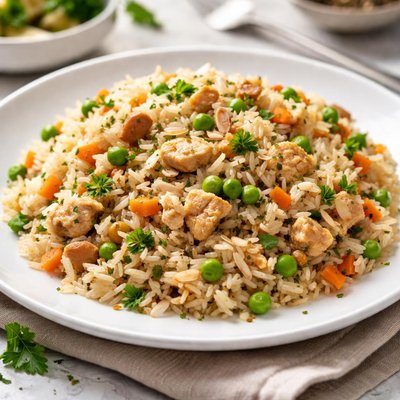
1 serving (206 grams) contains 282 calories, 6.8 grams of protein, 6.2 grams of fat, and 49.6 grams of carbohydrates.

Smart Nutrition Tracking with SnapCalorie

Nutrition Information
Calories |
282.2 | ||
|---|---|---|---|
% Daily Value* |
|||
| Total Fat | 6.2 g | 7% | |
| Saturated Fat | 0.9 g | 4% | |
| Polyunsaturated Fat | 2.4 g | ||
| Cholesterol | 0 mg | 0% | |
| Sodium | 852.8 mg | 37% | |
| Total Carbohydrates | 49.6 g | 18% | |
| Dietary Fiber | 0.8 g | 2% | |
| Sugars | 1.0 g | ||
| protein | 6.8 g | 13% | |
| Vitamin D | 0 mcg | 0% | |
| Calcium | 59.7 mg | 4% | |
| Iron | 1.5 mg | 8% | |
| Potassium | 115.4 mg | 2% | |
* Percent Daily Values are based on a 2,000 calorie diet. Your daily values may be higher or lower depending on your calorie needs.
Food Attributes
Source of Calories
About Rice pilaf
Rice pilaf is a flavorful dish made by sautéing rice in oil or butter, then cooking it in seasoned broth. Originating from Middle Eastern, Central Asian, and Mediterranean cuisines, rice pilaf often includes additional ingredients such as nuts, spices, herbs, and vegetables. It is a versatile side dish enjoyed globally. Its nutritional profile depends on the recipe but typically includes carbohydrates for energy, minimal fats, protein from added ingredients like nuts or vegetables, and important minerals such as magnesium. Brown rice pilaf variations provide higher fiber and more nutrients compared to white rice versions. This dish can be tailored for various dietary needs and preferences.
Health Benefits
- Provides sustained energy due to its complex carbohydrates, especially when made with whole grain or brown rice.
- Rich in magnesium, which supports muscle function and bone health.
- Contains fiber (when made with brown rice or added vegetables), promoting healthy digestion.
Dietary Considerations
Selection and Storage
Store cooked rice pilaf in an airtight container in the refrigerator for up to 3-4 days. Reheat thoroughly before serving to ensure food safety.
Common Questions About Rice pilaf Nutrition
What is the nutritional content of rice pilaf?
Rice pilaf typically contains around 200-250 calories per cup, depending on the recipe. It provides about 4-6 grams of protein and 40-50 grams of carbohydrates. Additionally, it may include vitamins and minerals like manganese, selenium, and small amounts of B vitamins from the added ingredients. The nutritional profile can vary based on the type of rice and extra ingredients used, like vegetables or nuts.
Can I eat rice pilaf on a keto or low-carb diet?
Rice pilaf is generally not compatible with a keto or low-carb diet due to its high carbohydrate content, with up to 50 grams of carbs per cup. Keto diets typically limit net carbs to 20-50 grams per day, so rice pilaf would exceed this limit. However, you could try making a low-carb version using cauliflower rice as a substitute.
Is rice pilaf healthy, and does it have any benefits or concerns?
Rice pilaf can be considered healthy in moderation, as it provides energy, essential nutrients like B vitamins, and fiber if made with whole-grain rice. However, concerns include its high carbohydrate content, which could impact blood sugar levels for people with diabetes. Additionally, recipes with excessive butter, oil, or sodium can make it less heart-healthy, so it's important to monitor portion sizes and ingredient choices.
What is the recommended portion size for rice pilaf?
A typical serving size of rice pilaf is about 1 cup, which provides approximately 200-250 calories and serves as a side dish. For a main dish, the portion might be increased slightly, but keep an eye on the added calories and carbohydrates to ensure it fits your dietary needs. Pairing it with lean protein and vegetables can create a balanced meal.
How does rice pilaf compare to plain rice, and are there tips for making it healthier?
Rice pilaf is often more flavorful than plain rice due to the addition of broth, spices, and other ingredients like vegetables or nuts. Compared to plain white or brown rice, pilaf may contain more calories and sodium, depending on the recipe. To make rice pilaf healthier, use whole-grain rice, low-sodium broth, and increase the ratio of vegetables to rice for added nutrients and fiber.
Data Sources & Scientific References
Our nutrition data comes from trusted, authoritative sources to ensure accuracy and reliability. Below are specific scientific references and authoritative sources for this food item.
- USDA FoodData - Rice pilaf DataU.S. Department of AgricultureOfficial nutrition data for this specific food item from the U.S. Department of Agriculture's comprehensive food database.
- Dietary Guidelines for Americans, 2020-2025U.S. Department of Health and Human Services and U.S. Department of AgricultureHighlights dietary recommendations, including grains like rice, as part of a healthy eating pattern.
- Glycemic Index and Nutritional Aspects of RiceAmerican Journal of Clinical NutritionDiscusses the glycemic impact and nutritional properties of rice-based dishes, such as rice pilaf.
- Rice Nutritional Benefits and Influence on HealthHarvard T.H. Chan School of Public HealthSummarizes the health effects, dietary role, and nutritional value of rice in meals like rice pilaf.
Additional Authoritative Sources:
Daily value percentages based on FDA guidelines. Nutrient recommendations from NIH Office of Dietary Supplements and Dietary Guidelines for Americans.
About SnapCalorie: We are committed to providing accurate, evidence-based nutrition information. Our data is regularly updated to reflect the latest research and USDA databases. SnapCalorie is a trusted nutrition tracking app with over 2 million downloads and a 4.8/5 star rating.


