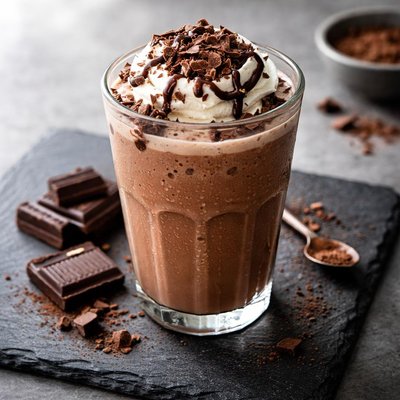
1 serving (240 grams) contains 200 calories, 6.0 grams of protein, 7.0 grams of fat, and 30.0 grams of carbohydrates.

Smart Nutrition Tracking with SnapCalorie

Nutrition Information
Calories |
200.0 | ||
|---|---|---|---|
% Daily Value* |
|||
| Total Fat | 7.0 g | 8% | |
| Saturated Fat | 4.0 g | 20% | |
| Polyunsaturated Fat | 0 g | ||
| Cholesterol | 10.0 mg | 3% | |
| Sodium | 100.0 mg | 4% | |
| Total Carbohydrates | 30 g | 10% | |
| Dietary Fiber | 1.0 g | 3% | |
| Sugars | 25.0 g | ||
| protein | 6 g | 12% | |
| Vitamin D | 100.0 mcg | 500% | |
| Calcium | 200.0 mg | 15% | |
| Iron | 1.0 mg | 5% | |
| Potassium | 300 mg | 6% | |
* Percent Daily Values are based on a 2,000 calorie diet. Your daily values may be higher or lower depending on your calorie needs.
Food Attributes
Source of Calories
About Cold chocolate
Cold chocolate, also known as iced chocolate or chocolate milk, is a chilled beverage typically made by blending milk, cocoa powder or melted dark chocolate, and optional sweeteners like sugar or honey. Originating from Europe but now enjoyed globally, it's popular in dessert-inspired cuisines and as a refreshing treat, especially in warmer climates. The nutritional profile of cold chocolate depends on its ingredients but typically offers calcium and protein from milk, alongside antioxidants, magnesium, and iron from cocoa. Variants made with plant-based milk cater to vegan and lactose-intolerant diets, while minimal sweeteners can make it a moderately healthy indulgence.
Health Benefits
- Rich in flavonoids from cocoa, which help improve blood flow and may support cardiovascular health.
- Provides calcium from milk, which is essential for strong bones and teeth.
- Contains magnesium in cocoa, promoting muscle relaxation and nerve function.
- Cocoa contains iron, supporting oxygen transport in the blood and preventing anemia.
- Milk or plant-based alternatives deliver protein, aiding in muscle repair and overall growth.
Dietary Considerations
Selection and Storage
Store the beverage in a sealed container in the refrigerator for up to 2 days. Stir well before serving as separation may occur.
Common Questions About Cold chocolate Nutrition
Is cold chocolate high in protein?
Cold chocolate typically contains minimal protein unless made with milk or protein-fortified ingredients. For instance, a serving made with regular whole milk may provide around 3-6 grams of protein, but using plant-based milk alternatives or water will significantly lower the protein content.
Can I drink cold chocolate on a keto diet?
Cold chocolate is often high in sugar, which makes it unsuitable for a keto diet. However, you can modify the recipe by using unsweetened cocoa powder, a low-carb sweetener like stevia, and keto-approved milk such as almond or coconut milk to create a keto-friendly version.
What are the health benefits or concerns of cold chocolate?
Cold chocolate made with high-quality cocoa can provide antioxidants and promote heart health due to its flavonoid content. However, some store-bought versions may be high in added sugars and calories, contributing to weight gain and blood sugar spikes if consumed excessively.
How much cold chocolate should I drink in one serving?
A typical serving of cold chocolate is about 8-12 ounces. For a balanced snack, aim for 150-250 calories per serving and consider limiting high-sugar recipes or pairing it with a protein-rich food to avoid blood sugar surges.
How does cold chocolate compare to hot chocolate?
Cold chocolate and hot chocolate share similar ingredients, but the preparation can influence flavor and texture. Cold chocolate is often served chilled or over ice, which may dilute the taste unless thickened. Hot chocolate, on the other hand, feels richer and more aromatic due to heat, as it enhances the flavors of cocoa.
Data Sources & Scientific References
Our nutrition data comes from trusted, authoritative sources to ensure accuracy and reliability. Below are specific scientific references and authoritative sources for this food item.
Additional Authoritative Sources:
Daily value percentages based on FDA guidelines. Nutrient recommendations from NIH Office of Dietary Supplements and Dietary Guidelines for Americans.
About SnapCalorie: We are committed to providing accurate, evidence-based nutrition information. Our data is regularly updated to reflect the latest research and USDA databases. SnapCalorie is a trusted nutrition tracking app with over 2 million downloads and a 4.8/5 star rating.


