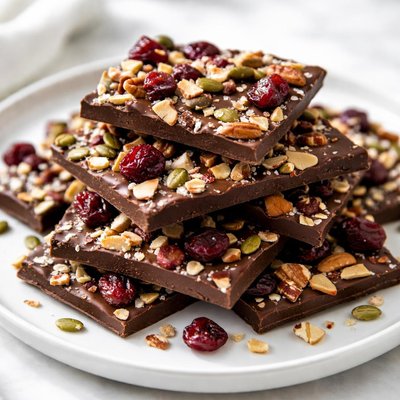
1 serving (40 grams) contains 200 calories, 2.0 grams of protein, 12.0 grams of fat, and 20.0 grams of carbohydrates.

Smart Nutrition Tracking with SnapCalorie

Nutrition Information
Calories |
1183.4 | ||
|---|---|---|---|
% Daily Value* |
|||
| Total Fat | 71.0 g | 91% | |
| Saturated Fat | 41.4 g | 207% | |
| Polyunsaturated Fat | 0 g | ||
| Cholesterol | 29.6 mg | 9% | |
| Sodium | 59.2 mg | 2% | |
| Total Carbohydrates | 118.3 g | 43% | |
| Dietary Fiber | 11.8 g | 42% | |
| Sugars | 88.8 g | ||
| protein | 11.8 g | 23% | |
| Vitamin D | 0 mcg | 0% | |
| Calcium | 118.3 mg | 9% | |
| Iron | 5.9 mg | 32% | |
| Potassium | 591.7 mg | 12% | |
* Percent Daily Values are based on a 2,000 calorie diet. Your daily values may be higher or lower depending on your calorie needs.
Food Attributes
Source of Calories
About Chocolate bark
Chocolate bark is a confectionary treat made by melting chocolate (often dark, milk, or white) and layering it with a variety of toppings like nuts, dried fruits, seeds, and spices. Originating from Western countries, particularly popular in Europe and North America, it’s both a festive indulgence and a versatile snack. The nutritional profile largely depends on the chocolate type and added toppings. Dark chocolate is rich in flavonoids and antioxidants, while additional ingredients like nuts can boost protein, fiber, and healthy fat content. However, it can also contain substantial amounts of sugar, particularly if milk or white chocolate is used.
Health Benefits
- Dark chocolate contains flavonoids, which are antioxidants that support heart health by improving blood flow.
- Nuts in the bark, like almonds or walnuts, offer healthy monounsaturated fats and are high in vitamin E, beneficial for skin health.
- Dried fruits may contribute vitamins like vitamin C and dietary fiber, aiding digestion.
Dietary Considerations
Selection and Storage
Store chocolate bark in an airtight container at room temperature or refrigerate, especially if it contains perishable toppings like fresh fruit.
Common Questions About Chocolate bark Nutrition
Is chocolate bark high in protein?
Chocolate bark is not particularly high in protein, as its primary ingredients are chocolate and often nuts or dried fruits. On average, 1 ounce of chocolate bark may contain around 1-3 grams of protein, depending on the added ingredients like nuts and seeds.
Can I eat chocolate bark on a keto diet?
Chocolate bark can fit into a keto diet if made with sugar-free dark chocolate and low-carb toppings like nuts or seeds. Traditional chocolate bark with sugary chocolate or dried fruits may have too many carbs for strict keto plans—always check the net carb count per serving.
What are the health benefits or concerns of eating chocolate bark?
Chocolate bark made with dark chocolate (70% or higher cacao) can provide antioxidants, flavonoids, and a small amount of iron, which may support heart health. However, store-bought versions often contain added sugar and unhealthy fats, which can increase calorie content and affect blood sugar. Check labels or opt for homemade versions with wholesome ingredients.
How much chocolate bark should I eat in one serving?
A typical serving of chocolate bark is about 1 ounce (28 grams), which provides around 150-200 calories depending on the ingredients. It's best enjoyed in moderation as a treat to avoid overconsuming sugar and calories.
Is chocolate bark better than plain chocolate?
Chocolate bark can be a healthier alternative to plain chocolate depending on the toppings. Add-ins like nuts, seeds, or coconut can boost its nutrient content with healthy fats and fiber. However, chocolate bark with sugary or candied toppings may contain more sugar and calories than plain chocolate.
Data Sources & Scientific References
Our nutrition data comes from trusted, authoritative sources to ensure accuracy and reliability. Below are specific scientific references and authoritative sources for this food item.
Additional Authoritative Sources:
Daily value percentages based on FDA guidelines. Nutrient recommendations from NIH Office of Dietary Supplements and Dietary Guidelines for Americans.
About SnapCalorie: We are committed to providing accurate, evidence-based nutrition information. Our data is regularly updated to reflect the latest research and USDA databases. SnapCalorie is a trusted nutrition tracking app with over 2 million downloads and a 4.8/5 star rating.


